In This Article
A wet bathroom floor doesn’t look dangerous. It just looks like a bathroom. But for an older relative with slower reflexes, weaker grip strength, or a bit of dizziness on standing, that same floor is one of the biggest hazards in the entire house. An anti-slip shower tray for elderly users is, in short, a shower base with a textured or specially treated surface that grips bare, wet feet far more effectively than a standard glossy tray — reducing the chance of a slip during the exact moment someone is at their most off-balance: stepping in, turning, or bending to wash. It’s a small swap with an outsized safety payoff.
We’re writing this guide for the adult child researching options for a parent, the carer planning a bathroom refit, and the older reader doing their own homework before spending real money. Falls remain a genuinely serious issue in the UK — roughly one in three adults over 64, and around half of those over 80, will have at least one fall in a given year, and a good proportion of those happen on wet bathroom floors. The good news is that simple changes to the home, alongside exercise to improve strength and balance, can meaningfully reduce that risk, according to the NHS falls prevention guidance.
This isn’t a rewritten spec sheet. We’ve dug into real UK-available shower trays, pulled actual dimensions and materials from manufacturer and retailer listings, and weighed up who each one genuinely suits — whether that’s a fully accessible wet room, a low-level retrofit, or a no-fuss anti-slip mat for a rented flat. You’ll find honest trade-offs throughout, not blanket praise. Below, we compare seven real anti-slip shower tray for elderly options across budget, mid-range and premium price points, followed by practical guidance on fitting, grab rails, wet room accessibility, and how to fund the whole project through a Disabled Facilities Grant if you’re eligible.
Quick Comparison Table
| Product | Type | Height | Weight Capacity | Best For |
|---|---|---|---|---|
| Mira Flight Safe Rectangular | Standard anti-slip tray | 40mm | Standard household use | All-round family & elderly bathrooms |
| AKW Low Profile Shower Tray | Accessibility tray | 32mm | 30st (190kg) | Heavy-duty wheelchair/carer support |
| AKW Onyx Exclusif | Ultra-low profile tray | 26mm | Up to 200kg | Level-access wet rooms, dementia-friendly |
| Kudos Kstone Rectangular | Mid-range anti-slip tray | 45mm | Standard household use | Best value, Made in Britain |
| Nuie Pearlstone NSR013 | Budget anti-slip tray | 40mm | Standard household use | Tightest budgets |
| AKW Sulby Shower Tray | Step-in accessibility tray | Low-entry | Standard reinforced use | Visual impairment, defined edge |
| XIYUNTE Non-Slip Shower Mat | Retrofit mat (no install) | N/A | Standard household use | Renters, instant no-tools fix |
Looking at the spread here, the real decision isn’t really “which tray is best” — it’s “how much of a renovation are you prepared to take on”. The AKW Low Profile Shower Tray and AKW Onyx Exclusif sit at the accessibility-specialist end, built specifically for level or near-level entry and rated for far higher loads than a typical retail tray. The Mira Flight Safe Rectangular and Kudos Kstone Rectangular occupy sensible middle ground: genuinely anti-slip, easy to source, and simple for a plumber to fit into an existing stud wall or enclosure. The XIYUNTE Non-Slip Shower Mat is the odd one out deliberately — it’s what you reach for when a full tray replacement isn’t happening this month.
💬 Just one click — help others make better buying decisions too!😊
Top 7 Anti-Slip Shower Trays for Elderly Users: Expert Analysis
1. Mira Flight Safe Rectangular Anti-Slip Shower Tray — best all-round pick for family and elderly bathrooms
The standout here is simple: this is the tray most UK bathroom fitters already know how to install without a second thought, which matters more than it sounds. Made from acrylic-capped stone resin, the Mira Flight Safe Rectangular measures in at a slimline 40mm high across most sizes (1000 x 800mm and 1200 x 800mm are the popular choices for a standard family bathroom), and includes BioCote antimicrobial technology baked into the surface. In practice, that antimicrobial layer matters more for an elderly household than a young one, since reduced mobility often means less frequent deep-cleaning, and a surface that resists bacterial build-up on its own buys some margin for error.
On the anti-slip front, the textured Mira Safe coating is embedded into the tray rather than sprayed on top, so it won’t wear thin the way some budget aftermarket anti-slip coatings do after a couple of years of daily showers. Based on the spec comparison with cheaper trays in this category, the acrylic cap also resists the scratching and yellowing that plain stone resin can suffer over a decade of use — a real factor if this tray is going into a “forever bathroom” that won’t be refitted again soon. Where actual customer feedback is visible on major UK retailer listings, the recurring theme is ease of cleaning and a genuinely non-slip feel underfoot rather than a marketing-only texture; verified star ratings vary by size and retailer, so it’s worth checking the specific listing before buying.
This tray is best suited to anyone who wants a “normal” walk-in shower with a proper anti-slip base, rather than a full accessibility conversion — think an older couple who are steady on their feet but sensible about reducing risk, not someone who needs a wheelchair-accessible level threshold.
Pros:
- ✅ Textured anti-slip coating built into the material, not sprayed on
- ✅ BioCote antimicrobial technology reduces bacterial build-up
- ✅ Widely stocked, so trade fitting is familiar and straightforward
Cons:
- ❌ 40mm height still creates a small step, unsuitable for wheelchairs
- ❌ Waste and leg/plinth kits are often sold separately, adding to cost
Prices for the Mira Flight Safe Rectangular vary a good deal by size, generally landing in the £180-£300 range at the time of research — always check the current price and size chart before ordering, since larger 1700mm formats sit well above the smaller square trays.
2. AKW Low Profile Shower Tray — best for heavy-duty wheelchair and carer-assisted use
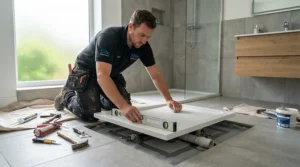
What most buyers overlook about accessibility-specialist trays is the weight rating, and this is where the AKW Low Profile Shower Tray earns its place. Rated to support up to 30 stone (190kg), it’s built for scenarios a standard retail tray simply isn’t designed for: a wheeled shower chair plus user, or a carer physically supporting someone during washing. At just 32mm thick, it can be fitted for either fully level access (recessed into a timber floor) or low-level access sitting above the floor, giving an installer real flexibility depending on the existing joist layout.
The tray is reinforced with internal steel sections, which is why it copes with that load rating without flexing — a genuine engineering difference from the foam-backed underside you’ll find on many consumer trays. It’s available in ten sizes from 1000x1000mm up to 1800x820mm, and the offset waste position is deliberately designed to dodge common joist positions, which cuts down on the structural work a fitter would otherwise need to do. AKW backs the tray with a lifetime guarantee, reflecting its positioning as a long-term accessibility investment rather than a like-for-like retail swap. Independent occupational therapy and mobility equipment sources consistently list AKW as a trusted specialist brand for local authority and Disabled Facilities Grant-funded work, which says something about how the trade views its durability.
This is the tray to specify if a wheelchair, shower chair, or hoist is part of the picture, or if a carer needs solid, level footing while assisting someone. It’s overkill — and unnecessary spend — for an otherwise mobile older adult who just wants extra grip.
Pros:
- ✅ Supports up to 30st (190kg) — genuinely wheelchair and carer-ready
- ✅ 32mm profile allows level or low-level installation flexibility
- ✅ Steel-reinforced construction avoids flexing under heavy use
Cons:
- ❌ Gravity waste only — not compatible with pumped waste systems
- ❌ Specialist pricing sits above generic retail shower trays
Expect the AKW Low Profile Shower Tray to sit in a roughly £200-£350 range depending on size and waste kit, with specialist mobility retailers typically the best source — check current pricing rather than assuming a fixed figure.
3. AKW Onyx Exclusif Shower Tray — the lightest true level-access tray on this list
Here’s what the spec sheet won’t tell you outright: weight matters enormously during installation, especially when a fitter is working solo in a cramped bathroom. The AKW Onyx Exclusif weighs under 25kg despite being rated for a 200kg load — a combination that comes from its Sheet Moulding Compound (SMC) construction rather than traditional stone resin. At just 26mm high, it’s the shallowest tray in this whole line-up, which makes true level, flush-to-floor access realistic even in bathrooms with limited depth to play with underneath.
That ultra-low profile isn’t just about wheelchair access, either. For someone living with dementia, a visible step or colour change at the shower threshold can trigger hesitation or confusion, and levelling the floor removes that visual trip hazard entirely. The tray can be trimmed to size within 15cm of the waste area, which gives an installer welcome flexibility on tighter jobs without ordering a custom size. Reviewers consistently note the trade-off with SMC trays generally: they’re easier to handle and fit, but the finish reads slightly more utilitarian than a glossy acrylic-capped tray, which matters if the bathroom is otherwise a design-led space.
Choose this one when level access is the non-negotiable requirement — wheelchair users, anyone with a progressive condition, or households future-proofing a bathroom before it’s strictly needed.
Pros:
- ✅ Under 25kg yet rated for 200kg load — easy to fit, hard to break
- ✅ 26mm height enables genuinely flush, level-access installation
- ✅ Can be trimmed on-site within 15cm of the waste for a custom fit
Cons:
- ❌ SMC finish is less glossy than acrylic-capped alternatives
- ❌ Premium accessibility pricing compared with standard trays
The AKW Onyx Exclusif typically sits in a £300-£450 range once fitting accessories are included, reflecting its position as a specialist wet room solution rather than a budget swap.
4. Kudos Kstone Rectangular Anti-Slip Shower Tray — best mid-range value, Made in Britain
The Kudos Kstone Rectangular earns its spot through a genuinely useful technical detail: its slip-resistant surface is embedded directly into the acrylic-capped ABS material rather than applied as a coating, and the manufacturer states it exceeds EU standards for barefoot bathing safety. That distinction matters in practice — a coating can wear thin with years of scrubbing and limescale remover, while a structured, material-level texture keeps its grip for the life of the tray.
At 45mm high, it’s slightly deeper than the Mira and Nuie options on this list, which some installers actually prefer because it gives a bit more room for the waste and pipework fall, particularly on solid concrete floors where digging deeper isn’t an option. Kudos manufactures in Cumbria and is a member of the Made in Britain organisation, which shortens supply chains and, anecdotally from trade forums, tends to mean fewer of the warping or colour-inconsistency complaints that sometimes crop up with imported stone resin trays. On the review side, feedback visible on UK retailer listings tends to praise how easily the tray cleans and how solid it feels underfoot — though as with most shower trays, verified review volume is thinner than you’d get on a mainstream consumer product, so treat any single rating with a pinch of salt.
This is the pragmatic middle-ground choice: not a specialist accessibility tray, but a genuinely superior anti-slip surface over a basic budget model, at a price most households can justify for a bathroom that isn’t undergoing a full accessibility conversion.
Pros:
- ✅ Slip resistance built into the material, exceeding EU barefoot standards
- ✅ Made in Britain, with shorter supply chains and consistent quality
- ✅ Lifetime manufacturer’s guarantee included as standard
Cons:
- ❌ 45mm height creates a slightly higher step than slimline rivals
- ❌ Waste sold separately on most listings, adding to the total spend
Depending on size, the Kudos Kstone Rectangular generally falls in a £150-£350 range, with smaller square formats at the lower end and the largest 1700mm rectangles pushing toward the top.
5. Nuie Pearlstone Slip Resistant Shower Tray (NSR013) — best budget shower tray
If the brief is “genuinely anti-slip, properly made, but priced for a tight renovation budget”, the Nuie Pearlstone NSR013 is where most people should start looking. It’s built from Nuie’s patented Pearlstone Matrix — a polyurethane resin and volcanic ash blend — which the manufacturer states makes the tray up to 50% lighter than conventional stone resin trays of the same size. That weight saving isn’t just a nice-to-have for an elderly household: a lighter tray is easier and safer for a two-person fitting team to manoeuvre into place, particularly up a staircase or through a narrow bathroom doorway.
At 40mm high with a flat underside for easier levelling, the slip-resistant textured finish is applied across the matt white surface, and the tray carries a lifetime manufacturer’s guarantee despite its budget positioning. What most buyers overlook here is that “budget” doesn’t mean “compromised safety feature” — the anti-slip texture itself isn’t a downgraded version of what you’d get on a pricier tray, it’s simply paired with fewer premium extras like BioCote hygiene coatings or accessibility-specific engineering. Nuie manufactures the Pearlstone range in Great Britain, which is a genuine point of reassurance on quality control for a budget-tier product.
This tray suits anyone prioritising a straightforward, safer shower base without stretching to specialist accessibility engineering — a sensible pick for a spare bathroom, a rental property adaptation, or simply the first step in making a home safer on a limited budget.
Pros:
- ✅ Up to 50% lighter than standard stone resin trays of the same size
- ✅ Genuine textured anti-slip finish, not a downgraded coating
- ✅ Lifetime guarantee despite sitting at the budget end of the market
Cons:
- ❌ No BioCote or antimicrobial technology included
- ❌ Fewer size options than the larger Mira or Kudos ranges
The Nuie Pearlstone NSR013 is typically the most affordable tray on this list, generally sitting under £150 for standard sizes — always confirm the current price for your exact dimensions before ordering.
6. AKW Sulby Shower Tray — best step-in tray for visual impairment
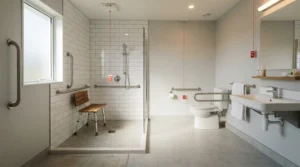
The AKW Sulby Shower Tray takes a slightly different approach from the other accessibility options here: rather than aiming for fully flush level access, it’s a low-entry, step-in design with a deliberately defined edge. That defined edge is the whole point — for someone with reduced vision, a completely level, colour-matched floor transition can actually be harder to judge safely than a small, clearly visible step, since there’s no tactile or visual cue telling you where the shower area begins.
Structurally, the tray uses a patented, built-in above-floor gravity waste with eight possible outlet points, which conceals pipework within the height of the tray itself rather than requiring extensive under-floor plumbing work — a genuine time and cost saver on a retrofit job where digging into a solid concrete floor isn’t practical. It’s available in multiple sizes and two heights, with steps or a ramp offered as optional extras, so a fitter can tailor the exact entry height to the individual’s ability rather than forcing a one-size-fits-all solution. The textured surface finish carries the same slip-resistance priority as AKW’s other accessibility trays, reflecting the brand’s specialist positioning in the mobility equipment sector rather than the general retail bathroom market.
Specify this one when the priority is a clearly defined, easy-to-fit accessible shower with genuine flexibility on entry height — particularly relevant for anyone with a visual impairment alongside reduced mobility, where a fully flush floor could actually introduce a new hazard rather than remove one.
Pros:
- ✅ Defined edge aids depth perception for visually impaired users
- ✅ Concealed above-floor gravity waste simplifies retrofit installation
- ✅ Optional steps or ramp let you tailor the exact entry height
Cons:
- ❌ Not a fully level-access solution like the Onyx Exclusif
- ❌ Specialist accessibility pricing above generic retail trays
Pricing for the AKW Sulby Shower Tray generally sits in a £250-£450 range once you factor in the waste kit and any optional step or ramp accessories, so it’s worth getting a full itemised quote before committing.
7. XIYUNTE Large Non-Slip Shower Mat — best no-installation quick fix
Not every household is ready for a shower tray replacement this month, whether that’s down to budget, a rental agreement, or simply needing an interim safety fix while a proper adaptation is arranged. The XIYUNTE Large Non-Slip Shower Mat fills that gap sensibly: made from TPE material with roughly 216 suction cups on the underside, it grips directly onto an existing tray or bath floor without a single tool or trade visit required.
The mat is designed to be cut to size, which matters more than it sounds — a mat that overhangs the edge of a tray or leaves gaps at the corners actually creates its own trip hazard, so the ability to trim it to an exact fit is a genuine safety feature rather than a marketing extra. Drain holes built into the design help prevent standing water from pooling underneath, which reduces the mould risk that plain rubber mats are notorious for in damp UK bathrooms. On the review side, the recurring theme across major retailer listings is straightforward: buyers report the suction genuinely holds on a clean, smooth surface, though — as with all suction mats — grip weakens over time as the underside picks up soap residue, so periodic cleaning of the mat itself is part of the deal, not an optional extra.
This is the right call as a stopgap or a permanent low-cost solution for a household that’s steady enough not to need a full tray replacement, but wants meaningfully better grip than a bare acrylic or enamel surface offers.
Pros:
- ✅ No installation, tools, or trade visit required — fits in minutes
- ✅ Cut-to-size design avoids overhang and gap trip hazards
- ✅ Drain holes reduce standing water and associated mould risk
Cons:
- ❌ Suction grip weakens over time and needs periodic mat cleaning
- ❌ Not a substitute for proper accessibility engineering if mobility needs are significant
The XIYUNTE Large Non-Slip Shower Mat is comfortably the most affordable option here, typically priced under £25 depending on size — a genuinely low-risk way to test whether extra grip alone solves the problem before committing to a full tray.
Fitting Your New Shower Tray: Setup, Grab Rails and the First 30 Days
Getting a new tray delivered is the easy part; getting it fitted properly, and making the wider shower area genuinely safe, is where most of the value actually gets delivered. Start with the tray itself: whichever of the seven products above you choose, insist your fitter checks the floor is level before bonding it down, since even a slight lean can pool water in one corner and undermine the anti-slip surface’s effectiveness over time. If you’ve gone with a low-level or level-access AKW tray, confirm with the installer in advance whether the floor needs recessing — this is a bigger job than a straightforward above-floor fit and is worth pricing separately.
Grab rail fitting deserves its own attention, and it’s a mistake to treat it as an afterthought once the tray is in. Rails need to be screwed into solid blocking behind the tile, not just into plasterboard or tile adhesive, because a rail that pulls away from the wall under load is arguably more dangerous than no rail at all — it removes the split-second of trust someone places in it. A general rule fitters use is one horizontal rail at roughly waist height inside the shower for standing support, plus a vertical or diagonal rail near the entry point to assist stepping over any remaining threshold. In the first 30 days, watch for common teething issues: a waste that drains slower than expected often means the tray wasn’t set with quite enough fall, and any hairline gap appearing at the tray-to-wall junction should be resealed promptly rather than left, since water ingress under a tray is one of the more expensive mistakes to fix later.
✨ Don’t Miss These Exclusive Deals!
🔍 Take your bathroom safety project to the next level with these carefully selected products. Click on any highlighted item to check current pricing and availability. These trays and fittings will help you create a genuinely safer, more confident showering experience your family will feel the benefit of every single day.
Real Scenarios: Matching the Right Tray to Your Situation
Abstract specs only get you so far — here’s how three realistic households might actually choose between these options. First, consider Margaret, 78, living independently, steady on her feet but recently had a near-miss slip getting out of the shower. She doesn’t need a full accessibility conversion; the Nuie Pearlstone NSR013 or Mira Flight Safe Rectangular paired with a single well-fitted grab rail solves her actual problem without the cost or disruption of a wet room conversion, and either could realistically be fitted within a day.
Next, take a household caring for a parent with advancing Parkinson’s who now uses a wheeled shower chair several times a week. Here, weight capacity and level access stop being nice-to-haves and become the entire brief — the AKW Low Profile Shower Tray or AKW Onyx Exclusif, specified alongside a proper wet room floor gradient and grab rails either side of the shower chair’s position, is the only sensible route, and this is exactly the kind of project a Disabled Facilities Grant is designed to help fund. Finally, picture a private renter in their 70s who can’t alter the fixed bathroom fittings at all under their tenancy agreement. For them, the XIYUNTE Large Non-Slip Shower Mat combined with a portable suction grab rail is a realistic, landlord-friendly way to meaningfully cut risk without a single permanent change to the property.
Care Bathroom Adaptation: A Buyer’s Decision Framework
Rather than guessing, work through this simply: if the person showering is mobile but cautious, choose a standard anti-slip tray like the Mira Flight Safe Rectangular or Kudos Kstone Rectangular, because the priority is grip, not structural load capacity. If a wheelchair, shower chair, or hoist is involved now or realistically within the next year or two, choose a specialist AKW tray, because retrofitting for load capacity later is far more disruptive than specifying it upfront. If visual impairment is part of the picture, lean toward a tray with a defined edge, such as the AKW Sulby Shower Tray, rather than a fully flush level-access design, since a completely level floor removes a useful tactile cue.
If the budget or tenancy simply won’t stretch to a tray replacement this year, the XIYUNTE Large Non-Slip Shower Mat is a legitimate interim step rather than a compromise to be embarrassed about — meaningful risk reduction doesn’t have to mean a full renovation. And if the household includes someone assessed by an occupational therapist as needing a level-access shower, it’s worth checking eligibility for a Disabled Facilities Grant before paying out of pocket, since means-tested funding of up to £30,000 in England can cover exactly this kind of bathroom adaptation.
How to Choose an Anti-Slip Shower Tray for Elderly Users
Working through these criteria in order will save a wasted purchase:
- Assess actual mobility, not assumed mobility. An occupational therapist assessment, even an informal one, gives a far more accurate picture than guessing — someone’s needs can change faster than a family expects.
- Check the weight rating against real-world use. A standard retail tray rated for everyday domestic use isn’t engineered for a wheeled shower chair plus carer; specialist AKW-style trays are.
- Decide between level-access and defined-edge designs early. This single decision affects almost every other choice, including cost, and it’s genuinely different depending on whether mobility or visual impairment is the bigger factor.
- Confirm the tray height against your existing floor build-up. A 26mm ultra-low tray needs less recessing than a 45mm tray, which matters enormously on a solid concrete floor with limited depth to play with.
- Ask what’s included versus sold separately. Wastes, leg and plinth kits, and tiling upstands are very often priced apart from the tray itself, and this catches people out when comparing headline prices.
- Verify anti-slip technology is embedded, not just coated. A structural, material-level texture holds up over a decade; a sprayed-on coating can wear thin within a few years of daily cleaning.
- Price the whole job, not just the tray. Fitting, sealing, waste, and any floor recessing work typically costs more than the tray itself, so budget accordingly before comparing product prices.
Low-Level vs Level-Access vs Standard Shower Trays: Wet Room Accessibility Explained
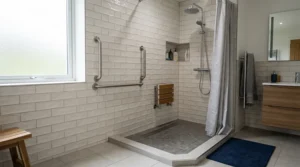
These three terms get used loosely, and the confusion causes real buying mistakes. A standard shower tray, like the Mira Flight Safe Rectangular or Nuie Pearlstone NSR013, sits on top of the floor at roughly 40-45mm, creating a small but noticeable step that most mobile adults barely register but that can genuinely trip someone with reduced foot clearance. A low-level tray, such as the AKW Low Profile Shower Tray, is slimmer at around 32mm and can be recessed slightly into the floor to reduce the step further, striking a middle ground between full accessibility and a conventional installation.
Level access — the territory of the AKW Onyx Exclusif and proper wet room accessibility more broadly — means no step at all: the shower floor sits perfectly flush with the surrounding bathroom floor, typically achieved either with an ultra-thin tray recessed into a formed floor gradient, or with a dedicated wet room tray-free former beneath waterproof tiling. True wet room accessibility is the gold standard for wheelchair users and anyone with a progressive condition, but it’s also the most disruptive and expensive route, generally requiring the floor to be dug out and re-formed rather than a straightforward tray swap. What the spec sheet won’t tell you plainly is that level access done badly — without the correct fall gradient toward the drain — can actually leave standing water pooling across a wider area than a well-designed low-level tray would, so specification and installation quality matter as much as the category you choose.
Common Mistakes When Buying a Non-Slip Tray for a Disabled Bathroom
The single most common mistake is buying the tray before getting a proper assessment of the person’s actual needs — a beautiful ultra-low-profile tray is wasted money if what’s really needed is a grab rail and a simple anti-slip mat, and vice versa. A close second is assuming any “anti-slip” label means the same level of grip; as covered above, embedded texture and sprayed coatings perform very differently over time, and the marketing language rarely makes that distinction clear.
Buyers also frequently underestimate total project cost by focusing only on the tray price and forgetting wastes, upstands, resealing, and potential floor levelling work — several of the products above are sold with the waste as a separate line item, which can add meaningfully to the final bill. Finally, a surprisingly common error is skipping the grab rail entirely because “the new tray is safer now” — a genuinely anti-slip surface reduces risk during standing and washing, but it doesn’t help someone who loses their balance stepping over the tray edge, which is precisely what a well-positioned rail is for.
Safety, Regulations and Disabled Facilities Grants
There’s no single mandatory British Standard that every domestic anti-slip shower tray must carry, but reputable manufacturers, including several featured above, reference independent slip-resistance testing and EU barefoot bathing safety standards in their product literature — it’s worth asking a retailer to confirm this if it isn’t stated clearly on the listing. Separately, funding is where many families get stuck unnecessarily: if an occupational therapist assessment confirms the need, a means-tested Disabled Facilities Grant can cover a substantial part of a bathroom adaptation project in England, including level-access showers and grab rail installation, with awards of up to £30,000 available depending on income and savings.
The Age UK falls prevention guidance is a genuinely useful starting point for families unsure whether a formal assessment is warranted, since it sets out the broader risk factors beyond just the bathroom itself. It’s also worth noting that recent clinical guidance from NICE on falls assessment and prevention in older adults reinforces that home hazard adaptations, including bathroom changes, form part of a recommended, evidence-based approach rather than being a nice-to-have extra.
Long-Term Cost and Maintenance: Is a Mobility-Friendly Shower Tray Worth It?
Judged purely on upfront price, a XIYUNTE Large Non-Slip Shower Mat at under £25 looks unbeatable against a AKW Onyx Exclusif costing well over ten times that. But total cost of ownership tells a fuller story. A quality tray with embedded anti-slip texture and a lifetime guarantee, like the Kudos Kstone Rectangular or Mira Flight Safe Rectangular, typically needs nothing beyond routine cleaning for a decade or more, while a suction mat needs periodic replacement as the suction cups and surface texture wear down with regular use and cleaning product exposure — realistically every one to two years for a household showering daily.
Factor in the cost of a fall, too, even setting aside the human cost: a hip fracture requiring hospital treatment and rehabilitation runs into thousands of pounds of NHS and social care spend, quite apart from the personal toll on independence and confidence. Viewed that way, a £250-£450 specialist tray that genuinely prevents even one serious fall over its lifetime represents strong value, not an indulgence. The maintenance side is refreshingly simple across the board: avoid abrasive cleaning products on textured anti-slip surfaces, since these can flatten the grip pattern over years of scrubbing, and stick to standard non-abrasive bathroom sprays recommended by the manufacturer.
Features That Actually Matter (And Those That Don’t)
Weight capacity, embedded (not coated) slip resistance, and tray height genuinely matter — these directly affect who can use the shower safely and how disruptive installation will be. A lifetime guarantee matters too, less for the guarantee claim itself and more as a signal that the manufacturer trusts the material to last. Colour-matched wastes, designer finishes, and “smart” branding around anti-slip technology matter far less than buyers often assume; a textured, tested surface in plain white performs identically to the same texture in a premium finish, and you’re simply paying a design premium, not a safety premium, for the latter.
BioCote or antimicrobial coatings, seen on the Mira Flight Safe Rectangular, are a genuine bonus rather than an essential — useful in a household where deep-cleaning happens less frequently, but not worth paying a significant premium for if budget is tight and a standard textured tray is otherwise perfectly suitable. Similarly, don’t be swayed by exaggerated flow-rate claims on wastes; a 25-30 litres per minute drainage rate, common across most of the trays above, is more than sufficient for domestic use, and a faster-draining waste won’t meaningfully change the shower experience.
Frequently Asked Questions
❓ What is the best anti-slip shower tray for elderly users on a budget?
❓ Do anti-slip shower trays actually reduce falls?
❓ Can I get funding to adapt a bathroom for an elderly relative in the UK?
❓ What height shower tray is best for elderly or limited mobility users?
❓ Is a non-slip shower mat as safe as a proper anti-slip shower tray?
Conclusion
There’s no single “best” anti-slip shower tray for elderly users, because the right choice genuinely depends on where someone sits on the mobility spectrum today, and realistically, in the next few years. For steady but cautious older adults, the Mira Flight Safe Rectangular or Kudos Kstone Rectangular deliver real, embedded grip without the cost or disruption of a full accessibility conversion. Where wheelchairs, shower chairs, or progressive conditions are part of the picture, the AKW Low Profile Shower Tray and AKW Onyx Exclusif are engineered for exactly that load and level-access requirement, while the AKW Sulby Shower Tray offers a genuinely useful middle path for anyone balancing mobility needs against visual impairment.
If budget is the binding constraint this year, don’t let that stop progress — the Nuie Pearlstone NSR013 proves that meaningful anti-slip technology doesn’t require premium pricing, and the XIYUNTE Large Non-Slip Shower Mat is a perfectly legitimate stopgap while a bigger project is planned or funded. Whichever route fits your household, pair the tray with properly fitted grab rails, and check Disabled Facilities Grant eligibility before assuming the whole cost has to come out of pocket. A safer shower isn’t a luxury purchase — it’s one of the most effective, evidence-backed changes a family can make to protect an older relative’s independence.
Recommended for You
- Stone Resin Shower Tray Review: 7 Best UK Picks 2026
- Slimline vs Stone Resin Shower Tray: 7 Best UK Picks (2026)
- Slimline Shower Tray: 7 Best Picks for UK Bathrooms (2026)
Disclaimer: This article contains affiliate links. As an Amazon Associate, I earn from qualifying purchases. If you purchase products through these links, we may earn a small commission at no additional cost to you.
✨ Found this helpful? Share it with your friends! 💬🤗
