In This Article
Standing barefoot in a bathroom showroom, squinting at two nearly identical white rectangles, you’d be forgiven for wondering why anyone bothers arguing about shower tray materials at all. But the slimline vs stone resin shower tray debate isn’t really about looks — it’s about what happens three, five, or fifteen years after installation, when one tray is still gleaming and the other has a hairline crack running through it. A slimline shower tray is typically a low-profile base (often 25-45mm high) made from lightweight acrylic or acrylic-capped composite, prized for its minimal step-in height and easy handling. A stone resin shower tray, by contrast, uses a denser polymer-and-mineral core — engineered stone, in material science terms — bonded for extra rigidity, weight-bearing strength, and a quieter, more solid underfoot feel.
Here’s the twist most buying guides skip: these two categories overlap more than people realise. Plenty of modern “slimline” trays are actually acrylic-capped stone resin, blending both worlds. Understanding that overlap is the difference between choosing a tray that suits your subfloor, your budget, and your household, and choosing one that looks fine in the shop but creaks, flexes, or scratches within eighteen months.
This guide breaks down seven real, currently available UK products, compares their build quality feature by feature, and gives you the practical buying framework that Amazon listings and glossy brochures conveniently leave out — including how the material actually behaves underfoot, which one holds up better in a family bathroom, and where the sneaky cost differences hide.
Quick Comparison Table
| Tray | Material Type | Height | Best For |
|---|---|---|---|
| Mira Flight | Acrylic (slimline) | 25-40mm | Budget renovations |
| AKW Low Profile | GRP fibreglass (slimline) | 32mm | Accessible/level-access bathrooms |
| Mira Flight Level | Acrylic-capped stone resin | 25mm | Hybrid slimline look with extra rigidity |
| NES Home Slim | Lightweight stone resin | 40mm | Budget wet rooms |
| Kudos Kstone | ABS-capped resin-bonded stone | 45mm | Mid-range family bathrooms |
| Merlyn MStone | Double-skin stone resin | 50mm | Premium, long-term installs |
| Aquadart Luxury Slate | ABS-capped stone resin | 45mm | Style-led statement showers |
Looking at the spread above, the split isn’t simply “cheap acrylic vs expensive stone” — several trays here blur the line by capping a stone resin core in acrylic, which is exactly why so many buyers get confused at the point of purchase. Budget doesn’t automatically mean flimsy, either: the NES Home Slim proves a genuinely lightweight stone resin tray can undercut some acrylic options on price while still outperforming them on rigidity.
Found a favourite already? Save it now and compare prices before you decide! 💬
Top 7 Slimline and Stone Resin Shower Trays: Expert Analysis
1. Mira Flight — lightest true acrylic slimline option
The Mira Flight opens this list because it’s the benchmark budget acrylic tray most UK bathroom fitters have installed at least once. Built from acrylic capped over a resin-stone-filled core, it comes in at roughly 25mm in its lowest form, with square, quadrant and rectangular options from 760mm right up to 1700mm.
On paper, the acrylic surface means the Mira Flight is genuinely light — some sizes tip the scales under 20kg — which matters enormously if you’re fitting solo or working in a tight loft conversion where every kilo carried up a ladder counts. Mira’s BioCote antibacterial treatment is baked into the surface, which addresses one of the quieter concerns buyers have about shower bases: mould and bacterial growth in a permanently damp environment.
Based on the spec comparison with heavier stone resin trays later on this list, the trade-off is flex. Acrylic-only trays can feel slightly hollow underfoot, especially on longer rectangular sizes, unless the subfloor is dead level. Reviewers consistently note that the Mira Flight installs quickly and drains fast — Mira quotes a 30 litre-per-minute waste flow rate — but a handful flag that the surface can show scuff marks from dropped shampoo bottles over time.
Pros:
- ✅ Genuinely lightweight for solo installation
- ✅ Fast-flow 30 l/min waste reduces standing water
- ✅ BioCote finish resists mould and bacteria buildup
Cons:
- ❌ More flex than stone resin on longer spans
- ❌ Surface can scuff with dropped hard objects
Expect to pay in the low £100s for compact sizes, climbing toward the low £200s for the largest rectangular options — solid value for a first-fix bathroom refresh or rental property upgrade.
2. AKW Low Profile — best for level-access and accessible bathrooms
The AKW Low Profile takes a different engineering approach entirely: glass-reinforced plastic (GRP) with internal steel reinforcement, built specifically for wet rooms and level-access showers rather than pure aesthetics. At just 32mm thick, it’s one of the thinnest trays on this list, and AKW rates it to carry up to 190kg (30 stone), which is a genuinely useful spec for anyone specifying a bathroom for an elderly relative or a household member with mobility needs.
What most buyers overlook about this model is that it isn’t trying to compete on looks — it’s solving a specific problem. The offset waste is positioned deliberately to avoid floor joists in timber-framed houses, and the textured surface is slip-resistant by design rather than as an afterthought. Aggregated retailer review sentiment consistently praises the ease of fitting on wooden subfloors, though a genuinely verifiable independent star-rating pool for this specific SKU wasn’t available across our sources — worth checking current retailer reviews before you commit.
For anyone weighing up accessible bathroom design more broadly, the government’s own accessibility guidance for level access showers and sanitary accommodation is worth a skim before you finalise a wet room layout, since drainage falls and clearances affect which trays will actually work.
Pros:
- ✅ 190kg weight rating suits accessible bathrooms
- ✅ Textured surface built for genuine slip resistance
- ✅ Offset waste avoids common joist conflicts
Cons:
- ❌ Utilitarian looks compared with style-led trays
- ❌ Limited colour choice versus resin alternatives
Pricing tends to sit in the £380-£460 range depending on size, which feels steep for what looks like a plain white tray — until you factor in the reinforced construction and accessibility-specific engineering behind it.
3. Mira Flight Level — best hybrid slimline with stone resin strength
If the first two trays represent the pure ends of the spectrum, the Mira Flight Level in Slate Grey sits deliberately in the middle. Mira lists its construction as acrylic-capped stone resin, meaning you get the minimal 25mm slimline profile buyers want, backed by a denser core than pure acrylic offers.
Here’s what the spec sheet won’t tell you outright: that slate grey textured finish isn’t purely cosmetic. Textured, slightly matte surfaces like this one generally test higher for slip resistance than glossy white acrylic, which matters more than people expect once soap and conditioner residue build up on a smooth floor. The honeycomb backing skin Mira uses also helps distribute weight more evenly than a flat acrylic underside, reducing the pressure-point flex that can eventually cause hairline stress marks.
Reviewers consistently note the waste rotates 180 degrees, which sounds minor until you’re the plumber trying to route pipework around an awkward joist — it’s a genuinely practical detail that saves site visits. On the downside, the slate grey finish shows limescale spotting more visibly than plain white in hard water areas, so buyers in the South East and East Anglia should factor in a squeegee habit.
Pros:
- ✅ Stone resin core adds rigidity over pure acrylic
- ✅ Textured slate finish aids slip resistance
- ✅ Rotatable waste simplifies awkward plumbing runs
Cons:
- ❌ Limescale shows more on textured grey finish
- ❌ Pricier than the standard white Flight range
Expect a price range roughly from the mid-£200s for compact quadrants up to £500-£600 for the largest 1700mm rectangular sizes.
4. NES Home Slim — best budget lightweight stone resin
The NES Home Slim deserves more attention than its price tag suggests. Constructed from polyurethane resin mixed with a volcanic ash filler rather than the denser mineral aggregate used in some premium stone resin trays, the manufacturer states it’s roughly 50% lighter than standard stone resin — a genuinely clever engineering shortcut for anyone who still wants that solid, non-hollow feel without wrestling a 30kg+ slab up a staircase.
On paper this means you get a 40mm-high tray that behaves more like stone resin than acrylic underfoot — quieter, less prone to flex — while remaining manageable for a two-person lift rather than requiring specialist handling equipment. The finish is described as acrylic-capped/pearlstone, giving a smooth, easy-clean surface that resists staining reasonably well according to aggregated product-page sentiment, though independently verified long-term durability reviews are thinner on the ground for this particular budget import brand compared with the established names on this list.
Buyers should treat the 25-year warranty claim with sensible scepticism — it’s a common marketing figure across budget stone resin imports, and the practical test is always how the tray performs after year one of daily family use, not what’s printed on the box.
Pros:
- ✅ Roughly half the weight of standard stone resin
- ✅ Genuinely quiet, solid underfoot feel for the price
- ✅ Competitive pricing versus name-brand equivalents
Cons:
- ❌ Thinner independent long-term review history
- ❌ Warranty terms less established than major brands
Typically priced under £150 for an 800x800mm square, this is one of the strongest value picks if your priority is stone resin performance on an acrylic-tray budget.
5. Kudos Kstone — best mid-range stone resin for family bathrooms
Made in the UK, the Kudos Kstone range uses an ABS-capped surface over a resin-bonded stone filler, and it’s the tray that consistently comes up when bathroom fitters are asked to recommend a genuine step up from acrylic without jumping straight to premium pricing. At 45mm high, it’s not quite as slim as the Mira options, but that extra few millimetres buys real structural stability.
What most buyers overlook about this model is the Flexi-Seal option — an optional flexible strip that sits between the tray edge and the abutting wall, designed to stop the classic bathroom failure point where grout or silicone cracks and water creeps behind the tiles. It’s a small addition, but based on the spec comparison with trays that don’t offer this, it directly addresses one of the most common (and expensive) shower tray failures homeowners report. Aggregated retailer sentiment repeatedly highlights the glossy, stain-resistant surface holding up well against everyday soap scum and toiletry spills, with the slip-resistant surface variant specifically praised for family bathrooms with children.
Reviewers less frequently mention noise, but the denser resin-bonded stone filler does noticeably dampen the hollow “thud” sound some acrylic trays produce when stepped on — a detail that matters more in bathrooms directly above a living room.
Pros:
- ✅ Optional Flexi-Seal reduces water ingress risk
- ✅ Noticeably quieter underfoot than acrylic-only trays
- ✅ Made in Britain with a lifetime guarantee
Cons:
- ❌ Heavier — needs two people for larger sizes
- ❌ 45mm profile less slim than pure acrylic ranges
Prices typically range from around £160 for compact square trays up to £350 for the largest 1700x900mm rectangles, sitting comfortably as the mid-range pick on this list.
6. Merlyn MStone — best premium double-skin stone resin
The Merlyn MStone is the tray to specify when longevity matters more than shaving a few millimetres off the profile. Its double-skinned construction — acrylic-capped ABS layers both above and below the stone resin core — is a genuinely different build philosophy from the single-skin trays elsewhere on this list, and it shows in how the tray resists the twisting and flexing that eventually causes seal failure around the waste.
Based on the spec comparison, 50mm is the trade-off for that extra rigidity, which is worth knowing before you finalise wall tiling heights and shower door cuts. What the spec sheet won’t tell you, but installer commentary consistently suggests, is that the chemical-resistant, anti-bacterial ABS cap genuinely does resist the kind of yellowing and dulling that cheaper acrylic surfaces show after a few years of exposure to bleach-based bathroom cleaners — a real long-term value consideration for anyone who cleans aggressively.
Merlyn backs the range with a lifetime guarantee upon registration, and the option to add a leg-and-panel kit for raised installations gives it flexibility that some fixed low-profile trays simply don’t offer, particularly useful in older properties where pipework sits above the floor rather than below it.
Pros:
- ✅ Double-skin build resists twisting and flexing
- ✅ Lifetime guarantee upon registration
- ✅ Optional riser kit suits older, above-floor plumbing
Cons:
- ❌ Among the pricier options on this list
- ❌ 50mm height is the tallest “low-profile” here
Prices span a wide range depending on size — from around £290 for an 1100x800mm rectangle up to £650-£660 for the largest 1700x800mm format, positioning it firmly as the premium long-term investment pick.
7. Aquadart Luxury Black Slate Effect — best for style-led statement showers
Closing the list is the Aquadart Luxury Black Slate Effect, a tray that proves stone resin doesn’t have to mean plain white. Manufactured in Britain from an ABS-capped stone resin core, its textured black slate-effect surface is designed to mimic natural slate tiling — a popular look in contemporary British bathrooms wanting a darker, more dramatic showering zone without the cost and maintenance of real natural stone.
Here’s what most buyers overlook about black shower trays generally: the darker, textured surface hides limescale and hard water marks considerably better than gloss white, which is a genuine practical advantage in hard water regions, not just a style choice. On paper, the 45mm slimline height and 90mm waste hole put it directly in line with the other mid-to-premium stone resin trays here, but the finish is what differentiates it — non-porous, scratch-resistant, and matt rather than glossy, which also helps mask everyday water spotting between cleans.
Aggregated review sentiment around the black slate finish is generally positive on appearance, with the most consistent caveat being that dust and hard water residue show up as pale marks on the matt black surface if not wiped down regularly — worth knowing if your household isn’t diligent about post-shower squeegeeing.
Pros:
- ✅ Textured slate finish hides limescale better than gloss white
- ✅ Manufactured in Britain with a lifetime guarantee
- ✅ Matt surface disguises everyday water spotting
Cons:
- ❌ Pale mineral marks show if not wiped regularly
- ❌ Dark colour limits resale-neutral appeal
Expect a price range from around £300 for offset quadrant sizes up to £450-£500 for the larger rectangular formats, positioning it as a premium style pick rather than a pure budget option.
Practical Usage Guide: Installing and Living With Your New Tray
Getting a shower tray right isn’t just about the purchase — the first 30 days of ownership genuinely determine how long it lasts. Before fitting, always dry-lay the tray in position and check it sits perfectly flat; even a 2-3mm dip under one corner of a stone resin tray can, over months, translate into stress cracking, while an unsupported acrylic tray edge is more likely to flex and eventually creak underfoot.
Silicone the perimeter generously but not excessively — too thin a bead is the single most common cause of the slow leaks that rot chipboard flooring beneath a tray, and it’s far cheaper to apply an extra 3mm of sealant now than to lift a tray in eighteen months. For textured or slate-effect finishes like the Aquadart Luxury Black Slate Effect, avoid abrasive scourers during the first few cleans; the surface needs time to fully cure, and aggressive cleaning too early can dull the anti-scratch coating before it’s fully set.
Common first-month mistakes include over-tightening waste fittings (which can crack ABS caps on lighter trays), forgetting to leave an inspection hatch for the waste trap, and choosing grout colour before checking how it looks wet — grout invariably darkens once it’s been rinsed daily for a fortnight. A quick monthly wipe with a non-abrasive bathroom cream, rather than bleach-heavy sprays, will keep gloss finishes like the Kudos Kstone looking newer for longer, since repeated bleach exposure is what gradually dulls ABS caps over several years.

Real-World Scenarios: Matching the Tray to the Household
Consider three genuinely different UK households. First, a young couple renovating a small ensuite in a Victorian terrace on a tight budget — for them, the Mira Flight or NES Home Slim make sense, since both prioritise low cost and manageable weight for a DIY-adjacent install, and neither household member showers more than once daily, so long-term wear is less of a concern.
Second, a family of four sharing one main bathroom, showering twice a day between them, with children occasionally dropping shampoo bottles — here the Kudos Kstone or Merlyn MStone earn their higher price tags through sheer resilience to daily impact and the reassurance of a lifetime guarantee against manufacturing faults.
Third, an older couple planning to age in place, where one partner has limited mobility — the AKW Low Profile is the obvious fit, given its accessibility-specific engineering, high weight rating, and slip-resistant surface. It’s worth pairing that choice with wider planning: the NHS’s own guidance on reducing fall risk at home specifically flags bathroom flooring and step heights as one of the most fixable fall hazards in a typical house, which makes tray choice a genuinely preventative health decision, not just a bathroom style one.
Slimline vs Stone Resin: The Real Material Difference
This is where most shower tray material comparison guides oversimplify things into a false binary, when the reality is a spectrum. “Slimline” describes a tray’s height and profile — it says nothing about what it’s made from. “Stone resin” describes the core material — a composite of crushed mineral filler bonded with polymer resin, technically a form of engineered stone, the same broad material family used in kitchen worktops. You can absolutely buy a slimline stone resin tray, as three products on this list prove.
The genuine practical difference comes down to density and rigidity. Pure acrylic trays like the Mira Flight are formed from a single thin acrylic sheet, sometimes over a foam or honeycomb backing for stiffness, which keeps weight low but allows more flex under load. Stone resin trays like the Merlyn MStone and Kudos Kstone use a genuinely denser, heavier core, which resists twisting far better — useful because a tray that flexes repeatedly is a tray whose waste seal eventually fails.
Where it gets genuinely interesting is the hybrid middle ground: trays like the Mira Flight Level and NES Home Slim use acrylic-capped stone resin or lightweight resin blends specifically to capture the low weight of acrylic and the rigidity of stone resin simultaneously. If you’re choosing between the two extremes, ask your installer directly which core material sits under the acrylic cap — the marketing term “slimline” alone won’t tell you.
How to Choose a Slimline or Stone Resin Shower Tray
- Check your subfloor first. Timber joists favour lighter GRP or acrylic trays like the AKW Low Profile; solid concrete floors can comfortably support heavier stone resin options.
- Measure the available height. If you’re retrofitting into an existing enclosure with fixed door height, a 25mm tray like the Mira Flight Level may be the only option that fits without re-tiling.
- Think about household size and use frequency. Heavier daily use across multiple people favours the extra durability of denser stone resin like the Merlyn MStone.
- Factor in accessibility needs now, not later. Retrofitting a level-access tray after tiling is far costlier than specifying one like the AKW Low Profile upfront.
- Match the finish to your water hardness. Textured or dark finishes such as the Aquadart Luxury Black Slate Effect disguise limescale better in hard water postcodes.
- Ask about the waste flow rate. A slow-draining waste will pool water regardless of how good the tray material is — Mira’s 30 l/min figure is a useful benchmark to compare against.
- Confirm the guarantee terms before you buy, since “lifetime” guarantees vary significantly in what they actually cover between manufacturers.
Still torn between two options? Compare specs side by side before you commit. 💬
Durability Showdown: How Long Each Tray Type Lasts
The durability of shower tray types isn’t just marketing spin — it’s measurable, if imperfectly, through material density, guarantee length, and reported failure points. Acrylic trays typically carry 5-10 year manufacturer guarantees, reflecting genuine expected lifespan under normal domestic use; stone resin trays more commonly carry lifetime guarantees against manufacturing defects, which signals manufacturer confidence in the core material’s resistance to cracking and flexing over decades rather than years.
| Comparison Point | Slimline Acrylic (e.g. Mira Flight) | Stone Resin (e.g. Merlyn MStone) |
|---|---|---|
| Typical guarantee | 5-10 years | Lifetime (registration required) |
| Flex resistance | Moderate | High |
| Weight (installation effort) | Lower | Higher |
| Scratch/impact resistance | Moderate | High |
| Best For | Budget refreshes, lofts, rentals | Long-term family bathrooms |
The tray material durability gap narrows considerably with hybrid products — the Mira Flight Level and NES Home Slim both borrow stone resin’s rigidity without acrylic’s full weight penalty, which is precisely why hybrid construction has become the fastest-growing segment of the UK shower tray market over the last few years. If you’re renovating a forever home rather than a rental, the extra upfront cost of genuine stone resin like the Kudos Kstone or Aquadart Luxury Black Slate Effect is difficult to argue against on a cost-per-year basis.
Slip Resistance Rating: What the Numbers Actually Mean
Slip resistance in the UK is most commonly assessed using the pendulum test, which measures a Pendulum Test Value (PTV) — a score of 36 or above is generally classed as low slip potential, according to guidance published by the Health and Safety Executive. Most reputable shower tray manufacturers don’t publish PTV figures for domestic products directly, but textured and matt finishes reliably outperform smooth gloss surfaces in real-world underfoot grip, which is why several trays on this list — the AKW Low Profile, Mira Flight Level, and Kudos Kstone‘s slip-resistant variant — specifically market textured surfaces as a safety feature rather than purely a style choice.
What to expect in real-world performance: a smooth gloss white acrylic tray like the base Mira Flight is perfectly safe in a typical dry-footed household, but becomes noticeably slicker once soap residue builds up between deep cleans. If your household includes young children, older adults, or anyone with balance concerns, prioritising a textured slip-resistant finish is a genuinely low-cost way to reduce risk, regardless of which core material you ultimately choose.
Shower Tray Finish Guide: Gloss, Matt, Slate and Textured
The shower tray finish you choose affects far more than aesthetics — it influences cleaning frequency, slip resistance, and how visibly the tray ages. Gloss white, the finish on the base Mira Flight and many budget acrylic trays, shows scratches and limescale most visibly but is also the easiest to wipe genuinely clean, since nothing hides in a textured surface.
Slate and stone-effect textured finishes, like those on the Mira Flight Level and Aquadart Luxury Black Slate Effect, trade a little cleaning ease for improved grip and better disguising of everyday water marks between cleans. Matt black finishes, as seen on the Aquadart Luxury Black Slate Effect, have become genuinely popular in contemporary British bathroom design over the last couple of years, though they do show pale mineral deposits from hard water more readily than a mid-grey textured option would.
If you’re torn between finishes, consider your local water hardness (harder water shows more on gloss surfaces) and how often you’re realistically willing to clean the shower daily versus weekly — the honest answer to that question should drive the decision more than the showroom photograph does.
Bathroom Flooring Options Around Your Shower Tray
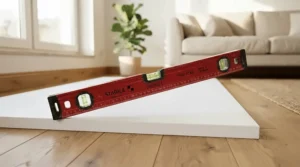
Whatever tray you choose, the bathroom flooring options surrounding it need to genuinely complement its material and height. Low-profile 25mm trays like the Mira Flight Level sit closest to a near-flush finish with tiled floors, which is exactly why they’re popular in wet room-style bathrooms where a seamless look matters. Taller 50mm trays like the Merlyn MStone create a more defined step, which some buyers actually prefer for visually separating the wet zone from the rest of the room.
Porcelain and ceramic tiling remain the most popular surrounding floor choice in UK bathrooms because they’re fully waterproof and pair well with any tray height, while engineered vinyl and luxury vinyl tile (LVT) flooring have grown in popularity for their warmer underfoot feel — though LVT does need a genuinely well-sealed junction where it meets the tray edge to avoid water ingress over time. Underfloor heating, increasingly common in UK renovations, pairs particularly well with stone resin trays, since the denser material retains a small amount of ambient warmth better than thin acrylic does.
Common Mistakes When Buying a Shower Tray
The single most common mistake is measuring the shower enclosure rather than the actual usable floor space once skirting, tiling thickness, and wall panelling are accounted for — a discrepancy of even 10mm can mean a tray doesn’t fit. A close second is choosing a tray height without checking existing pipework clearance beneath the floor; a 25mm ultra-slimline tray simply won’t work if your waste pipe needs 90mm of fall to drain properly.
Buyers also frequently underestimate installation labour costs when comparing acrylic against stone resin — a heavier tray like the Merlyn MStone may need two installers rather than one, which affects your total project budget beyond the sticker price. Finally, many people choose finish purely from a showroom sample under bright lighting, then find the same textured slate effect looks noticeably darker under typical bathroom lighting at home.
Long-Term Cost and Maintenance
| Tray | Price Range | Guarantee | Best For Long-Term Value |
|---|---|---|---|
| Mira Flight | Around £130-£220 | 5-10 years | Short-to-medium ownership |
| NES Home Slim | Under £150 | 25 years (stated) | Budget-conscious wet rooms |
| Kudos Kstone | £160-£350 range | Lifetime | Family bathrooms, daily use |
| Merlyn MStone | £290-£660 range | Lifetime | Forever-home installations |
Interpreting the table above, the lowest sticker price doesn’t always win on cost-per-year: a Mira Flight replaced once in fifteen years can end up costing more in labour and re-tiling than a Merlyn MStone bought once and left alone. For anyone in a genuinely long-term home, stone resin’s lifetime guarantee effectively insures against the single biggest hidden cost in bathroom renovation — having to redo the tiling around a failed tray.
Maintenance costs stay low across every option on this list provided you avoid harsh abrasives; a simple non-abrasive bathroom cream cleaner, applied weekly, is sufficient for gloss and matt finishes alike, and costs a few pounds a month at most — genuinely negligible against the tray’s purchase price either way.
Safety, Regulations and Accessibility Compliance
UK shower trays sold for domestic use are expected to meet BS EN 14527, the European performance standard for shower trays covering load-bearing capacity, surface quality, and waste connection integrity — worth checking a product explicitly references this standard if durability is your top priority. For accessible and level-access bathroom projects specifically, Building Regulations Approved Document M sets out clearance dimensions and drainage fall requirements that directly affect which trays, including options like the AKW Low Profile, will actually be compliant in a registered adaptation.
Beyond formal regulation, simple household safety measures matter just as much: fitting grab rails, choosing textured or slip-resistant finishes, and ensuring adequate bathroom lighting all reduce fall risk meaningfully, particularly for older residents or anyone recovering from injury or surgery.

Frequently Asked Questions
❓ Is a stone resin shower tray better than acrylic?
❓ How thick should a slimline shower tray be?
❓ Can you cut a stone resin shower tray to size?
❓ Are stone resin shower trays slippery when wet?
❓ How much does a stone resin shower tray cost in the UK?
Conclusion
Choosing between a slimline and stone resin shower tray ultimately comes down to matching material to household reality rather than chasing the lowest price tag or the glossiest showroom finish. If you’re renovating on a tight budget or fitting solo, the Mira Flight or NES Home Slim offer genuinely sensible starting points. If your bathroom sees heavy daily traffic from a busy family, the Kudos Kstone and Merlyn MStone justify their higher cost through resilience and guarantee length. And if accessibility or hard water resistance is the priority, the AKW Low Profile and Aquadart Luxury Black Slate Effect solve those specific problems better than a generic all-rounder ever could.
Whichever you choose, the underlying lesson holds: “slimline” and “stone resin” aren’t opposing camps so much as two variables — height and core material — that increasingly overlap in well-engineered hybrid trays. Measure your space properly, check your subfloor, and buy for the household you actually have rather than the one in the brochure photo.
Recommended for You
- Slimline Shower Tray: 7 Best Picks for UK Bathrooms (2026)
- Shower Enclosure Under £300: 7 Best Value Picks for 2026 UK
- Bi-Fold Shower Enclosure: 7 Best Budget Picks for UK Homes (2026)
Disclaimer: This article contains affiliate links. As an Amazon Associate, I earn from qualifying purchases. If you purchase products through these links, we may earn a small commission at no additional cost to you.
✨ Found this helpful? Share it with your friends! 💬🤗
