In This Article
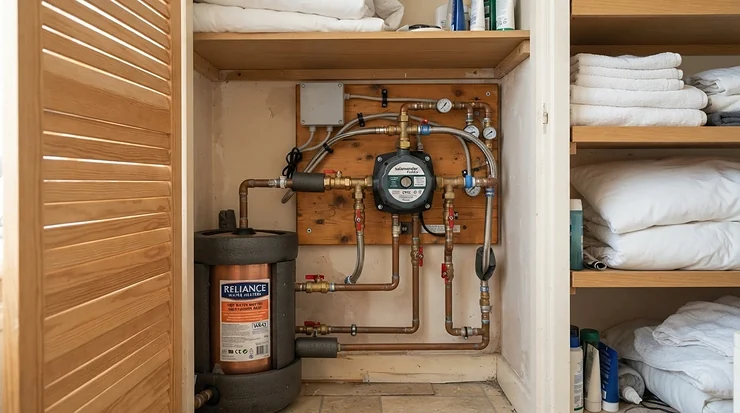
A weak shower is a small tragedy that repeats every morning. You stand there, shampoo cooling on your head, while a thin stream of water apologises for itself. If your home has a loft tank feeding the taps, a pump is the usual cure. But the single impeller vs twin impeller shower pump decision is where plenty of buyers go wrong, because the two designs boost different things. One pushes a single feed. The other pushes hot and cold together. Choose badly and you get lukewarm roulette, a motor that whines like a dentist’s drill, or a pump that flatly refuses to start.
So this guide goes beyond a shopping list. Alongside seven real models, you’ll get plain-English explanations of impeller design, positive vs negative head, and the often-overlooked business of hot and cold balancing. That last one decides whether your shower feels smooth or sulky. Manufacturer guidance from Grundfos UK frames the basic split neatly. Single impeller pumps are generally used to boost one supply, such as cold water feeding a combi or unvented cylinder. Twin impeller pumps lift hot and cold together to a single outlet.
A quick note on method. I haven’t used these pumps myself, so you won’t find invented “I fitted it in my bathroom” stories here. What you will find is analysis built on manufacturer data sheets, UK retailer listings and aggregated review scores, plus an honest admission where reliable reviews don’t exist. Prices are ranges only and they move around. Stock on Amazon UK changes too, so check the current listing before you buy. 🚿
Quick Comparison: Single Impeller vs Twin Impeller Shower Pump at a Glance
Here’s the whole debate on one screen before we dig in.
| Feature | Single impeller | Twin impeller |
|---|---|---|
| What it boosts | One feed: hot, cold or mixed | Hot and cold together |
| Hot and cold balancing | Depends on the other side already being strong | Built in, as both sides are lifted equally |
| Typical home | Mains-fed cold with weak hot (or the reverse) | Fully gravity-fed hot and cold |
| Head options | Positive head or universal (negative head) | Positive head or universal (negative head) |
| Price range in this guide | Around £250–£350 | Around £110–£750 |
| Best for | Grundfos SSR2-2.0 CN, Salamander CT Force 20SU | Stuart Turner Showermate Eco 1.5 bar, Stuart Turner Monsoon Universal U2.0 |
Read across the table and the pattern is plain. Twin pumps are the default for gravity-fed homes because they lift both supplies together, which is why Stuart Turner Showermate Eco 1.5 bar and Stuart Turner Monsoon Universal U2.0 suit most loft-tank houses. Single pumps such as Grundfos SSR2-2.0 CN earn their keep only when one side is already strong, typically mains-fed cold against sluggish hot. If you’re unsure, count the feeds reaching your shower valve: two weak feeds almost always point to a twin.
💬 Just one click — help others make better buying decisions too!😊
Top 7 Shower Pumps: Single Impeller vs Twin Impeller Shower Pump Analysis
Five twins and two singles, spread across budget, mid-range and premium. Every spec below is followed by what it means in practice.
1. Stuart Turner Showermate Eco 1.5 bar — cheapest sensible twin for loft-tank homes
Its trump card is a gentle start-up. This pump wakes on a flow of roughly 0.8 litres a minute, which helps if your loft tank delivers a lazy trickle.
The 1.5 bar closed-head rating works out, per the data sheet, to about 1.1 bar at 9 litres a minute and 0.6 bar at 18. That’s enough to lift a standard handset or a modest fixed head, though not a rainfall rose with ambitions. The plastic body keeps costs down, and the intermittent rating tells you it’s built for showers rather than all-day whole-house duty. Listings quote about 52 dB(A) of noise.
Based on the spec comparison, this suits a single shower in a gravity-fed house where you want a positive head shower pump that boosts both feeds equally without paying brass prices. Because it’s a twin, hot and cold balancing is handled by design rather than luck. That’s exactly what a manual or thermostatic mixer wants.
On review sentiment, I couldn’t verify a deep model-specific pool. Across the wider Showermate positive-head listings at one UK plumbing retailer, scores sat between 4.8 and 5.0, but from only 15–33 ratings each. That’s encouraging but thin.
Pros:
- ✅ Starts on very low flow
- ✅ Isolation-valve hoses and anti-vibration feet included
- ✅ WRAS-approved and compact
Cons:
- ❌ Plastic build with intermittent duty rating
- ❌ Positive head only, three-year guarantee
Price range: roughly £120–£180, which is good value for a standard shower, but check current price.
2. Grundfos STR2-1.5 C — big-brand reassurance at a budget price
Grundfos is a name plumbers recognise, and this twin brings that pedigree down to entry-level money.
The Grundfos STR2-1.5 C is a twin impeller regenerative pump rated at 1.5 bar for positive head systems. In practice, 1.5 bar suits a single shower with a 100–120 mm head, the match retailer sizing charts typically give. Push it toward a large rain head or body jets and you’ll want 2.0 bar or more.
What the spec sheet won’t tell you is how much a recognisable brand matters later. Spares, installer familiarity and documentation are usually easier with an established manufacturer. That’s a practical advantage when a seal wears out in year six. I couldn’t verify a noise figure in the listings I reviewed, so check the data sheet if your airing cupboard backs onto a bedroom.
For review sentiment, one UK plumbing retailer showed 4.9 from 16 ratings and another showed a perfect score. That reads as satisfied buyers, but sixteen opinions isn’t a mountain of evidence.
Pros:
- ✅ Twin design keeps hot and cold evenly boosted
- ✅ Established manufacturer with easy-to-find support
- ✅ Strong early ratings, albeit small sample
Cons:
- ❌ Positive head only
- ❌ Fewer published performance figures than rivals
Price range: around £110–£150, which is cracking value if your head measurement qualifies. Check current price.
3. Salamander CT Force 20PT — brass-built workhorse for bigger heads
Brass ends and a brass impeller give this pump a reassuringly heavy-duty feel for the money.
The 2.0 bar closed-head rating drops to about 1.7 bar at 8 litres a minute, according to one retailer’s specification. That headroom matters if you want a wide fixed head to feel properly generous. The motor is rated at 580W, and a ten-minute shower therefore uses roughly 0.1 kWh. Noise is quoted at 54 dB(A), so it’s not the quietest, but a pump mat helps. Salamander lists a five-year guarantee and continuous rating, which makes this a sturdier proposition than plastic budget twins.
Here’s the honest analysis. The Salamander CT Force 20PT is the sensible middle path for a family bathroom in a gravity-fed house: a twin, so balancing is taken care of, with brass for longevity. The trade-off is noise, which is more noticeable than on centrifugal designs.
Review evidence is limited. One retailer listed only two reviews, so I can’t responsibly summarise sentiment. The five-year guarantee is the more reliable confidence signal.
Pros:
- ✅ Brass ends and impeller
- ✅ Continuous rating with five-year guarantee
- ✅ 2.0 bar handles larger shower heads
Cons:
- ❌ Louder than centrifugal rivals
- ❌ Positive head only
Price range: roughly £280–£420 depending on retailer. Good value for brass, but check current price.
4. Salamander RP50PT — the quiet one, on paper
If your pump lives near a bedroom wall, this is the one to shortlist.
The Salamander RP50PT uses a centrifugal rather than regenerative design. Salamander claims it generates just 45.5 dB(A), citing independent Salford University testing, and calls it the quietest twin-ended plastic shower pump on the UK market. That is a manufacturer claim, so treat it as directional. One installer on a DIY forum felt real-world noise differences between brands were small, and that fits with installation quality mattering as much as the label. Salamander also says centrifugal pumps are more flow-efficient, a point I’ll unpack in the impeller design section below.
At 1.5 bar, this is a twin for positive head systems and a modest shower. It’s best for a single bathroom where silence beats raw power. Some listings bundle an anti-vibration mat, which is worth having whichever pump you buy.
On reviews, I couldn’t find enough verifiable feedback on this exact model to summarise honestly. The case for it rests on the data sheet and the design logic, not crowd sentiment.
Pros:
- ✅ Lowest claimed noise in this guide
- ✅ Centrifugal design aimed at efficiency
- ✅ Twin impeller balances hot and cold
Cons:
- ❌ Positive head only
- ❌ Little verifiable owner feedback
Price range: typically above budget plastic twins, so check current price. Fair value if quiet is your priority.
5. Stuart Turner Monsoon Universal U2.0 — premium twin that conquers loft conversions
This is the “it just works almost anywhere” option. The universal designation means it runs on both positive and negative head systems.
The Stuart Turner Monsoon Universal U2.0 has a brass body and impeller, a 2.0 bar maximum head, about 1.5 bar at 9 litres a minute and 1.1 bar at 18. Per the manufacturer, it doesn’t need a gravity flow to start. It’s continuously rated, carries a five-year guarantee, and the data sheet lists typical noise at 52 dB(A). It also uses a short run-on timer, which keeps the pump going for three seconds after the valve closes so the pipework settles. That makes it a flexible choice for an en suite squeezed under a roof, or a bathroom where you may later add outlets.
My analytical take: you’re paying for certainty. A negative head shower pump setup is unforgiving, and this removes the head-measurement gamble entirely.
Review sentiment is the strongest here. The wider Monsoon range scored 4.9 from 251 ratings at one UK plumbing retailer. A smaller set of reviews on this exact model praised quiet running and installation flexibility, though that’s only four reviews.
Pros:
- ✅ Works in positive or negative head systems
- ✅ Brass construction, continuously rated
- ✅ Five-year guarantee and strong range reviews
Cons:
- ❌ Premium price
- ❌ Bulkier and heavier than plastic twins
Price range: from the mid-£500s to over £700 depending on retailer. Expensive, but cheaper than fitting the wrong pump twice. Check current price.
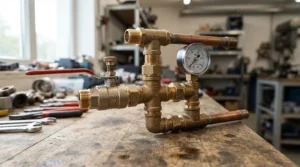
6. Salamander CT Force 20SU — brass single impeller with universal head
Here the standout feature is selective power. It’s a single impeller pump that works on positive or negative head, with brass ends and impeller.
The 2.0 bar rating suits boosting one feed to a decent shower. Most single-pump installs pump the hot side while the cold already arrives at good pressure, as in a mains-fed cold supply. This Salamander CT Force 20SU is built for that job. It’s also the model to consider if hot and cold feeds sit too far apart for one twin pump, as retailers like Anchor Pumps point out that two singles can then be used.
Now the hot and cold balancing caveat. A single pump only fixes the side it serves. If the unpumped feed is weak too, your valve sees mismatched pressures and temperature swings follow. So treat this as a surgical tool, not a general-purpose upgrade.
I couldn’t verify meaningful review sentiment for this specific model, so I won’t pretend otherwise. Its appeal rests on construction and application fit.
Pros:
- ✅ Universal head compatibility
- ✅ Brass ends and impeller
- ✅ Ideal for boosting a single weak feed
Cons:
- ❌ Boosts one feed only
- ❌ Priced close to some twin pumps
Price range: around £300–£350. Fair value only if your plumbing really suits a single. Check current price.
7. Grundfos SSR2-2.0 CN — single impeller for mixed supplies
The headline is simplicity. This is a single impeller regenerative pump with universal head capability, from a manufacturer that explicitly positions single pumps for boosting cold to combi or unvented systems.
At 2.0 bar, the Grundfos SSR2-2.0 CN suits a single shower rather than a whole-house build. It’s typically a lower-cost route to a pressure boost than a twin, so long as your installation is a genuine one-feed problem. One retailer showed a 4.8 out of 5 score, which suggests satisfied buyers, though I couldn’t confirm the review count.
Regulation context matters here. A listing for another Stuart Turner pump carries an advisory that pumps must not be connected directly to the mains water supply, and the same principle runs through UK water fittings rules. If your supply is mains-fed, a qualified installer should confirm the correct arrangement, such as a break tank, before you buy any pump.
On balance, this is a targeted fix for mains-cold, weak-hot homes. It isn’t the right pick for fully gravity-fed hot and cold, where a twin wins.
Pros:
- ✅ Universal head compatibility
- ✅ Lower cost than twin brass alternatives
- ✅ Manufacturer clearly defines its single-feed role
Cons:
- ❌ Boosts one feed only
- ❌ Needs correct installation context for mains supplies
Price range: around £230–£270. Decent value for the right plumbing. Check current price.
Top 7 Comparison Table
| Product | Impeller | Head | Max bar | Noise | Price range | Best for |
|---|---|---|---|---|---|---|
| Stuart Turner Showermate Eco 1.5 bar | Twin | Positive | 1.5 | 52 dB(A) | £120–£180 | Budget single shower |
| Grundfos STR2-1.5 C | Twin | Positive | 1.5 | Not verified | £110–£150 | Brand-conscious budget |
| Salamander CT Force 20PT | Twin | Positive | 2.0 | 54 dB(A) | £280–£420 | Brass durability |
| Salamander RP50PT | Twin | Positive | 1.5 | 45.5 dB(A) claimed | Check listing | Quiet bathrooms |
| Stuart Turner Monsoon Universal U2.0 | Twin | Universal | 2.0 | 52 dB(A) | £550–£750+ | Loft conversions |
| Salamander CT Force 20SU | Single | Universal | 2.0 | Not verified | £300–£350 | One-feed boosting |
| Grundfos SSR2-2.0 CN | Single | Universal | 2.0 | Not verified | £230–£270 | Mixed supplies |
The table tells a story about value. If your head measurement clears the threshold, Grundfos STR2-1.5 C and Stuart Turner Showermate Eco 1.5 bar deliver the cheapest route to a balanced twin shower. If you’re in a loft conversion, Stuart Turner Monsoon Universal U2.0 justifies its premium because it removes the guesswork. Meanwhile Salamander CT Force 20SU and Grundfos SSR2-2.0 CN only make sense when you genuinely have a one-feed problem, so don’t buy them just because they’re cheaper than a twin.
✨ Don’t Miss These Exclusive Deals!
🔍 Take your bathroom to the next level with these carefully selected pumps. Click on any highlighted product to check current pricing and availability. The right pump will turn a trickle into the kind of shower your family actually fights over! 🚿
Practical Usage Guide: Setting Up Your Shower Pump Without Drama
Amazon listings won’t tell you this, but most pump problems are installation problems wearing a disguise. Here’s the sequence I’d follow, with a plumber for anything involving the water supply.
- Measure first. Work out the distance between the base of the cold tank and the highest point after the pump. Manufacturers use 600 mm as the line. Some installers recommend a margin beyond that, so don’t buy a positive head pump if you’re borderline.
- Check natural flow. Positive head pumps rely on water flowing to trigger their switches. Requirements vary by model, with one Salamander guide citing 2 litres a minute and the standard Stuart Turner Showermate listing 0.8.
- Give it dedicated feeds. Aeration is the great noise-maker. Salamander advises taking CT-range feeds from the first downward leg, with the hot taken via an approved flange.
- Isolate vibration. Use the supplied flexible hoses, a dense foam mat and properly clipped pipework. Rattles often come from loose pipes, not the pump.
- Check tank capacity. Salamander’s guidance cites minimum usable cold capacity of 50 gallons per bathroom.
- Notify your water supplier. Many pump installs require advance notice, which the WRAS guidance on pump notification explains.
In the first 30 days, listen for changes in sound, check joints for weeps, and note whether temperature stays steady. A stable shower in week one is a good sign your hot and cold balancing is right.
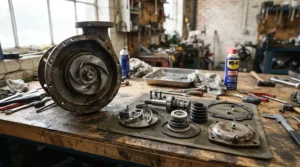
Real-World Scenarios: Which Pump Fits Which Home?
Here are three buyer profiles, matched with reasoning rather than guesswork.
Scenario 1: The Victorian terrace family. First-floor bathroom, loft tank well above the shower, two growing teenagers. Both feeds are gravity-fed and the head clears 600 mm comfortably. A positive head shower pump in twin form is the obvious route. The budget pick is Stuart Turner Showermate Eco 1.5 bar. If the family wants a larger head and a longer-lasting build, Salamander CT Force 20PT gives brass and more pressure.
Scenario 2: The loft-conversion en suite. The shower sits barely below, or even beside, the cold tank. A positive head model may simply fail to start here. This is negative head territory, and Stuart Turner Monsoon Universal U2.0 is the safer, if pricier, answer. It’s a twin, so hot and cold balancing stays intact, and it doesn’t rely on gravity flow to start.
Scenario 3: The mixed-supply house. Cold arrives at strong mains pressure while hot comes weakly from a vented cylinder. A single pump on the hot side can bring the two closer. Grundfos SSR2-2.0 CN is the lower-cost candidate and Salamander CT Force 20SU the brass alternative. Because the cold stays strong, a single is justified here, though an approved plumber should confirm the arrangement.
The pattern: head measurement picks positive or negative, and the feed count picks single or twin.
Problem to Solution: Fixing Common Shower Pump Headaches
Problem: temperature swings mid-shower. This is the classic hot and cold balancing failure. A single pump on a two-feed gravity system lifts one side only, so the valve gets mismatched pressures. The solution is a twin, or confirming the other feed is genuinely strong.
Problem: the pump won’t start. On a positive head shower pump, the usual suspects are insufficient head or insufficient natural flow. Re-measure the distance, check outlet flow, and consider a universal pump if the maths is marginal.
Problem: buzzing or grinding. Aeration is the prime suspect. Salamander’s guidance links buzzing to air entering the pump and a gravelly sound to severe aeration, so check flanges and dedicated feeds.
Problem: rattling. Look at loose pipework and rigid connections. Anti-vibration hoses and a mat usually calm things down.
Problem: the pump starts by itself. On a negative head shower pump, this can point to a leak in the pressurised pipework between pump and outlet, as Salamander notes. Don’t ignore it. Find the leak.
What Is a Single Impeller vs Twin Impeller Shower Pump?
A single impeller vs twin impeller shower pump comes down to how many water feeds each can boost. A single impeller pump has one pumping chamber and lifts one supply: hot, cold or mixed. A twin impeller pump has two chambers on one motor and boosts hot and cold together, so both sides of your mixer arrive at matching pressure.
That’s the headline, but the practical detail matters. In a twin, hot and cold enter and exit from opposite ends of the pump, and the two supplies are pushed at the same rate. In a single, there’s one inlet and one outlet. Screwfix notes singles are most often used to pump hot water to a mixer that already has cold mains pressure.
Twin impeller pumps are described by several UK retailers as the more common choice in modern homes. That makes sense: most British gravity-fed homes have two weak feeds, not one. Think of it like rowing. A twin is two rowers pulling in time. A single is one rower, which is fine if the other is already a gym rat and a disaster if both are asleep.
Impeller Design Explained: Regenerative, Peripheral and Centrifugal
Impeller design is the quiet engineering story behind the noise and efficiency claims you see on listings. The impeller is the spinning component that adds pressure, and shower pumps use two broad approaches.
Regenerative pumps (also sold as peripheral) whip water around the rim of the impeller, and a stripping block removes it. Salamander explains this stripping action produces a different noise character from centrifugal pumps. The Salamander CT Force 20PT, Grundfos STR2-1.5 C and Stuart Turner Monsoon Universal U2.0 all fall into this broad family.
Centrifugal pumps fling water outwards, raising pressure inside the chamber. Salamander says its Right range, including the Salamander RP50PT, is quieter and more flow-efficient than regenerative designs. Anchor Pumps makes a similar case, describing centrifugal models as built from higher-quality components with longer lifespans.
Here’s the sceptical bit. Real-world noise depends on the motor, vibration and aeration too, and one installer on a DIY forum argued the gap between brands is small. So impeller design is a useful clue, not a verdict.
Material matters as much. Brass impellers, as in Stuart Turner Monsoon Universal U2.0, generally signal heavier-duty intent than plastic ones, though plastic can be perfectly fine for intermittent domestic use, as with Stuart Turner Showermate Eco 1.5 bar.
Hot and Cold Balancing: Why It Decides Shower Quality
Hot and cold balancing is simply the idea that both feeds reaching your mixer valve should be at similar pressure. When they are, the valve can blend smoothly. When they aren’t, the stronger side bullies the weaker one, and you get the shower equivalent of a seesaw.
This is the real reason the single impeller vs twin impeller shower pump choice matters. A twin lifts both feeds equally, so a gravity-fed home keeps its balance. Mira’s buying and fitting guide notes that thermostatic mixer showers work best with twin impeller pumps, and that singles are usually used to boost hot water when cold is mains-fed.
The edge case is the mixed supply. Strong mains cold and weak gravity hot is unbalanced from the start, and a single pump on the hot side tries to close the gap. Guides differ on exactly how much imbalance a valve tolerates, so check your valve’s data sheet and have an approved plumber confirm the cold side doesn’t also need regulating.
Practical test: open the shower fully hot, then fully cold. If flow changes dramatically between the two, you’ve diagnosed a balancing problem, not a pump problem. A mismatched single pump will make it worse, while a correctly chosen twin usually smooths it out.
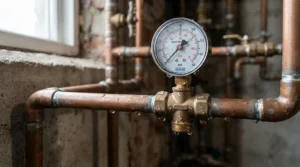
Positive vs Negative Head: The 600 mm Rule Explained
Positive vs negative head is the second great fork in the road, and it’s independent of single or twin. It describes how much gravity helps you.
Positive Head Shower Pump
A system is positive head when the shower sits more than 600 mm below the base of the cold water tank. Water then flows naturally, and that flow is what triggers the pump’s flow switches. A positive head shower pump only works under these conditions, and manufacturers specify a minimum start flow. Positive head pumps are widely described as the most common in British homes, and they tend to be cheaper, as with Stuart Turner Showermate Eco 1.5 bar and Grundfos STR2-1.5 C.
Negative Head Shower Pump
A negative head shower pump, also called universal, is needed when the tank is within 600 mm of the shower or below it. Loft conversions are the classic case. These pumps pressurise the pipework between pump and outlet and detect valve opening via a pressure switch, rather than relying on gravity flow. They work in positive head systems too, so if you’re unsure, a universal pump is the safer choice, as Salamander’s own guidance says. Some restrictive outlets, such as body jets, may also call for one. Stuart Turner Monsoon Universal U2.0, Salamander CT Force 20SU and Grundfos SSR2-2.0 CN all fit here.
The trade-off: universal pumps cost more, and a leak can make them restart on their own. Measure carefully, then decide.
How to Choose a Single Impeller vs Twin Impeller Shower Pump
Follow these six steps in order.
- Count your feeds. Two weak gravity feeds mean a twin. One weak feed against a strong one suggests a single.
- Measure your head. More than 600 mm from tank base to the highest outlet allows a positive head shower pump. Less means a negative head shower pump (universal).
- Check your valve type. Mixer and thermostatic showers want balanced feeds, which favours twins. Electric showers don’t need a pump at all, as Mira points out.
- Match the bar rating to the outlet. A retailer sizing guide suggests 1.5 bar for a single shower with a 100–120 mm head, 2.0 bar for a small bathroom with similar heads, and 3.0 bar for multiple bathrooms, 150 mm heads or body jets.
- Consider noise and location. If the pump sits near a bedroom, favour lower-noise designs such as Salamander RP50PT and add a mat.
- Weigh warranty and duty rating. Brass, continuous-rated pumps with five-year guarantees, like Salamander CT Force 20PT, suit heavier use than intermittent plastic ones.
Notice that bigger isn’t automatically better. A pump that pushes more flow also drains your hot cylinder faster. Based on the arithmetic alone, a 12 litre-a-minute shower over eight minutes uses about 96 litres of mixed water, so higher bar can mean a shorter shower, not a better one.
Common Mistakes When Buying a Single Impeller vs Twin Impeller Shower Pump
Mistake 1: buying a single for a two-feed gravity shower. It’s cheaper, so it tempts. But it unbalances the valve, and the temperature swings arrive within days.
Mistake 2: skipping the head measurement. Plenty of buyers eyeball it. A positive head pump on a borderline system may not start, and that’s an expensive lesson. Some installers suggest allowing margin beyond 600 mm.
Mistake 3: assuming more bar is better. More pressure means more water, faster. A 3.0 bar pump on a 100 mm head is overkill, and your hot water will disappear.
Mistake 4: ignoring installation noise. Pumps get blamed for buzzing that actually comes from air, loose pipes or no vibration mat.
Mistake 5: connecting straight to mains. Pumps of this type are for vented gravity systems, and some listings carry explicit advisories against direct mains connection. A mains-fed home needs professional advice on an appropriate arrangement.
Mistake 6: forgetting notification. The rules around pumps are real, and the WRAS guidance covered earlier is the place to start.
Each of these mistakes is avoidable with ten minutes of measuring and one honest look at your plumbing.
Long-Term Cost and Maintenance: What a Pump Really Costs You
Purchase price is only chapter one. Longer guarantees, tougher materials and duty ratings all shape what you’ll really spend. Compare Stuart Turner Showermate Eco 1.5 bar (three-year guarantee, plastic, intermittent rating) with Stuart Turner Monsoon Universal U2.0 (five years, brass, continuous rating). If the cheaper pump needs replacing once in the time the premium one runs, the gap narrows.
Electricity is modest. A 580W motor, like the one listed for Salamander CT Force 20PT, uses roughly 0.1 kWh across a ten-minute shower. The larger cost is hot water, because stronger flow uses more of it.
| Option | Boosts | Upfront cost | Main drawback |
|---|---|---|---|
| Twin impeller pump | Hot and cold | Mid to high | Needs correct head type |
| Single impeller pump | One feed | Low to mid | Can unbalance a two-feed system |
| Electric shower | Neither (self-contained) | Varies | Limited temperature and flow in some homes |
| Do nothing | Nothing | Zero | The weak shower stays |
The table shows why twins dominate gravity-fed homes: they solve balancing and boosting together. A single is the specialist’s tool, while an electric shower sidesteps the pump question entirely, as Mira notes. Doing nothing is free right up until you’ve spent a year showering in disappointment.
Maintenance is straightforward. Listen for changes in noise, check joints for weeps, keep strainers clear where fitted, and don’t run the pump dry.
Safety, Regulations and Compliance: What UK Homeowners Should Know
Pumps interact with the public water supply rules, so a few points matter. Under regulation 5 of the Water Supply (Water Fittings) Regulations 1999, a pump or booster drawing more than 12 litres a minute, connected directly or indirectly to a supply pipe, requires prior notification to the water supplier. WRAS guidance explains this applies to pumps capable of delivering more than 12 litres a minute, including a shower supplied through a pump. Many domestic shower pumps can exceed that figure on paper. The data sheet for Stuart Turner Showermate Eco 1.5 bar, for instance, lists a maximum flow of 32 litres a minute.
If no response comes back from the supplier, consent is deemed granted, but the installer or occupier still has to make sure the installation fully complies. WRAS-approved products and approved plumbers are the sensible route. Look for WRAS approval, as listed for Stuart Turner Showermate Eco 1.5 bar and the Stuart Turner Monsoon range.
Two practical safety points: keep the hot connection through an approved method, and never connect these pumps directly to mains water. If you’re anywhere near the edge of what you understand, bring in an approved plumber. A pump is a small appliance with a large legal and hygiene footprint.
FAQ
❓ Can I use a twin impeller shower pump with an electric shower?
❓ Is a twin impeller shower pump noisier than a single?
❓ Can I swap a single impeller pump for a twin later?
❓ Do I need a negative head shower pump for a loft en suite?
❓ Does a higher bar rating always mean a better shower?
Conclusion
So, single impeller vs twin impeller shower pump: who wins? For most British gravity-fed homes, the twin. It lifts hot and cold together, protects your hot and cold balancing, and keeps the shower steady. The single is the specialist, best reserved for homes with one strong feed and one weak one.
Then comes the second decision. Measure your head and choose a positive head shower pump above 600 mm, or a negative head shower pump (universal) below it. Get that wrong and no amount of brass or bar rating will save you.
My shortlist, based on specs and aggregated review signals, runs like this. Stuart Turner Showermate Eco 1.5 bar and Grundfos STR2-1.5 C are the budget twins for straightforward positive head systems. Salamander CT Force 20PT is the brass mid-range option, and Salamander RP50PT is the quiet specialist, subject to its manufacturer-claimed figures. Stuart Turner Monsoon Universal U2.0 is the premium answer for awkward loft conversions. Salamander CT Force 20SU and Grundfos SSR2-2.0 CN are for genuine one-feed problems only.
Measure twice, notify your water supplier, and book an approved plumber for anything involving the supply. Then enjoy a shower that finally behaves. 🚿
Recommended for You
- Shower Pump For Low Pressure: 7 Best Picks For UK Homes (2026)
- Extra Long Shower Hose 2m: 7 Best Picks For UK Homes (2026)
- Anti-Kink Shower Hose: 7 Best Tangle-Free Picks For UK Homes (2026)
Disclaimer: This article contains affiliate links. As an Amazon Associate, I earn from qualifying purchases. If you purchase products through these links, we may earn a small commission at no additional cost to you.
✨ Found this helpful? Share it with your friends! 💬🤗
