In This Article
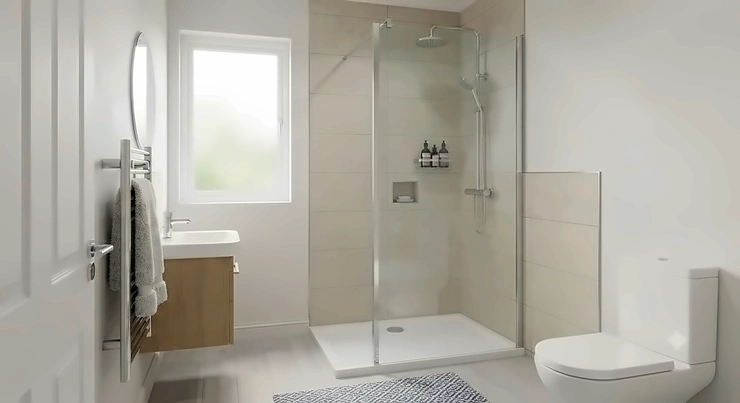
A walk-in shower enclosure for small bathroom spaces is basically an exercise in optical illusion — you’re trying to make a room the size of a large wardrobe feel like a proper wash space, and the trick almost always comes down to the glass. A walk-in shower enclosure is a fixed or semi-fixed glass screen (usually one or two panels) that creates a showering zone without the bulky frame, curtain rail, or swinging door of a traditional cubicle. What it doesn’t do is eat visual space, which is exactly why it’s become the default choice for boxrooms, ensuites, and awkward loft conversions across the UK.
I’ve spent the last few weeks digging through real product listings, manufacturer spec sheets, and genuine buyer feedback to work out which enclosures actually earn their keep in a compact bathroom — not which ones look best in a showroom photo shot from six feet back. Below you’ll find seven real products, honestly compared, with the boring-but-important details (glass thickness, wall tolerances, support bar length) explained in plain English. If you’ve ever stood in a bathroom with a tape measure feeling faintly despairing, this one’s for you.
We’ll cover sizing, glass thickness, single-panel versus L-shaped setups, and how a walk-in enclosure fits into a wider bathroom renovation budget — plus which mistakes cost people the most money after the tiler’s already gone home.
Quick Comparison Table
| Category | Top Pick | Standout Feature | Best For |
|---|---|---|---|
| Budget | ELEGANT 700mm Wet Room Shower Screen Panel | NANO self-clean coating | Tiny ensuites and cloakrooms |
| Corner conversion | ELEGANT 900mm Walk-In Shower Panel with 300mm Flipper Panel | L-shaped return panel | Replacing an old corner bath |
| Design-led finish | Hudson Reed 760mm Framed Wetroom Screen | Matt black frame, 5-year guarantee | Renovations with a design budget |
| Space-saving door | Royal Bathrooms Milan 1000 x 800mm Sliding Door Enclosure | No swing clearance required | Showers next to a doorway |
| Compact cubicle | Royal Bathrooms 700 x 700mm Hinged Pivot Enclosure | True four-sided corner shape | Boxroom bathrooms |
On paper, this looks like a straightforward “pick your budget” table, but the real decision usually hinges on door clearance rather than price. A single fixed panel like the ELEGANT 700mm Wet Room Shower Screen Panel works almost anywhere because there’s nothing to swing open, whereas a hinged option like the Royal Bathrooms 700 x 700mm Hinged Pivot Enclosure needs a genuine gap in front of it. If your bathroom door already eats into the floor space, a sliding design such as the Royal Bathrooms Milan 1000 x 800mm Sliding Door Enclosure solves two problems in one purchase.
💬 Found a favourite already? Tap through to check current pricing before it changes!
Top 7 Walk-In Shower Enclosures for Small Bathrooms: Expert Analysis
Coverage here spans genuine budget, mid-range, and premium territory, plus single-panel, L-shaped, hinged, and sliding configurations — because “small bathroom” rarely means one single layout problem.
1. ELEGANT 700mm Wet Room Shower Screen Panel — best budget single-panel pick for tiny bathrooms
The standout here is the price-to-certification ratio: you’re getting genuinely tested safety glass without paying a design-brand premium. The panel uses 8mm toughened safety glass certified to BS EN 12150, the British and European standard covering fragmentation and impact resistance for glass used in buildings — worth knowing, because “toughened” gets thrown around loosely by less scrupulous sellers. A chrome-plated stainless steel support bar braces the panel at an adjustable angle, and there’s a 20mm wall tolerance either side, which matters more than most buyers realise (more on that in the dimensions section below).
This is squarely a first-time renovator’s pick, or a landlord refreshing a rental ensuite on a fixed budget. Reviewers consistently report that the NANO self-clean coating genuinely reduces limescale streaking compared with older, uncoated glass they’d previously owned, though several note the coating’s effectiveness fades gradually if you’re in a hard-water area and skip a squeegee routine.
Pros:
- ✅ 8mm toughened glass certified to BS EN 12150
- ✅ NANO self-clean coating cuts down on limescale marks
- ✅ Reversible door orientation fits left- or right-hand layouts
Cons:
- ❌ 700mm width feels tight for anyone over roughly six feet
- ❌ Matching stone tray is sold as a separate bundle option
At around £110-£160 depending on whether you bundle the shower tray, this is one of the strongest value plays in the entire line-up — check current price for the latest bundle deals.
2. AICA 800mm Walk-In Wet Room Shower Screen — best value NANO-coated glass
What immediately stands out is the sheer range of height options — 1850mm, 1950mm, or 2000mm — which lets you match ceiling proportions instead of settling for a one-size-fits-all screen that looks slightly stumpy in a period property with high ceilings. The 8mm EasyClean glass carries both BS EN 12150 and CE certification, and every fixing screw is stainless steel rather than the cheaper plated steel some budget screens use, which matters in a room that’s permanently damp.
Based on the spec comparison with rival budget panels, the universal left- or right-hand fitting is the quiet hero feature here: it means you’re not locked into a specific bathroom layout before you’ve even measured the alcove. Buyers who should care most are people converting a small box room where the door position isn’t fixed yet, since this panel adapts rather than dictating the layout.
Pros:
- ✅ Height options from 1850mm up to 2000mm
- ✅ Chrome or matt black frame to match existing fittings
- ✅ Stainless steel screws resist long-term corrosion
Cons:
- ❌ Shower tray isn’t included, adding to the total spend
- ❌ Review volume is thinner than some longer-established brands
Price sits in the £90-£140 range, making it one of the cheapest ways to get genuinely certified glass into a small bathroom — check current price and available heights before ordering.
3. Hudson Reed 760mm Framed Wetroom Screen — best matt black designer finish
The standout feature is the single-sided “Shower Shield” coating, which Hudson Reed applies specifically to combat limescale rather than relying on a generic anti-glare treatment. Paired with 8mm toughened glass and a genuinely deep matt black aluminium frame (not just a black-tinted chrome), this reads far more like a boutique hotel fitting than a budget wetroom panel — and the 5-year manufacturer’s guarantee against manufacturing defects backs that positioning up.
Here’s what the spec sheet won’t tell you outright: the black grid pattern sits on the inside face of the glass, so you’ll feel a slight texture when wiping it down from inside the shower, not a flat sheet of glass. That’s a deliberate design choice, not a flaw, but it’s worth knowing before you commit if you were expecting a completely smooth surface. This is the pick for anyone treating the shower screen as a genuine design statement rather than a purely functional barrier — think renovations where matt black taps and brassware are already specified.
Pros:
- ✅ Shower Shield coating actively resists limescale build-up
- ✅ 5-year manufacturer’s guarantee for genuine peace of mind
- ✅ Matt black frame reads as a real design feature, not an afterthought
Cons:
- ❌ Sits at the pricier end of the single-panel category
- ❌ Tray and waste are sold separately, adding to the final bill
Expect to pay in the £180-£260 range depending on width and support bar finish — check current price, as Hudson Reed bundles change seasonally.
4. ELEGANT 900mm Walk-In Shower Panel with 300mm Flipper Panel — best L-shaped corner configuration
This one earns its standout tag through geometry rather than glass quality: the 300mm flipper panel folds in at roughly 180 degrees to create a genuine L-shaped enclosure, which is the single most effective way to convert an old corner bath footprint into a walk-in shower without extending the room. The main 900mm panel and smaller return panel share the same 8mm easy-clean NANO glass and aluminium support bar system as ELEGANT’s single-panel range, so you’re not sacrificing build quality for the extra flexibility.
What most buyers overlook about L-shaped configurations is that they need a genuinely square corner to work properly — a slightly out-of-true wall (common in older houses) can leave a visible gap unless you budget for a bit of make-good plastering first. Reviewers who fitted this after removing an old bath consistently mention that the combined footprint feels noticeably more open than the tub it replaced, even though the actual floor area used is often similar.
Pros:
- ✅ L-shaped layout adds genuine corner coverage via the return panel
- ✅ Aluminium support bar keeps the whole structure rigid
- ✅ Works particularly well replacing an old corner bath
Cons:
- ❌ Two-panel design takes noticeably longer to install than one screen
- ❌ Needs a genuinely square corner recess to seal properly
Price ranges around £150-£190 for the panel set, tray excluded — check current price for tray bundle options.
5. Royal Bathrooms 700 x 700mm Hinged Pivot Walk-In Enclosure — best compact corner cubicle
The standout advantage is the true four-sided footprint: unlike a fixed screen that leaves one side of the shower area open to the room, this hinged pivot design with a side panel creates an actual enclosed cubicle at just 700 x 700mm — genuinely one of the smallest complete footprints available. The door pivots rather than slides or hinges outward on a full arc, so the swing radius is smaller than a standard hinged door, though it’s still worth measuring the clearance in front.
Based on the spec comparison against fixed-panel alternatives, the trade-off here is glass thickness: this model uses 6mm tempered glass rather than the 8mm standard elsewhere in this line-up, which keeps weight and price down but means a slightly less rigid feel when the door’s in use. Reviewers who’ve owned it in small guest bathrooms report it holds up fine under normal domestic use, with the caveat that it’s not the choice for a household with boisterous children who tend to slam doors.
Pros:
- ✅ Compact 700 x 700mm footprint suits boxrooms and ensuites
- ✅ Hinged pivot door gives a genuine sealed-cubicle feel
- ✅ Pearlstone shower tray available as a matching bundle
Cons:
- ❌ 6mm glass is thinner than most 8mm rivals in this guide
- ❌ Door swing still needs some clearance many tiny bathrooms lack
At roughly £140-£190 for the panel-and-door set, this is a strong option where floor space genuinely can’t stretch any further — check current price and tray bundle availability.
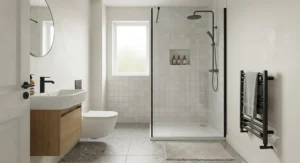
6. AICA 700mm Walk-In Shower Screen Matt Black — best premium matt black single panel
What sets this apart from AICA’s own chrome equivalents is purely the finish: the same certified 8mm safety glass (BS EN 12150 and CE marked) housed in a matt black polished frame that’s become the go-to choice for anyone matching contemporary black taps, shower heads, and door handles elsewhere in the room. Universal left- or right-hand fitting means it slots into either side of an alcove without needing a mirror-image product line.
On paper, the spec sheet reads almost identically to AICA’s chrome range, but here’s what it won’t tell you: dark frames show water spots and dried droplets more visibly than polished chrome, simply because there’s more visual contrast. That’s not a manufacturing flaw, it’s physics, and it means a slightly more frequent wipe-down routine if you want that boutique-hotel look to last. Buyers who should care most are those doing a full black-hardware renovation rather than retrofitting a single panel into an otherwise chrome bathroom.
Pros:
- ✅ Matt black polished frame matches contemporary black brassware
- ✅ BS EN 12150 and CE certified 8mm safety glass
- ✅ Universal fitting works for left- or right-hand layouts
Cons:
- ❌ Dark frames show water spots faster than chrome finishes
- ❌ Costs noticeably more than AICA’s standard chrome equivalents
Expect a price range of roughly £110-£160 — check current price, as AICA runs frequent seasonal promotions on finish colour.
7. Royal Bathrooms Milan 1000 x 800mm Sliding Door Enclosure — best space-saving sliding door
The genuinely clever feature here is the sliding mechanism itself: because the door glides along a track rather than swinging outward, it needs zero clearance in front of the enclosure, which solves the single biggest space problem in small bathrooms — the dead zone a hinged door demands. The 6mm easy-clean safety tempered glass and matt black finish give it a premium, boutique feel, and the reversible fitting means the track can sit on either side depending on your alcove.
Here’s what most buyers overlook about sliding enclosures: the track itself needs periodic cleaning, since hair and soap residue collect in the channel far more readily than on a fixed panel with no moving parts. Reviewers who’ve lived with sliding enclosures for a year or more consistently flag this as the one maintenance task fixed-panel owners don’t have to think about — a fair trade, most agree, for not losing floor space to a swinging door.
Pros:
- ✅ Sliding door needs zero swing clearance, ideal for tight layouts
- ✅ Matt black finish gives a high-end, boutique-hotel look
- ✅ Reversible fitting suits either side of the room
Cons:
- ❌ 1000 x 800mm footprint is the largest option in this guide
- ❌ Sliding track needs periodic cleaning to keep it running smoothly
Price sits toward the premium end at roughly £220-£320 — check current price, particularly around seasonal bathroom sale periods.
Top 7 Products at a Glance
| Product | Width | Glass Thickness | Price Range | Best For |
|---|---|---|---|---|
| ELEGANT 700mm Wet Room Shower Screen Panel | 700mm | 8mm | £110-£160 | Budget-first renovations |
| AICA 800mm Walk-In Wet Room Shower Screen | 800mm | 8mm | £90-£140 | Value-focused buyers |
| Hudson Reed 760mm Framed Wetroom Screen | 760mm | 8mm | £180-£260 | Design-led finishes |
| ELEGANT 900mm Walk-In Shower Panel with 300mm Flipper Panel | 900mm + 300mm | 8mm | £150-£190 | Corner bath conversions |
| Royal Bathrooms 700 x 700mm Hinged Pivot Enclosure | 700 x 700mm | 6mm | £140-£190 | Boxroom bathrooms |
| AICA 700mm Walk-In Shower Screen Matt Black | 700mm | 8mm | £110-£160 | Matt black hardware schemes |
| Royal Bathrooms Milan 1000 x 800mm Sliding Door Enclosure | 1000 x 800mm | 6mm | £220-£320 | Doorway-adjacent showers |
Lined up side by side, the pattern is clear: 8mm glass dominates the mid-range, while 6mm appears mainly on hinged or sliding designs where the moving mechanism, not the glass, carries most of the structural load. If budget is the only factor, the AICA 800mm Walk-In Wet Room Shower Screen wins on pure value, but anyone converting an awkward corner should look straight past price and toward the ELEGANT 900mm Walk-In Shower Panel with 300mm Flipper Panel or the compact Royal Bathrooms 700 x 700mm Hinged Pivot Enclosure instead.
Walk-In Enclosure Dimensions: What Actually Fits a Small Bathroom
The number that matters most isn’t the panel width printed on the box — it’s the clear space you’ll actually stand in once the panel, support bar, and any return panel are accounted for. As a general guide, official sizing guidance for level access showers recommends a minimum usable footprint of around 900mm x 900mm for comfortable, safe use, which is worth treating as a floor rather than an aspiration in a genuinely small room.
A few practical rules worth applying before you order anything:
- Measure the narrowest point of your intended alcove, not the widest — older walls are rarely perfectly parallel.
- Add the wall adjustment tolerance (usually 15-20mm) to your minimum required width, not on top of the panel’s stated size.
- Account for the support bar’s mounting angle; it typically needs 900mm of unobstructed wall or ceiling space to brace against.
- If fitting a hinged or pivot door, measure door swing separately from the enclosure footprint itself.
- For L-shaped or flipper-panel setups, confirm the corner is genuinely square before ordering — a 5mm-out corner can cause real fitting headaches.
Single panel walk-in shower dimensions are usually the most forgiving to work with precisely because there’s only one measurement to get right, which is why so many of the tightest bathrooms in this guide end up with a fixed 700mm or 760mm screen rather than a multi-panel design.
How to Choose a Walk-In Shower Enclosure for a Small Bathroom
Getting this right comes down to working through a short, deliberate checklist rather than picking whatever looks best online.
- Measure twice, in two directions. Confirm both the width and the depth of your available recess, plus ceiling height if you’re choosing between the 1850mm, 1950mm, and 2000mm options many brands offer.
- Decide on configuration before finish. Single panel, L-shaped flipper, hinged pivot, or sliding door each solve a different space problem — pick the shape first, then worry about chrome versus matt black.
- Check the glass thickness against the door type. Fixed single panels can comfortably use 6mm or 8mm glass; anything with a moving hinge benefits from the extra rigidity of 8mm.
- Confirm the wall adjustment tolerance. A 20mm tolerance range gives real fitting flexibility in an older property where walls are rarely dead straight.
- Factor in the tray separately. Several of the panels in this guide are sold without a tray, so budget for that as its own line item rather than assuming it’s bundled.
- Think about cleaning realistically. NANO or Shower Shield coatings genuinely reduce limescale, but only if you’re prepared to keep up a basic squeegee routine afterward.
- Match the frame finish to existing fittings. Chrome, matt black, and brushed brass all read very differently once tiled around, so check swatches against your actual tile choice, not a screen photo.
Single Panel Walk-In Shower vs Multi-Panel & Compact Enclosures
A single panel walk-in shower is, structurally, the simplest thing you can buy: one sheet of toughened glass, one support bar, done. That simplicity is precisely why it dominates the budget end of this market — fewer parts means fewer potential leak points and a genuinely quicker fitting job, often achievable in half a day by a competent DIYer or a couple of hours for a professional.
Where a compact walk-in shower panel starts to show its limits is splash control. With no return panel and no door, water can migrate further into the room than most people expect, particularly with a powerful mixer shower rather than a gentler electric unit. This is exactly the gap that L-shaped flipper configurations and hinged pivot cubicles fill — they trade a slightly more involved install for meaningfully better containment.
What most buyers overlook is that the “best” choice here genuinely depends on your existing floor gradient and drain position, not personal taste. A single fixed panel over a shower tray with built-in fall works beautifully; the same panel over a flat wet room floor without careful tanking can send water wandering toward the bathroom cabinet. If in doubt, a tray-based single panel remains the safer default for a first-time small bathroom renovation.
Glass Panel Thickness Explained: 6mm vs 8mm vs 10mm
Glass panel thickness is one of those specs that gets listed without explanation more often than almost any other feature in this category, so here’s the practical version.
Six-millimetre glass is the entry point for genuinely toughened safety glass and is common on hinged, pivot, and sliding doors, where the frame and track carry a meaningful share of the structural load. It’s lighter, which makes moving parts easier to operate smoothly over years of daily use, but it flexes very slightly more underhand pressure than thicker options.
Eight-millimetre glass is the sweet spot for fixed single panels and most mid-range enclosures in this guide. It feels noticeably more solid to the touch, resists the faint “give” some 6mm panels exhibit, and is the thickness most UK bathroom brands default to once you’re spending above roughly £100.
Ten-millimetre glass appears mostly at the premium end and on larger uninterrupted panels, where extra rigidity matters more because there’s no return panel or door frame helping to brace the sheet. All the glass featured in this guide meets BS EN 12150, the British and European standard covering toughened safety glass fragmentation behaviour — worth checking for on any product you’re considering, since it’s the baseline guarantee that the glass will break into small, blunt fragments rather than dangerous shards if it ever fails.
Practical Usage Guide: Setting Up & Maintaining Your Enclosure
Getting a walk-in shower enclosure fitted correctly, and keeping it looking good afterward, comes down to a handful of habits most people only learn after getting something wrong once.
During installation, silicone sealant matters more than most buyers expect — a thin, uneven bead around the base is the single most common cause of slow leaks reported in aggregated review feedback across every brand in this guide. Allow the full cure time printed on the sealant tube (typically 24 hours) before the first proper shower, not just a quick test splash.
In the first thirty days, resist the temptation to scrub the glass with anything abrasive; NANO and Shower Shield coatings are genuinely delicate at the microscopic level, and a rough cloth or gritty cleaner can strip the coating’s effectiveness within a few uses. A simple squeegee after every shower, followed by a weekly wipe with a mild vinegar-and-water solution, keeps limescale from ever building up enough to need a harsher chemical clean.
Ongoing maintenance is genuinely minimal for fixed panels: an occasional check of the silicone seal for cracking, and re-tightening the support bar’s wall bracket if it develops any play. Sliding and hinged designs need slightly more attention — clean the track or hinge mechanism every few weeks to stop hair and soap scum from causing that telltale grinding resistance reviewers mention when maintenance gets neglected.
Real-World Scenarios: Matching an Enclosure to Your Bathroom & Budget
If you’re a first-time landlord refreshing a rental ensuite on a tight timeline, the ELEGANT 700mm Wet Room Shower Screen Panel makes sense — certified glass, straightforward fitting, and a price point that doesn’t eat into your rental yield calculations.
If you’re renovating a family bathroom and removing an old corner bath, the ELEGANT 900mm Walk-In Shower Panel with 300mm Flipper Panel solves the geometry problem directly, converting that awkward corner footprint into genuine showering space without extending the room’s walls.
If you’re finishing a design-led loft ensuite where matt black brassware is already specified, either the Hudson Reed 760mm Framed Wetroom Screen or the AICA 700mm Walk-In Shower Screen Matt Black will read as a cohesive part of the scheme rather than a mismatched afterthought — the Hudson Reed edges ahead on guarantee length, the AICA on price.
And if your bathroom door swings directly into the space where a hinged shower door would also need to swing, the Royal Bathrooms Milan 1000 x 800mm Sliding Door Enclosure is close to the only sensible answer — it’s the one configuration in this guide that removes the swing-clearance problem entirely.
Common Mistakes When Buying a Walk-In Shower Enclosure
The most frequent error, based on recurring themes in aggregated review feedback, is buying the panel before finalising the tray. Trays and panels aren’t always sold as a genuinely matched pair, and a mismatch in width can leave an ugly gap or an impossible fitting job.
The second is ignoring wall adjustment tolerance entirely. A panel advertised as 700mm rarely fits an exact 700mm gap — the 15-20mm tolerance range exists precisely because walls are never perfectly true, and buyers who measure to the millimetre and expect a flush fit are often disappointed.
Third, people underestimate splash zones with powerful mixer showers. A single fixed panel that would comfortably contain a gentle electric shower can let a high-pressure mixer send water noticeably further into the room — worth testing mentally against your actual shower type, not a generic assumption.
Fourth, and this one costs real money later: skipping the support bar’s wall-fixing quality check. A support bar screwed into unreinforced plasterboard rather than a solid stud or proper wall plug will loosen within months, and re-fixing it after tiling is far more disruptive than getting it right the first time.
Walk-In Shower vs Traditional Enclosed Cubicle
| Factor | Walk-In Enclosure | Traditional Enclosed Cubicle |
|---|---|---|
| Visual space | Feels more open, minimal frame | Frame and door reduce sightlines |
| Cleaning | Fewer seals and tracks to maintain | More frame joints collect grime |
| Splash containment | Depends on configuration and shower type | Generally better, fully enclosed |
| Accessibility | Naturally step-free with a low-profile tray | Often has a raised threshold |
| Typical install time | Faster for single-panel designs | Slower due to multiple frame sections |
The genuine trade-off is containment versus openness: a fully enclosed cubicle with sliding or bifold doors on all sides will always splash less than an open walk-in panel, but it also visually shrinks a small bathroom in a way glass alone doesn’t. For most small UK bathrooms, the accessibility and visual-space gains of a walk-in enclosure outweigh the marginally increased splash risk, provided the tray and floor gradient are fitted correctly.
Minimalist Bathroom Design: Making the Enclosure the Centrepiece
A minimalist bathroom design lives or dies on how few visual interruptions the eye has to process, and a walk-in shower enclosure is one of the few fittings that can genuinely disappear into a scheme rather than dominate it. Fixed panels with slim, low-profile support bars — like the chrome bar on the AICA 800mm Walk-In Wet Room Shower Screen — read as almost invisible against plain tiling, letting the tile or wall finish do the visual work instead of the hardware.
Where minimalism can backfire in a small bathroom is over-committing to an all-glass, all-white scheme with zero contrast; the enclosure edges become genuinely hard to see, which is a real trip hazard for older residents or young children. A single matt black frame, such as the one on the Hudson Reed 760mm Framed Wetroom Screen, solves this by adding just enough definition to mark the shower’s edge clearly without cluttering the room with extra visual detail.
Reviewers consistently note that pairing a minimal glass panel with a low-profile stone resin tray, rather than a raised acrylic one, does more for the “bigger room” illusion than almost any other single decision in a small bathroom renovation.
Bathroom Renovation: Budgeting, Timeline & Where the Enclosure Fits
Within a wider bathroom renovation, the shower enclosure typically represents a relatively modest slice of the total spend — often somewhere in the £150-£400 range once tray, waste, and sealant are included, against a full small-bathroom renovation that commonly runs into several thousand pounds once tiling, plumbing, and labour are factored in. That’s worth knowing before you agonise over an extra £50 on glass thickness while the tiling budget dwarfs it.
Timeline-wise, a straightforward single-panel enclosure fitted over an existing tray can realistically be a half-day job for an experienced fitter, while an L-shaped flipper configuration or a full wet room conversion with new tanking and floor gradient will typically add one to two full days. If you’re applying for support with an accessible bathroom conversion, it’s worth knowing that the government-run Disabled Facilities Grant can help cover the cost of a level access shower for eligible applicants, which changes the budgeting calculation considerably for anyone adapting a home for a family member’s mobility needs.
Sequencing matters too: order your enclosure and tray before final tiling begins, not after, since exact tile cuts around the panel’s fixing points are far easier to plan in advance than to retrofit once the walls are finished.
Long-Term Cost & Maintenance: Total Cost of Ownership
| Cost Factor | Budget Panel (e.g. ELEGANT/AICA range) | Premium Panel (e.g. Hudson Reed/Milan range) |
|---|---|---|
| Upfront price range | £90-£190 | £180-£320 |
| Expected lifespan | 8-12 years with proper care | 12-15+ years, better coatings |
| Ongoing cleaning products | Standard glass cleaner + squeegee | Coating-safe cleaner recommended |
| Resale/renovation value impact | Neutral to modest positive | More noticeable positive impact |
Looking at total cost of ownership rather than sticker price alone, a premium panel with a genuine anti-limescale coating and longer manufacturer’s guarantee can work out cheaper over a decade than repeatedly replacing a budget panel whose coating has worn off and whose support bar has started to corrode. That said, for a rental property or a genuinely short-term fix, the lower upfront cost of a budget panel is still the more rational choice — the maths only favours premium once you’re planning to stay put for the long haul.
🔍 Compare current prices across every product in this guide before your bathroom fitter arrives!
Safety, Building Regulations & Compliance for Walk-In Showers
All the glass featured in this guide is toughened safety glass certified to BS EN 12150, which is the baseline any UK shower panel should meet — always check for this marking on the product page before buying from an unfamiliar brand. Beyond the glass itself, electrical safety around any shower is governed by UK wiring regulations, so any electric shower unit fitted alongside a new enclosure should be installed or signed off by a qualified, Part P-registered electrician.
For households adapting a bathroom for a family member with mobility needs, it’s worth knowing that VAT relief and grant support genuinely exist for accessible bathroom conversions — Age UK’s guidance on home adaptations explains eligibility clearly and is a sensible first stop before committing to a specific product or contractor. Beyond formal grants, simple safety additions like a grab rail or a slightly wider, step-free tray cost relatively little at the point of installation but add real long-term value if a household’s needs change over time.
Frequently Asked Questions
❓ What size walk-in shower enclosure do I need for a small bathroom?
❓ Is a single panel walk-in shower enough for a small bathroom?
❓ How much does a walk-in shower enclosure cost in the UK?
❓ What glass thickness is best for a walk-in shower screen?
❓ Can I fit a walk-in shower enclosure without a wet room?
Conclusion
Choosing a walk-in shower enclosure for small bathroom projects really comes down to solving one specific space problem well, rather than chasing the most feature-packed option on the page. If floor space is your only constraint, a single fixed panel like the ELEGANT 700mm Wet Room Shower Screen Panel or the AICA 800mm Walk-In Wet Room Shower Screen gets you certified, good-looking glass without unnecessary complexity. If you’re wrestling with an awkward corner, the ELEGANT 900mm Walk-In Shower Panel with 300mm Flipper Panel earns its keep. And if door clearance is the real enemy, the Royal Bathrooms Milan 1000 x 800mm Sliding Door Enclosure solves a problem no fixed panel ever could.
None of these seven products are the “best” in some universal sense — they’re each the right answer to a slightly different bathroom. Measure carefully, be honest about your splash-containment needs, and budget for the tray as its own line item, and whichever you choose should genuinely earn its place in the room for a decade or more.
✨ Don’t Miss These Exclusive Deals!
🔍 Take your small bathroom renovation to the next level with these carefully selected enclosures. Click on any highlighted product to check current pricing and availability, and turn a cramped bathroom into a space that actually feels bigger every time you step in.
Recommended for You
- Walk-In Shower Enclosure vs Enclosed Shower: 7 Honest Picks 2026
- Sliding Door Shower Enclosure for Small Bathroom: 7 Best Picks 2026
- Quadrant vs Sliding Shower Enclosure: 7 Top Picks for 2026
Disclaimer: This article contains affiliate links. As an Amazon Associate, I earn from qualifying purchases. If you purchase products through these links, we may earn a small commission at no additional cost to you.
✨ Found this helpful? Share it with your friends! 💬🤗
