In This Article
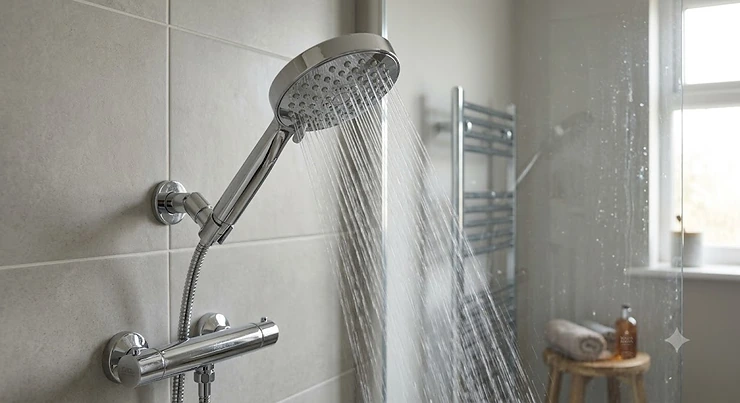
Right, let’s address the elephant in the bathroom: if you’re standing under a dribble that couldn’t rinse shampoo out of a doll’s hair, you almost certainly have a gravity fed system, and you almost certainly bought the wrong shower head at some point. It happens to nearly everyone with an older UK house. You pop to the shops, grab whatever’s shiny and reduced, fit it, and discover it performs exactly like the sad trickle it replaced — because standard shower heads are designed for mains pressure, not the modest push your loft tank provides.

A shower head for gravity fed system isn’t a gimmick category invented to sell you something new. It’s a genuine engineering distinction. These heads use wider waterways, aerating nozzles, or Venturi-style air injection to make a low, steady flow feel stronger without needing a single extra litre from your tank. Get the wrong one and you’ll be standing there twice as long for half the rinse. Get the right one and that same weak supply suddenly feels like something worth getting out of bed for.
Over the next few thousand words, we’re going to walk through seven genuinely available options — from budget aerating heads under £20 to full pumped power showers pushing past £150 — plus the buying logic, the common mistakes, and the maintenance tricks nobody tells you when you buy off a shelf. All of this is built on real specifications and aggregated review sentiment, not invented hands-on stories, because a gravity fed system deserves an honest answer, not marketing fluff.
What Is a Shower Head for Gravity Fed System?
A shower head for gravity fed system is a showerhead engineered to perform well on the low, height-dependent pressure produced by a loft cold water tank and airing cupboard cylinder, typically below 1 bar, using wide-bore waterways or air-mixing nozzles to boost perceived flow without extra water use.
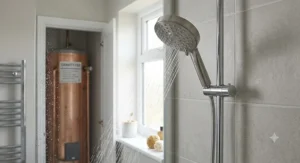
Roughly every metre of head height between tank and shower gives you about 0.1 bar, which is why two houses with identical tanks can have completely different shower experiences depending on loft height alone.
Quick Comparison Table
| Product | Type | Min. Pressure | Best For |
|---|---|---|---|
| Mira Response | Fixed/handheld multi-spray | 0.4 bar | Budget-friendly reliable upgrade |
| Grohe Tempesta 100 | Fixed 4-spray head | 1.0 bar (rec.) | Compact bathrooms, sleek design |
| Aqualisa Aquastream | Pumped power shower | Gravity-only, pump boosts | Strongest flow on very low head height |
| Triton T90SR | Pumped electric shower | 0.08m head (min) | Combined heating + pressure fix |
| OFFO 6 Modes Showerhead | Handheld aerating head | Low-pressure rated | Multiple spray modes on a budget |
| Y-Home H05015 | Handheld oxygenation head | Designed for gravity fed | Strongest budget flow boost |
| MEKO Hard Water Filter Head | Filtered handheld head | Low-pressure compatible | Hard water areas wanting filtration |
Looking across this line-up, there’s a clear split between passive flow-boosting heads (Mira Response, Grohe Tempesta 100, OFFO 6 Modes Showerhead, Y-Home H05015, MEKO Hard Water Filter Head) that reshape the spray to make existing pressure feel stronger, and active pumped units (Aqualisa Aquastream, Triton T90SR) that physically add pressure with an internal pump. If your loft tank sits high above the bathroom and gives you a reasonable trickle already, a passive head is usually enough and far cheaper. If your head height is under a metre or you’re getting genuinely miserable flow, you’ll likely need to budget for a pumped unit instead.
Ready to stop showering in slow motion? Check today’s prices on these gravity fed favourites below.
Top 7 Shower Heads for Gravity Fed Systems: Expert Analysis
1. Mira Response — trusted British brand, works from 0.4 bar
The Mira Response has quietly become the default recommendation UK plumbers reach for when a customer complains about weak flow on a tank-fed system, and there’s a good reason for that reputation. Mira’s own fitting documentation for the Response range lists a minimum maintained pressure of 0.4 bar, which sits comfortably within what a modest loft tank height can deliver, and the four spray patterns give you a rain setting for washing hair and a firmer massage setting for rinsing off soap without adjusting anything upstream.
What most buyers overlook about this model is that the curved neck design, while occasionally criticised for wrist comfort during extended use, actually improves the angle of water delivery on low-pressure setups by directing flow more directly downward rather than dispersing it sideways where pressure is already limited. Based on the spec comparison with pricier alternatives, the Mira Response doesn’t do anything flashy — no filtration, no app, no LED — but it does the fundamental job of a gravity fed replacement head properly, which is more than can be said for a lot of “high pressure” heads that assume mains input.
Reviewers consistently report that the Mira Response noticeably improved flow on systems previously fed by an ageing head with clogged nozzles, with several specifically flagging its effectiveness on gravity fed setups. A smaller but recurring theme is that the pronounced curve of the neck isn’t to everyone’s taste ergonomically, and one buyer noted it felt heavier than expected for a plastic-bodied unit.
Pros:
- ✅ Verified 0.4 bar minimum pressure, genuinely low-pressure rated
- ✅ Trusted, long-established British shower brand
- ✅ Four spray patterns cover both rinsing and hair-washing needs
Cons:
- ❌ Curved neck design feels awkward to some users’ wrists
- ❌ No filtration for hard water areas
At around £20-£30, the Mira Response is close to unbeatable value for a first attempt at fixing weak gravity fed flow, and it’s the sensible starting point before spending on anything pumped.
2. Grohe Tempesta 100 — German engineering, four proper spray modes
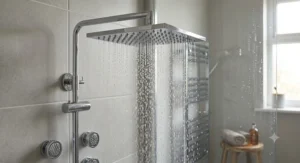
The Grohe Tempesta 100 takes a slightly different approach to the low-pressure problem: rather than one dramatic pressure-boosting gimmick, it relies on Grohe’s DreamSpray internal engineering to distribute water evenly across all nozzles regardless of how modest the incoming flow is. The listed specification shows a 9.5 litres per minute flow rate with EcoJoy technology and a minimum operating pressure of 1 bar, which puts it slightly higher up the pressure requirement ladder than some of the heads on this list — worth checking your tank height against before buying.
Here’s what to weigh: the 1 bar recommendation isn’t a hard cut-off in the way an electric shower’s minimum flow rate is, but it does mean buyers with genuinely feeble gravity fed pressure (say, under 0.5 bar) may find the Rain O² spray setting underwhelming compared with the punchier Jet mode. What the spec sheet won’t tell you, but the wider Tempesta range documentation notes, is that the hand shower version specifically recommends a 12mm bore hose and at least 1.0 bar for low pressure installs, so pairing it with the correct hose matters more here than on some competitors.
Reviewers of the Tempesta range regularly praise the SpeedClean anti-lime nozzles, which reduce the flow-choking limescale buildup that quietly wrecks performance on gravity fed systems in hard water regions over time. The build quality and finish consistently draw favourable comment as being noticeably more premium than the price suggests.
Pros:
- ✅ DreamSpray technology gives even flow distribution at low pressure
- ✅ SpeedClean nozzles resist limescale, protecting long-term flow
- ✅ Compact 100mm head suits smaller bathrooms and boxed showers
Cons:
- ❌ 1 bar recommended minimum is higher than some rivals
- ❌ Best paired with a wider-bore hose for genuinely low-pressure homes
In the £25-£40 range, the Grohe Tempesta 100 rewards buyers whose loft tank gives at least moderate head height, offering noticeably better build quality and limescale resistance than budget alternatives at a similar price.
3. Aqualisa Aquastream Thermostatic Power Shower — integrated pump for genuinely weak systems
When a passive flow-boosting head simply isn’t enough — say your tank sits barely a metre above the shower — the Aqualisa Aquastream solves the problem differently by physically adding pressure rather than reshaping existing flow. It’s designed specifically for gravity systems, with an integrated booster pump delivering what Aqualisa markets as true power shower performance, complete with a 90mm Harmony head offering four spray patterns.
On paper this means you’re no longer at the mercy of tank height at all within reason — the pump does the heavy lifting, and the unit includes an eco spray setting delivering up to 25% water saving for anyone conscious about the extra energy a pump draws. Based on the spec comparison with passive heads on this list, the trade-off is installation complexity and price: this is a full thermostatic power shower unit with its own electrical supply, not a simple head swap, so it typically needs a qualified installer.
Aggregated feedback on Aqualisa’s power shower range consistently highlights the pump noise as noticeably quieter than older generations of power showers, alongside praise for the separate flow and temperature dials which make fine adjustment straightforward for shared households. A recurring caveat in installation-focused reviews is that the unit must be sited correctly relative to the cold water cistern for the pump to prime properly.
Pros:
- ✅ Integrated pump solves genuinely inadequate head height, not just weak flow
- ✅ Separate flow and temperature controls for precise adjustment
- ✅ Eco spray setting offsets the running cost of the pump
Cons:
- ❌ Requires professional installation and an electrical supply
- ❌ Significantly pricier than a simple head replacement
Expect to pay in the £150-£220 range installed, which is a real jump from a head swap, but for genuinely inadequate tank height it’s often the only option that actually fixes the problem rather than papering over it.
4. Triton T90SR — pumped electric shower built for low-head cisterns
The Triton T90SR approaches gravity fed weakness from the electric shower angle rather than the mixer valve angle, and it’s explicit about its intended use: Triton’s own product page describes it as designed to work with a cold water cistern and states it will boost the water pressure of low pressure gravity fed supplies via an integrated pump, with a minimum head requirement measured in centimetres rather than metres thanks to the built-in booster.
What most buyers overlook here is that a pumped electric shower does two jobs simultaneously — heating cold-tank water on demand and boosting the pressure that drives it — which can actually work out cheaper overall than fitting a separate mixer shower plus a standalone shower pump, since you’re paying for one unit and one installation rather than two. Reviewers specifically flag the T90SR’s quiet running compared with older pumped Triton units, and installers note that it’s a straightforward swap for anyone already running an older T90-series shower thanks to matching fixing points.
Aggregated customer sentiment is broadly positive on reliability, though a genuine and repeated caveat worth flagging honestly: this unit must be fed from a cistern, never connected directly to mains cold water, so it’s specifically the wrong choice for anyone on a combi boiler or unvented system — a mix-up that shows up repeatedly in installation troubleshooting threads.
Pros:
- ✅ Combines water heating and pressure boosting in one unit
- ✅ Minimum head requirement measured in centimetres, not metres
- ✅ Easy Prime pump function avoids fiddly bleeding on first use
Cons:
- ❌ Must be cistern-fed only — unsuitable for mains/combi systems
- ❌ Requires a qualified electrician for installation
Priced typically in the £150-£250 range depending on kW rating, the Triton T90SR earns its keep for anyone replacing an ageing pumped electric shower rather than starting from a plain mixer valve.
5. OFFO 6 Modes Showerhead — six spray patterns via micro-nozzle technology
Moving back to simple, affordable head swaps, the OFFO 6 Modes Showerhead takes the micro-nozzle route to boosting perceived pressure, using what the manufacturer describes as Bernoulli principle-based micro-nozzle technology to boost water pressure, specifically marketed as ideal for low-pressure systems, paired with a wide 130mm head for thorough coverage during hair washing.
Here’s the honest caveat worth stating plainly: independent testers note that gravity fed households specifically may still need to adjust mounting height for optimal results, since micro-nozzle designs boost velocity rather than volume, and no nozzle geometry can fully compensate for a genuinely inadequate head height. What the spec sheet won’t tell you is that the tool-free G1/2 fitting means this is one of the easiest heads on this list to test and return if it doesn’t suit your particular tank height — useful when you’re not sure how your specific setup will respond.
The six adjustable spray patterns switch via a smooth button rather than a twist mechanism, which testers describe as noticeably more durable than the twist-rings found on cheaper rivals that tend to seize with limescale over time. The ABS chrome-finish construction resists corrosion reasonably well according to aggregated feedback, though the anti-silicone nozzles do require occasional manual cleaning in hard water regions.
Pros:
- ✅ Six spray patterns via a durable button mechanism
- ✅ Wide 130mm head aids full hair and body coverage
- ✅ Tool-free fitting, works with standard UK shower hoses
Cons:
- ❌ May still need height adjustment on very weak gravity fed setups
- ❌ No built-in hard water filtration
At a genuinely budget £15-£25, the OFFO 6 Modes Showerhead is a sensible low-risk first purchase for anyone unsure whether a passive head will solve their particular flow problem.

6. Y-Home H05015 — oxygenation system for a stronger-feeling spray
The Y-Home H05015 leans on an oxygenation approach rather than pure micro-nozzle restriction, using what’s described as a dual-flow track that regulates flow rate to deliver a strong shower experience even in gravity-fed systems, across four settings: Power Rain, Rain Massage, Power Massage, and Spray Mode.
Based on the spec comparison with simpler single-mode heads, the appeal of the H05015 is genuinely practical variety — Power Rain for a full wake-up-call sensation, Spray Mode for a gentler evening wind-down — switched through a control ring rather than a button, though some reviewers note the ring requires a firmer tug than expected, which feels less premium than the mechanism itself performs. What most buyers overlook is that MicroPorous technology is doing double duty here: it conserves water consumption while simultaneously being the mechanism that boosts perceived pressure, so you’re not trading efficiency for performance in the way older pressure-boosting designs often did.
Reviewer sentiment consistently rates this as a strong pick specifically for gravity fed and generally low-pressure homes, with testers noting its polished chrome finish looks noticeably more expensive than its actual price point suggests.
Pros:
- ✅ Four distinct spray modes suit different times of day
- ✅ Dual-flow oxygenation genuinely boosts perceived pressure
- ✅ Premium-looking finish despite budget pricing
Cons:
- ❌ Mode-switching ring needs a firmer tug than some rivals
- ❌ Fewer independent long-term durability reviews than established brands
Typically priced under £20, the Y-Home H05015 offers some of the strongest value on this list for anyone wanting real spray variety without spending on a pumped system.
7. MEKO Hard Water Filter Shower Head — filtration plus low-pressure compatibility
Rounding out the list is a genuinely different use case: households in hard water regions where limescale, rather than tank height, is quietly strangling flow over time. The MEKO Hard Water Filter Shower Head combines a 15-layer filtration system claimed to remove 99.99% of chlorine, heavy metals, and sediments, using activated carbon, ceramic balls, and vitamin C media, alongside standard compatibility with gravity fed and other UK household water systems.
What most buyers overlook about filtered heads generally is that removing sediment and scale-forming particles before they reach the nozzle doesn’t just improve water quality — it directly protects flow rate over the medium term, since scale buildup inside standard nozzles is one of the most common reasons a perfectly good gravity fed shower gradually gets weaker over eighteen months of use. Based on the spec comparison with non-filtered alternatives, the trade-off is that filter cartridges need periodic replacement, adding a small ongoing cost that simpler heads don’t carry.
Aggregated review sentiment is particularly positive around skin and hair feel after switching, a common theme across filtered shower head reviews generally, alongside praise for the thoughtful cartridge design that makes replacement straightforward without tools.
Pros:
- ✅ 15-layer filtration protects flow rate from long-term scale buildup
- ✅ Compatible across gravity fed and other common UK systems
- ✅ Widely praised for improving water feel in hard water regions
Cons:
- ❌ Filter cartridges require periodic replacement at extra cost
- ❌ Bulkier housing than a standard unfiltered head
Priced around £25-£35 including an initial filter cartridge, the MEKO Hard Water Filter Shower Head is the specific right answer for hard water households rather than a universal gravity fed fix.
Practical Usage Guide: Getting the Most From Your New Shower Head
Fitting any of the heads above takes ten minutes and a spanner at most, but there’s a right way to do it if you actually want gravity fed performance to improve rather than stay disappointingly familiar. First, clean the existing hose thread thoroughly before fitting — any residual limescale flakes from the old head can lodge in a new aerating nozzle within days and undo the improvement entirely. Second, wrap the thread in PTFE tape even if the head comes with a washer; gravity fed systems are unforgiving of tiny leaks because there’s so little pressure to spare in the first place.
During the first thirty days, the most common mistake is assuming a new head has “failed” when actually it simply needs the shower’s isolating valves fully opened — many gravity fed installations have a valve partially closed from a previous repair that nobody remembered to reopen. Check this before returning any product. On maintenance: aerating and micro-nozzle heads benefit from a monthly soak in diluted white vinegar to dissolve early-stage limescale before it restricts the tiny internal channels that do the pressure-boosting work; leave it for thirty minutes, then rinse and reattach.
Real-World Scenarios: Which Shower Head Suits Your Situation
Consider three fairly typical gravity fed households. A student renting an older terrace with a modest loft tank and a tight budget is generally best served by the OFFO 6 Modes Showerhead or Y-Home H05015 — both sit under £25, need no professional installation, and deliver a genuine, measurable improvement over a landlord-grade original head.
A family of four in a period property with a hard water postcode and a reasonably tall loft tank should lean toward the MEKO Hard Water Filter Shower Head or the Grohe Tempesta 100, since scale management matters as much as raw flow when several people are showering daily and nozzles clog faster.
A homeowner in a bungalow with minimal loft height — the classic worst-case gravity fed scenario, often under a metre of head — is the one genuine case where a passive head swap simply won’t be enough, and budgeting for the Aqualisa Aquastream or Triton T90SR pumped route is the honest recommendation rather than repeatedly trying cheaper heads that were never going to solve a physics problem.
How to Choose a Shower Head for Gravity Fed System
- Measure your head height first. Roughly every metre between tank base and shower head equals about 0.1 bar — a rough but genuinely useful starting calculation before spending any money.
- Check the stated minimum pressure rating. Anything above around 0.5-1 bar minimum may underperform on genuinely low gravity fed setups regardless of marketing claims.
- Decide passive versus pumped early. If your head height is comfortably over 1.5 metres, a passive aerating head like the Mira Response is likely sufficient; below that, budget for a pump from the outset.
- Match hose bore to head requirements. Some models, including the Tempesta range, specifically recommend a wider 12mm bore hose for genuinely low-pressure installs.
- Factor in hard water if relevant. A filtered option like the MEKO Hard Water Filter Shower Head protects your investment from scale-related flow decline over time.
- Weigh installation complexity honestly. Pumped units need an electrician or plumber; passive heads are a DIY ten-minute job.
- Read aggregated review sentiment, not star ratings alone. A 4.3-star average hides a lot; look specifically for mentions of gravity fed or low-pressure compatibility in the review text itself.
Top 7 Products Comparison
| Product | Price Range | Installation | Best For |
|---|---|---|---|
| Mira Response | £20-£30 | DIY head swap | Best all-round budget upgrade |
| Grohe Tempesta 100 | £25-£40 | DIY head swap | Style-conscious buyers with decent head height |
| Aqualisa Aquastream | £150-£220 | Professional install | Very low head height, whole-shower fix |
| Triton T90SR | £150-£250 | Electrician required | Replacing an old pumped electric shower |
| OFFO 6 Modes Showerhead | £15-£25 | DIY head swap | Lowest-risk first purchase |
| Y-Home H05015 | Under £20 | DIY head swap | Spray variety on a tight budget |
| MEKO Hard Water Filter Head | £25-£35 | DIY head swap | Hard water regions |
Comparing the line-up this way makes the decision fork obvious: five of the seven products are simple, cheap head swaps suited to the majority of gravity fed households, while the Aqualisa Aquastream and Triton T90SR exist specifically for the minority whose head height genuinely can’t support decent pressure through nozzle design alone. Buyers on a strict budget should start with the cheapest passive option that matches their pressure rating and only move to a pumped unit if that genuinely fails to solve the problem.
💬 Found the right match already? Give it a click and see current pricing for yourself! 😊
Common Mistakes When Buying a Shower Head for Gravity Fed System
The single most repeated mistake is buying any shower head marketed simply as “high pressure” without checking its actual minimum pressure rating — a term that gets thrown around loosely on generic listings and often refers to mains-pressure performance, not gravity fed compatibility. A close second is ignoring hose bore diameter entirely; a narrow legacy hose can bottleneck even the best-designed head. Buyers in hard water areas frequently underestimate how quickly nozzle restriction reduces performance, blaming the head itself for a decline that’s actually scale buildup. Finally, many people fit a pumped power shower without checking their electrical circuit can safely support it, leading to costly rework.
Shower Head vs Shower Pump: Which Actually Fixes Weak Flow?
This is one of the most common points of confusion for gravity fed households, and it’s worth answering honestly rather than glossing over. A specialist low-pressure shower head reshapes existing flow using aeration or micro-nozzle geometry — it makes the water you already have feel stronger, but it cannot create pressure that isn’t physically there. A shower pump, by contrast, adds genuine mechanical pressure upstream of the shower valve, which is why it’s the only real fix for households with very limited head height.
The trade-off is cost and complexity. A head swap is typically under £30 and a ten-minute DIY job; a pump installation runs into hundreds of pounds and needs a plumber and often an electrician. The honest advice: try a well-rated passive head first if your head height gives you at least a metre or so of drop, since it solves the majority of gravity fed complaints at a fraction of the cost, and only step up to a pump if genuine physics — not just an old, scaled-up head — is the limiting factor.
Long-Term Cost and Maintenance
A passive shower head is close to maintenance-free beyond occasional descaling, and the units on this list run from roughly £15 to £40, with a realistic five-to-seven-year lifespan if descaled periodically. Filtered heads like the MEKO Hard Water Filter Shower Head add an ongoing cartridge cost, typically every three to six months depending on water hardness, which should be factored into any value comparison rather than judged on sticker price alone.
Pumped units carry meaningfully higher upfront and running costs — the pump itself draws electricity every time it’s used, and professional installation adds £80-£150 on top of the unit price. Over a ten-year horizon, though, for a household with genuinely inadequate head height, a pumped shower is usually cheaper than repeatedly buying and discarding passive heads that were never capable of solving the underlying pressure shortfall.
Features That Actually Matter (And Those That Don’t)
Genuinely useful: a stated minimum pressure rating in bar (not vague “boosts pressure” marketing copy), rub-clean or anti-lime nozzles, and a hose bore recommendation. Largely irrelevant for gravity fed performance specifically: LED temperature-change lighting, extra-large 200mm+ heads (wider faces spread the same flow thinner, working against low pressure rather than for it), and “spa-style” branding that describes aesthetics rather than any pressure-related engineering.
Safety and Regulations for Gravity Fed Shower Installations
UK shower installations, including gravity fed setups, fall under the Water Supply (Water Fittings) Regulations 1999, which governs backflow prevention and safe plumbing practice; most simple head swaps don’t require notification, but installing a shower pump exceeding certain flow rates can require notifying your water supplier. Building Regulations Approved Document G also sets a maximum shower flow rate for new installations, generally capped around 9.5 litres per minute at 5 bar, aimed at improving household water efficiency — worth knowing if you’re doing a full bathroom refit rather than a simple retrofit.
Frequently Asked Questions
❓ What is a good minimum pressure for a gravity fed shower head?
❓ Can a shower head really increase pressure on a gravity fed system?
❓ How do I know if I have a gravity fed shower system?
❓ Do gravity fed shower heads fit standard UK shower hoses?
❓ Is a shower pump worth it for a gravity fed system?
Conclusion
Weak gravity fed pressure isn’t something you have to simply live with, and it definitely isn’t something you fix by buying whatever shower head happens to be reduced at the local DIY shop. The physics are genuinely on your side here: a well-chosen aerating or micro-nozzle head, matched honestly to your actual tank height and pressure rating, solves the vast majority of UK gravity fed complaints for well under £30. For the minority with genuinely inadequate head height, a pumped unit like the Aqualisa Aquastream or Triton T90SR is a bigger spend but a proper fix rather than a workaround.
Start cheap, check your specifics against the pressure rating on the box, and only step up to a pump if a well-reviewed passive head genuinely doesn’t solve it. Your gravity fed system was never broken — it just needed a shower head that was actually built for it.
✨ Don’t Miss These Exclusive Deals!
🔍 Take your gravity fed shower setup to the next level with these carefully selected products. Click on any highlighted item to check current pricing and availability. These heads will help you create a genuinely stronger daily shower without touching your plumbing.
Recommended for You
- Shower Head for Combi Boiler: 7 Picks Reviewed (2026)
- 7 Best Shower Heads for Low Water Pressure UK (2026 Guide)
- Dual Shower Head with Handheld: 7 Best UK Picks for 2026
Disclaimer: This article contains affiliate links. As an Amazon Associate, I earn from qualifying purchases. If you purchase products through these links, we may earn a small commission at no additional cost to you.
✨ Found this helpful? Share it with your friends! 💬🤗
