In This Article
There’s a particular kind of morning misery reserved for standing under a shower that dribbles rather than drenches. You twist the dial, you wait, you hope — and you still end up rinsing shampoo out with what feels like a leaky garden hose. If that sounds familiar, you’re not imagining it, and you’re certainly not alone: weak flow is one of the most common bathroom complaints in the UK, especially in older homes with gravity-fed tanks or flats fed by shared mains.
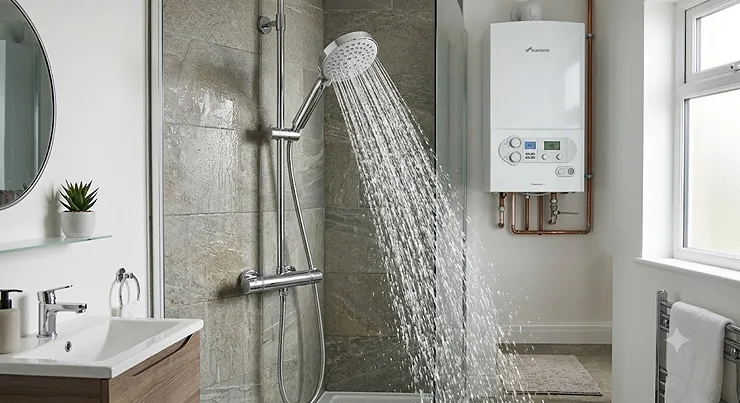
A shower head that increases pressure is, in plain terms, a fixed or handheld head engineered with narrower nozzles, fewer but more concentrated jets, or turbo-style internal channels that squeeze the same volume of water through a smaller space — the result feels noticeably stronger even though your home’s actual mains pressure hasn’t changed at all.
The good news is that swapping your shower head is one of the cheapest, fastest fixes going — usually a five-minute job with no plumber required. But not every “high pressure” shower head marketed online genuinely earns that label, and some cheap imports simply throttle flow so hard the spray feels thin rather than powerful. In this guide, I’ve dug into real specifications, aggregated UK customer feedback, and expert plumbing advice to shortlist seven genuinely effective pressure boosting shower head options, explain how they compare with shower pumps, and walk through exactly how to diagnose and fix a feeble shower, once and for all.
Quick Comparison Table
Before the deep dive, here’s the fast version for anyone short on time.
| Shower Head | Type | Standout Pressure Feature | Price Range |
|---|---|---|---|
| Aqua Elegante Pressure Boosting Shower Head | Fixed wall mount | 42 concentrated anti-clog nozzles | around £20-£30 |
| Mira Beat Shower Head | Fixed, mixer-compatible | UK-tuned low-pressure design | under £20 |
| Bright Showers 6-Inch High Pressure Rainfall | Fixed rainfall | Removable flow restrictor, 90 nozzles | £20-£30 range |
| SparkPod 3-Inch Extreme High Pressure | Fixed, 3 modes | Rain/massage/pulsating jet switching | £25-£35 range |
| GROHE Tempesta 100 Hand Shower | Handheld | DreamSpray even-pressure technology | £20-£30 range |
| GROHE Vitalio Start 210 | Fixed rainfall | Removable 9.5 l/min flow limiter | £25-£35 range |
| Aqua Elegante 6 Function Luxury Shower Head | Fixed, 6 modes | High-pressure boosting across all functions | £30-£45 range |
Looking at the spread above, the pattern is clear: cheaper fixed heads like the Mira Beat Shower Head win on price and simplicity, mid-range multi-mode heads like the SparkPod 3-Inch Extreme High Pressure shower head add versatility for households who like switching between a hard jet and a softer massage setting, and premium picks like the Aqua Elegante 6 Function Luxury Shower Head justify their higher price with consistent performance across every spray mode rather than just one “power” setting. If your main goal is simply “make my weak shower feel stronger” without fuss, the budget and mid-range options genuinely hold their own against pricier alternatives.
💬 Found a pick you like the look of already? Scroll down to compare full specs before you commit — a two-minute read could save you a wasted purchase.
Top 7 Shower Heads That Increase Pressure: Expert Analysis
Every product below has been selected for genuinely relevant pressure-boosting engineering, not just marketing copy. Where I reference customer sentiment, it reflects aggregated themes from real UK and international buyer feedback rather than any single invented review.
1. Aqua Elegante Pressure Boosting Shower Head — best all-round value pick
The standout here is the 42-nozzle spray face, packed into a compact 3-inch head that concentrates flow rather than spreading it thin. In practice, that density is exactly what makes a low-pressure shower feel transformed: cramming more nozzles into a smaller area increases the velocity of each individual jet even when the total water volume stays the same, which is the entire trick behind “pressure boosting” heads that don’t need batteries or pumps. The adjustable brass ball-joint fitting means you can angle the spray without needing a separate shower arm bracket, and the anti-clog silicone nozzles are designed to be wiped clean of limescale with a fingertip rather than needing a descaling soak every few weeks. Based on the spec comparison against other budget fixed heads, this model earns its reputation as a strong first upgrade for anyone testing whether a shower head swap alone will solve their pressure complaint, before spending more on a pump or booster. Reviewers consistently report a noticeably stronger, more even spray straight out of the box, particularly on combi boiler systems running around 1-1.5 bar, though a small minority in very low gravity-fed systems (under 0.5 bar) note the improvement is more moderate. It’s a sensible pick for renters and first-time buyers who want proof of concept before committing to anything more expensive or permanent.
Pros:
- ✅ Dense 42-nozzle face boosts perceived pressure noticeably
- ✅ Tool-free brass ball-joint installation in minutes
- ✅ Anti-clog nozzles resist hard water limescale build-up
Cons:
- ❌ Limited real-world benefit below roughly 0.3 bar pressure
- ❌ Fixed head only, no handheld flexibility
Typically found in the around £20-£30 bracket, it represents strong value for the improvement most combi boiler households will notice.
2. Mira Beat Shower Head — best British-brand budget pick
What most buyers overlook about this model is that Mira, as a UK manufacturer, designs its shower ranges specifically around British plumbing quirks — mixer showers, electric showers, and the low-to-moderate mains pressure common in older housing stock — rather than adapting a design built for high-pressure American plumbing. The simple, no-frills spray face keeps maintenance low, and the fitting is built to slot straight onto standard UK shower rails and hoses without adapters. This is a shower head for buyers who don’t want six spray settings to fiddle with; they want one reliable, honest spray that performs consistently whether the water’s coming from a combi boiler or a gravity tank. Aggregated UK customer sentiment around Mira’s budget fixed-head range frequently highlights straightforward fitting and dependable performance on mixer showers, with the main criticism being that it lacks the adjustable spray modes found on pricier multi-function heads. For households prioritising trustworthy British engineering and simplicity over bells and whistles, it’s hard to beat on price.
Pros:
- ✅ UK-designed specifically for British water systems
- ✅ Simple, low-maintenance single spray pattern
- ✅ Fits standard UK shower rails without adapters
Cons:
- ❌ No adjustable spray modes for variety
- ❌ Less dramatic pressure boost than nozzle-dense rivals
Usually priced under £20, it’s the pragmatic choice for anyone who just wants a dependable British-made replacement without overthinking it.
3. Bright Showers 6-Inch High Pressure Rainfall Shower Head — best for full-body rainfall coverage
The 6-inch round face with 90 touch-clean nozzles is the headline feature, and here’s what the spec sheet doesn’t spell out: a wider face generally means weaker individual jets unless the nozzle count and internal channel design compensate for it, which is precisely what this model attempts by packing in far more nozzles than a typical rainfall head of this size. The removable flow restrictor is the other genuinely useful detail — it lets buyers on stronger mains supplies open the flow right up for a proper drenching rainfall effect, while those on weaker supplies can leave it fitted to keep the pressure concentrated rather than diffused. Built from ABS plastic rather than metal, it’s lightweight and rust-resistant, which matters in hard water areas where metal fittings corrode and seize over time. What the spec sheet won’t tell you, but reviewers note, is that the touch-clean silicone nozzles genuinely do make descaling a thirty-second job rather than a soak-overnight chore. This is the pick for anyone who wants the “hotel spa” wide rainfall look without sacrificing the punch of a smaller high-pressure head.
Pros:
- ✅ Wide 6-inch face for full-body rainfall coverage
- ✅ Removable restrictor lets you tune flow to your supply
- ✅ Touch-clean nozzles simplify limescale removal
Cons:
- ❌ Wider face still feels softer than 3-inch heads on very weak supplies
- ❌ ABS build feels less premium than metal alternatives
At around £20-£30, it strikes a fair balance between rainfall aesthetics and genuine pressure performance.
4. SparkPod 3-Inch Extreme High Pressure Shower Head — best for spray-mode variety
Three switchable modes — rain, massage, and pulsating — is the standout feature, and the practical upshot is that this shower head effectively behaves like three different pressure profiles in one fitting. The massage setting concentrates flow into fewer, harder jets for genuinely stronger localised pressure (handy for tired shoulders after a long day), while the rain setting spreads that same flow wider for gentler full-body coverage. Anti-clog nozzles and a compact 3-inch face keep the unit dense enough that even the “softest” rain setting still outperforms a basic single-mode head on weak mains. Here’s what to weigh: households that shower at different intensities depending on mood or time pressure genuinely benefit from mode-switching, whereas single-person households who always want maximum force might find a dedicated high-pressure-only head like the Aqua Elegante Pressure Boosting Shower Head slightly more effective, since it isn’t splitting engineering effort across three modes. Aggregated reviewer sentiment tends to praise the tactile click of the mode dial and the genuine difference between settings, with occasional comments that the pulsating mode feels gimmicky compared with rain and massage.
Pros:
- ✅ Three genuinely distinct spray-intensity modes
- ✅ Compact face keeps even the gentlest mode fairly strong
- ✅ Anti-clog nozzles suit hard water UK regions
Cons:
- ❌ Pulsating mode adds less real value than the other two
- ❌ Mode dial adds a moving part that can wear over years
Typically in the £25-£35 range, it’s the strongest option here for buyers who want flexibility as well as force.
5. GROHE Tempesta 100 Hand Shower — best trusted mid-range handheld
GROHE’s DreamSpray technology is the standout feature, and in practice it means the internal channelling is engineered to distribute water evenly across every nozzle so you don’t get the classic “stronger in the middle, weaker at the edges” spray pattern cheaper heads suffer from. As a handheld unit rather than a fixed head, it also brings genuine practical flexibility: you can direct concentrated flow exactly where you want it, which is one of the simplest ways to make a weak shower feel more powerful without touching your plumbing at all. GROHE states a minimum recommended pressure of 1.0 bar, so on paper this means it’s built with combi boiler and unvented cylinder systems in mind rather than the weakest gravity-fed tanks. The anti-limescale silicone nozzles wipe clean easily, addressing one of the most common causes of gradually worsening shower pressure over time: mineral build-up silently choking the holes. Aggregated customer sentiment around GROHE’s shower head range consistently praises build quality and ease of descaling, and the brand’s reputation for reliability is well established in the UK market; some buyers on genuinely very low pressure supplies do note the rain setting feels gentler than the jet setting, which is a reasonable trade-off for the added spray-pattern refinement.
Pros:
- ✅ DreamSpray technology delivers genuinely even flow
- ✅ Handheld design lets you direct pressure precisely
- ✅ Anti-limescale nozzles simplify long-term maintenance
Cons:
- ❌ Not designed for supplies under roughly 1.0 bar
- ❌ Rain setting noticeably softer than the jet setting
Priced in the £20-£30 range typically, it’s a dependable step up in build quality over generic budget imports.
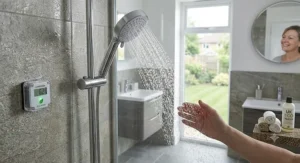
6. GROHE Vitalio Start 210 — best mid-range fixed rainfall head
The 9.5 litres-per-minute flow limiter is the standout feature here, and crucially, it’s removable — meaning buyers on stronger mains supplies can strip it out entirely for maximum flow, while those wanting to keep water bills in check can leave it fitted and still get a satisfying rain spray at a controlled rate. A flow rate around 9.5 l/min actually sits close to what UK plumbing experts consider the sweet spot for a “good shower,” so even with the limiter in place, most households on moderate pressure systems will notice a genuine improvement over a decade-old, half-scaled original head. The 210mm rainfall face is generously sized for full-body coverage without straying into “too wide to feel powerful” territory the way some 8-inch heads do. Anti-limescale nozzles and GROHE’s typically robust chrome finish round out a shower head built for longevity rather than a quick fix. Reviewers consistently note reliable performance and straightforward fitting, with the main criticism being that buyers on genuinely weak gravity-fed supplies under 0.5 bar may still find the rainfall spread thins the flow more than a concentrated 3-inch head would.
Pros:
- ✅ Removable flow limiter adapts to your water pressure
- ✅ Generous 210mm face for full coverage
- ✅ Reliable GROHE build quality and anti-limescale nozzles
Cons:
- ❌ Rainfall spread reduces intensity versus concentrated heads
- ❌ Best suited to 1.0 bar or above, not the weakest supplies
Expect to pay in the £25-£35 range for the reassurance of a trusted, longer-lasting brand.
7. Aqua Elegante 6 Function Luxury Shower Head — best premium multi-function option
Six spray functions built on the same high-pressure-boosting nozzle technology as the brand’s simpler 3-inch model is the standout feature, and what most buyers overlook is that maintaining pressure across six distinct modes is genuinely harder to engineer than doing it for one — many cheaper multi-function heads sacrifice force as you add settings, whereas this model is specifically designed to keep every mode punchy. The adjustable wall-mount fitting allows precise angle control, useful in awkward bathroom layouts where the shower arm doesn’t point exactly where you’d like. Anti-clog nozzles again address the long-term limescale problem that gradually saps pressure from any shower head over months of hard water use. Based on the spec comparison with this brand’s more basic model, the extra spray functions genuinely add day-to-day versatility rather than being pure marketing padding, particularly for shared bathrooms where household members prefer different intensities. Aggregated feedback highlights the noticeable jump in perceived power compared with typical rainfall-only heads at a similar price, while a smaller number of reviewers mention the six-mode dial takes a shower or two to learn intuitively.
Pros:
- ✅ Six spray modes all engineered for strong pressure
- ✅ Adjustable wall mount suits awkward bathroom layouts
- ✅ Anti-clog nozzles maintain performance long-term
Cons:
- ❌ Highest price point of the seven featured here
- ❌ Mode dial has a short learning curve for new users
Sitting in the £30-£45 range, it’s the pick for households wanting maximum flexibility without dropping to a genuinely weak setting on any mode.
Top 7 Products: Full Specification Comparison
| Shower Head | Best For | Spray Modes | Flow Rate / Feature | Price Range |
|---|---|---|---|---|
| Aqua Elegante Pressure Boosting Shower Head | First-time upgraders | 1 | 42-nozzle concentration | £20-£30 |
| Mira Beat Shower Head | UK budget simplicity | 1 | Single reliable pattern | Under £20 |
| Bright Showers 6-Inch High Pressure Rainfall | Full-body rainfall | 1 | Removable flow restrictor | £20-£30 |
| SparkPod 3-Inch Extreme High Pressure | Mode variety | 3 | Rain/massage/pulsating | £25-£35 |
| GROHE Tempesta 100 Hand Shower | Directional control | 2-4 (usable) | DreamSpray even flow | £20-£30 |
| GROHE Vitalio Start 210 | Trusted mid-range | 1 | Removable 9.5 l/min limiter | £25-£35 |
| Aqua Elegante 6 Function Luxury | Maximum flexibility | 6 | High-pressure across all modes | £30-£45 |
Interpreting this table, the real decision point isn’t actually price — it’s how much your household values mode variety versus raw concentrated force. If you live alone and want maximum punch with zero fuss, the Mira Beat Shower Head or Aqua Elegante Pressure Boosting Shower Head deliver excellent value. If you’re sharing a bathroom with people who have different pressure preferences, paying more for the SparkPod 3-Inch Extreme High Pressure or Aqua Elegante 6 Function Luxury Shower Head genuinely earns its keep rather than being an unnecessary upgrade.
✨ Don’t Miss Out on These Shower Upgrades!
🔍 Take your daily shower from disappointing to genuinely refreshing with one of these carefully researched picks. Click through to check current availability and pricing — a five-minute fitting job could transform your mornings for good.
Practical Usage Guide: Installing and Maintaining Your New Shower Head
Fitting almost any modern shower head is genuinely a five-to-ten-minute job. Start by unscrewing your old head anticlockwise from the shower arm or hose (a cloth wrapped around it helps with grip on stubborn, corroded fittings). Wrap two or three turns of PTFE tape clockwise around the exposed threads — this is the single most common step people skip, and skipping it is the leading cause of a leaky new fitting. Screw the new head on clockwise by hand, then a final quarter-turn with pliers wrapped in cloth to avoid scratching the chrome finish. Run the water briefly before your first proper shower to flush out any plastic residue from manufacturing.
For the first thirty days, resist the urge to over-tighten if you notice a small drip — often it settles as the rubber washer seats properly after a few uses. A common early mistake is fitting the head without checking whether your existing hose or arm uses a UK-standard connector; nearly all modern shower heads use a universal G1/2 thread, but very old fittings occasionally differ, so it’s worth a five-second check before ordering.
Ongoing maintenance is refreshingly simple: soak the head in a 50/50 white vinegar and water solution for thirty minutes every four to six weeks in hard water areas, then gently scrub the nozzles with an old toothbrush. This single habit does more for long-term pressure than almost any other factor, since limescale build-up inside the nozzles is the most common reason a perfectly good shower head gradually feels weaker over its first year of use.
Real-World Scenarios: Which Shower Head Suits Your Situation
The flat-share on a shared mains supply. Three housemates, moderate but inconsistent pressure that dips during peak morning hours, and a tight budget. Here, the Mira Beat Shower Head or Aqua Elegante Pressure Boosting Shower Head make sense — low cost, minimal fuss, and a genuine, noticeable improvement without asking anyone to chip in for something pricier.
The family home with a combi boiler. Two adults, two children, and everyone showering at different times with different preferences — one wants a gentle rinse, another wants a powerful blast to wake up. The SparkPod 3-Inch Extreme High Pressure shower head’s three modes solve this neatly, letting each household member dial in their own experience without buying multiple heads.
The renovated Victorian terrace with an unvented cylinder. Strong mains pressure already, but an outdated, half-scaled original shower head is throttling performance. Here, the GROHE Vitalio Start 210‘s removable flow limiter lets you strip back the restriction entirely and take full advantage of genuinely strong existing pressure, while the DreamSpray-equipped GROHE Tempesta 100 Hand Shower offers precise directional control for a proper power-shower feel.
Problem → Solution: Fixing Common Shower Pressure Complaints
Problem: the shower was fine last year but has gradually weakened. This is almost always limescale build-up inside the nozzles rather than a genuine drop in mains pressure. Soak and scrub the head as described above before spending a penny on a replacement.
Problem: pressure is fine on the cold tap but weak in the shower specifically. This usually points to a partially closed shut-off valve or a kinked, ageing hose rather than the shower head itself — check both before assuming a new head will fix it.
Problem: pressure was always weak, even with a brand-new head fitted. This suggests the underlying supply genuinely is low (often under 0.5 bar), and a shower head swap alone may only offer modest gains; run a quick jug test first — time how long it takes a one-litre jug to fill at full flow, and anything beyond around fifteen seconds points to a supply issue better addressed with a booster pump rather than a shower head alone, a distinction covered further in our Consumer Council for Water guidance on testing low pressure.
Problem: pressure fluctuates dramatically depending on the time of day. This points to mains demand from neighbours during peak hours (typically early morning and early evening) rather than anything wrong with your own plumbing, and unfortunately no shower head can fully compensate for a genuinely fluctuating supply.
💬 Sorted your pressure problem yet? A quick share helps other frustrated showerers find a fix too! 😊
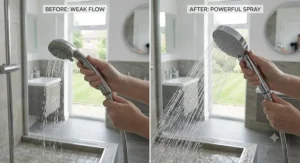
How to Choose a Shower Head That Increases Pressure
What is a pressure boosting shower head? It’s a fixed or handheld shower head engineered with dense, narrow nozzles or internal channelling that concentrates existing water flow into a stronger-feeling spray, without needing an electric pump or any change to your home’s actual mains pressure.
Choosing the right one comes down to a handful of practical checks:
- Test your existing pressure first. Use the one-litre jug method — under fifteen seconds to fill suggests your supply is reasonably healthy and any pressure-boosting head should work well.
- Check your system type. Combi boilers and unvented cylinders generally deliver 1.0 bar or above, matching most of the heads featured here; gravity-fed tank systems below 0.5 bar may need a booster pump alongside a new head.
- Match nozzle density to your priority. More, narrower nozzles concentrate force; fewer, wider ones spread coverage — decide whether raw power or full-body drenching matters more to you.
- Consider mode-switching only if you’ll use it. Multi-function heads add genuine value for shared households but little benefit for single users who always want maximum force.
- Check the connector standard. Nearly all UK fittings use a universal G1/2 thread, but confirm before ordering if your bathroom is unusually old.
- Factor in material and maintenance. ABS plastic resists corrosion and costs less; metal finishes look and feel premium but need more attentive descaling in hard water areas.
- Know your legal baseline. Under the Water Industry Act 1991, Section 65, your water undertaker has a statutory duty to maintain supply pressure sufficient to reach the top floor of your building — worth knowing before assuming a plumbing fault is entirely your own responsibility.
Does Removing the Flow Restrictor Increase Pressure?
This is one of the most searched questions on the topic, and the honest answer is: sometimes, but with real trade-offs. A flow restrictor is a small plastic disc fitted inside many shower heads specifically to cap the maximum litres-per-minute passing through, usually for water-saving compliance rather than to limit pressure itself. Removing it allows more total water volume through the head, which on a genuinely strong mains supply can noticeably increase the felt force of the spray. However, on a weak supply, removing the restrictor often does very little, because the bottleneck is the incoming pressure rather than the restrictor — you can’t release more water than is actually arriving. There’s also a real cost trade-off: a removed restrictor typically increases water and (if applicable) heating costs, since you’re using more litres per shower with no guarantee of a proportionally stronger spray on already-weak supplies. Several models featured above, including the GROHE Vitalio Start 210 and Bright Showers 6-Inch High Pressure Rainfall Shower Head, are specifically designed with an easily removable restrictor precisely so buyers can test this trade-off themselves without needing tools or voiding a warranty.
Shower Head vs Shower Pump: Which Actually Solves Low Pressure?
A shower head swap and a shower pump solve genuinely different problems, and confusing the two is one of the most expensive mistakes buyers make. A pressure-boosting shower head concentrates the water you already have; it cannot manufacture pressure that isn’t arriving at your bathroom in the first place. A shower pump, by contrast, is a small electric or mechanical unit fitted inline (often near your hot water cylinder) that actively increases the force of water travelling to your shower, and it’s the only genuine solution for homes on gravity-fed systems where mains or tank pressure sits consistently below around 0.3-0.5 bar. In practice: if your one-litre jug test takes under fifteen seconds, a shower head from this list will likely be all you need. If it takes considerably longer, or if you’ve already tried a pressure-boosting head with disappointing results, a pump is the more reliable long-term fix — at a notably higher cost and typically requiring professional installation, unlike the five-minute shower head swap. Think of it as the difference between turning up the volume on a quiet speaker (shower head) versus plugging in an amplifier (pump) — one works with what’s already there, the other adds genuine extra power.
Self-Pressurising Shower Heads Explained
A “self-pressurising” shower head is a marketing term rather than a strict technical category, and it’s worth understanding what it actually means before paying a premium for the label. Genuinely self-pressurising units typically use one of two approaches: densely packed narrow nozzles that increase jet velocity through concentration (the mechanism behind most heads on this list), or, less commonly, a small built-in turbine or aerating chamber that mixes air into the water stream to create a fuller-feeling spray at lower flow rates. Neither approach adds real hydraulic pressure to your plumbing system the way an electric pump does — they simply make better use of the pressure already present. Buyers researching this term are usually looking for exactly the kind of product featured throughout this guide: a plug-and-play head that noticeably improves shower feel without electrics, batteries, or professional installation. If a listing implies a shower head can overcome genuinely very low mains pressure (below roughly 0.3 bar) through nozzle design alone, treat that claim with healthy scepticism — physics has limits that clever engineering can improve on, but not eliminate entirely.
Common Mistakes When Buying a Pressure-Boosting Shower Head
The single biggest mistake is buying based on marketing language like “extreme high pressure” without checking whether the underlying issue is your supply rather than your old head — a five-minute jug test before purchase saves plenty of disappointment. A close second is ignoring connector compatibility, particularly in older UK bathrooms with non-standard fittings, leading to returns and wasted postage. Buyers also frequently overlook maintenance requirements, choosing an intricate multi-mode head without realising the extra moving parts need more frequent cleaning in hard water regions. Another common misstep is assuming a wider rainfall face automatically means a better shower; as covered above, wider faces generally spread the same flow more thinly unless nozzle density specifically compensates. Finally, some buyers expect a shower head alone to fix a fundamentally low-pressure gravity-fed system, when a pump is genuinely the more appropriate — if pricier — solution.
Features That Actually Matter (And Those That Don’t)
Nozzle density and internal channelling genuinely matter — they’re the actual engineering behind any real pressure boost. A removable flow restrictor matters too, since it lets you tune the head to your specific supply rather than committing to one fixed setting. Anti-limescale or anti-clog nozzle coatings matter significantly in the UK’s generally hard-water regions, directly affecting how long that initial pressure improvement lasts. On the other hand, exaggerated marketing language such as “extreme,” “turbo,” or “hurricane” in a product name carries no technical meaning and shouldn’t influence your decision either way. LED colour-changing lights, while eye-catching, add no pressure benefit whatsoever and are purely cosmetic. Similarly, an unusually high number of spray “settings” (ten or more) often just means several near-identical variations on the same two or three genuinely distinct patterns.
Safety, Regulations and Compliance Guide
UK shower heads sold through Amazon and reputable retailers must meet standard plumbing and materials safety requirements, but there’s a genuinely important maintenance-related safety point worth knowing regardless of which head you choose: infrequently used showers, particularly in spare bathrooms or holiday lets, can allow stagnant water to sit in the head and hose, creating conditions where legionella bacteria can multiply if the system isn’t flushed regularly. The Health and Safety Executive’s guidance on legionella control recommends running any little-used shower at a hot temperature for several minutes periodically, and descaling the head itself, which conveniently is also exactly the maintenance routine that keeps pressure-boosting nozzles performing at their best. For most everyday family bathrooms in regular use, this is a low risk, but it’s worth a mention for anyone with a rarely used guest shower.
FAQ
❓ Does a pressure boosting shower head actually work on very low mains pressure?
❓ How to improve shower pressure without replacing my whole system?
❓ Is removing the flow restrictor safe to do myself?
❓ What's the difference between a shower head and a shower pump for boosting pressure?
❓ Will a pressure boosting shower head increase my water bill?
Conclusion
A weak shower is one of those everyday frustrations that’s genuinely easy to fix without a plumber, a pump, or a big bill — provided you match the right shower head to your actual water pressure situation rather than chasing the loudest marketing claim. For most UK households on a combi boiler or unvented cylinder, any of the seven options covered here — from the budget-friendly Mira Beat Shower Head through to the flexible Aqua Elegante 6 Function Luxury Shower Head — will deliver a genuinely noticeable improvement within minutes of fitting. The real decision points are simple: how much raw force versus mode variety you want, how hard your local water is, and whether a quick jug test reveals a supply problem that a shower head alone can’t solve. Test your pressure, pick the head that matches your system and household habits, and enjoy mornings that finally feel like a proper wake-up rather than a disappointing drizzle.
✨ Ready to Upgrade Your Shower?
🔍 Check current pricing and availability on today’s top picks, and turn your next shower into the powerful reset your mornings deserve.
Recommended for You
- Shower Head For Gravity Fed System: 7 Best Picks 2026
- Shower Head for Combi Boiler: 7 Picks Reviewed (2026)
- 7 Best Shower Heads for Low Water Pressure UK (2026 Guide)
Disclaimer: This article contains affiliate links. As an Amazon Associate, I earn from qualifying purchases. If you purchase products through these links, we may earn a small commission at no additional cost to you.
✨ Found this helpful? Share it with your friends! 💬🤗
