In This Article
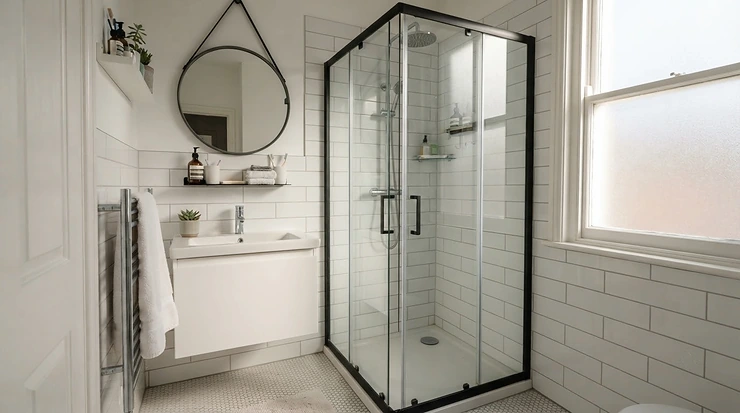
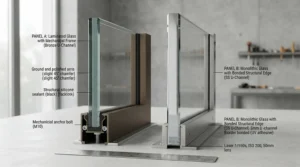
Standing in the bathroom aisle of your own head, staring at glass door after glass door, you eventually land on the same wall every renovator hits: frameless vs framed shower enclosure — which one actually earns its place in your bathroom? A frameless vs framed shower enclosure decision isn’t really about looks alone, though the glossy magazine shots would have you believe otherwise. It’s about wall tolerances, cleaning habits, budget, and how forgiving your bathroom is of a fitting error. In plain terms, a frameless shower enclosure uses thick 8mm or 10mm toughened glass held by minimal fixings, while a framed enclosure relies on an aluminium or chrome profile to support thinner, cheaper glass. Neither is objectively “better” — they’re built for different bathrooms and different patience levels with a spirit level.
This guide skips the marketing gloss and gets into the actual products, real specifications, and honest trade-offs. We’ve pulled together seven genuine enclosures currently sold in the UK — from no-nonsense budget framed units to a lifetime-guaranteed frameless flagship — and picked them apart the way a plumber friend would over a cup of tea, not the way a listing writer would. Expect straight talk on glass thickness, hinge quality, and where your money is actually going. By the end, you’ll know exactly which side of the frameless vs framed shower enclosure debate suits your bathroom, your budget, and your tolerance for re-caulking on a Sunday afternoon.
Quick Comparison Table
Before the deep dive, here’s the shortcut version — useful if you’ve got ten minutes and a tape measure, not an hour and a cup of tea.
| Pick | Style | Glass | Price Range | Best For |
|---|---|---|---|---|
| AICA 8mm NANO Quadrant | Framed | 8mm | around £100-£220 | Tight corners on a budget |
| ELEGANT 800mm Pivot Door | Minimal-frame | 6mm | around £100-£160 | Small en-suites, quick swap |
| Aqualux Framed 6mm Pivot Door | Framed | 6mm | around £230-£280 | Trusted-brand family bathrooms |
| Merlyn Ionic Essence Frameless | Frameless | 8mm+ | around £500-£750+ | Premium, long-term homeowners |
Even at a glance, the spread tells its own story: framed options cluster at the value end because thinner glass and a supporting profile cost less to manufacture, while the frameless Merlyn Ionic Essence Frameless sits well above the rest on price alone. That gap isn’t padding — thicker glass, precision-machined fixings, and a lifetime guarantee all add real manufacturing cost. If you’re renovating a rental or a compact en-suite, the framed end of this table earns its keep; if this is your forever bathroom, the extra spend on frameless starts to look like reasonable insurance.
💬 Already got a favourite from the table above? Scroll down for the full breakdown before you commit — the details matter more than the thumbnail.
Top 7 Frameless vs Framed Shower Enclosures: Expert Analysis
Here’s where we get into the actual products — real names, real specs, and the sort of honest commentary a listing page will never give you. We’ve deliberately mixed budget framed picks, mid-range all-rounders, and genuine frameless options so you can compare like for like.
1. AICA 8mm NANO Easy Clean glass Quadrant Shower Enclosure — best framed budget quadrant for tight corners
The standout here is the price-to-glass-thickness ratio: 8mm toughened glass at a genuinely budget price point, which is rarer than it should be. Key specs worth noting: the quadrant ships in multiple footprints from 800x800mm up to 1000x900mm, uses BS EN 12150 and CE-certified NANO-coated glass, and comes with a polished chrome frame that’s passed multiple waterproof tests. In practice, that NANO coating means the glass resists limescale streaking noticeably better than uncoated budget alternatives — the sort of detail that saves you a weekly vinegar-and-cloth session.
Based on the spec comparison against other sub-£220 quadrants, this is one of the few that doesn’t drop to 4mm or 5mm glass to hit its price point, which matters both for perceived quality and for long-term durability against everyday knocks.
AICA has manufactured bathroom fittings since 1998 and now operates across several European markets, so this isn’t a fly-by-night listing; aggregated feedback on comparable AICA quadrant and screen products on marketplaces like ManoMano runs positive, with buyers repeatedly flagging good value and prompt delivery as the recurring theme rather than any specific durability complaint.
Pros:
- ✅ 8mm glass at a genuinely budget price point
- ✅ NANO easy-clean coating reduces limescale build-up
- ✅ Multiple size options for awkward corner spaces
Cons:
- ❌ Chrome frame shows fingerprints more than matt finishes
- ❌ Shower tray sold separately on most size variants
Typically priced around £100-£220 depending on footprint, this represents genuinely strong value — you’re paying mid-range glass thickness for a budget-tier price tag.
2. ELEGANT 800mm Frameless Pivot Shower Door 6mm Safety Glass — best low-profile pivot door for small en-suites
The standout advantage is the slim polished aluminium frame that reads as near-frameless from a normal viewing distance, without the price tag of true 8mm frameless glass. Specs worth flagging: it’s a reversible 800mm pivot door with a 30mm wall adjustment tolerance, 6mm toughened safety glass certified to BS EN 12150, and a corrosion-resistant aluminium structure. What most buyers overlook about this model is that 30mm of wall adjustment — in older UK properties with walls that are rarely true, that tolerance is the difference between a weekend DIY fit and a call to a professional.
Here’s what to weigh: ELEGANT has served over 500,000 customers from its West Midlands warehouse since 2005, and the hardware itself gets consistent praise in aggregated reviews for looking “expensive” for the price.
The honest counterpoint, drawn directly from verified purchaser feedback on this exact listing, is that aftersales support has been reported as inconsistent by some buyers when a part failed — worth budgeting a small contingency for spares rather than assuming full manufacturer backup.
Pros:
- ✅ Slim frame gives a near-frameless look for less
- ✅ Generous 30mm wall adjustment for uneven walls
- ✅ Reversible fitting works on either side of the opening
Cons:
- ❌ Aftersales support reported as inconsistent by some buyers
- ❌ 6mm glass feels lighter in hand than premium 8mm options
Expect this in the £100-£160 range — a sensible pick if you want the frameless aesthetic on a framed-enclosure budget.
3. Aqualux Framed 6mm Pivot Door — best trusted-brand framed pick for family bathrooms
The standout feature is brand pedigree: Aqualux has over 40 years of UK showering expertise behind a fairly ordinary-sounding pivot door. Specs that matter in daily use: 6mm toughened safety glass, a fully framed aluminium structure, reversible fittings that work regardless of which end of the bath or enclosure your plumbing sits, and an inward-outward 180-degree pivot action designed for easy cleaning access.
Reviewers consistently note that the reversible fitting genuinely simplifies planning — you’re not locked into a left-hand or right-hand configuration before you’ve even measured the room, which removes one of the classic first-time-fitter mistakes. On paper, this means a household with children or less confident DIYers gets a wider margin for error than with more minimalist frameless designs, where fixings are less forgiving of small measurement mistakes.
As a long-established household name rather than a newer import brand, Aqualux products also tend to have more readily available spare parts down the line, which is a genuine long-term cost consideration that’s easy to ignore at purchase time.
Pros:
- ✅ 40+ years of UK brand trust and spares availability
- ✅ Fully reversible fitting simplifies installation planning
- ✅ 180-degree pivot eases cleaning access
Cons:
- ❌ Fully framed look reads as more traditional, less contemporary
- ❌ 6mm glass sits mid-pack rather than premium-tier thickness
Typically found in the £230-£280 range including VAT, this suits family bathrooms where reliability and easy servicing outrank cutting-edge minimalism.
4. Coram Optima Framed Shower Enclosure — best mid-range framed option for uneven walls
The standout here is the generous 40mm total wall adjustment across the paired profiles, which is unusually forgiving for a framed enclosure at this price tier. Key specs: 6mm thermally toughened safety glass, CE certification, a polished chrome finish, and side panels engineered specifically to pair with pivot, bi-fold, or sliding doors depending on your layout. What the spec sheet won’t tell you, but the fitting notes make clear, is that Coram has explicitly sized this range around average British bathroom proportions — a small but genuinely useful nod to real UK housing stock rather than a generic international template.
The easy-clean coating applied to the glass panels is a straightforward wipe-and-done affair rather than requiring specialist cleaning products, which matters if you’re the one stuck doing the weekly bathroom clean.
Coram positions this firmly as a mid-market framed option rather than a premium line, and the honest trade-off is that its aesthetic won’t chase the ultra-minimalist frameless look — but for a household prioritising practical wall-tolerance over showroom styling, that’s rarely a dealbreaker.
Pros:
- ✅ 40mm total wall adjustment handles uneven British walls
- ✅ Easy-clean coating needs only a simple wipe-down
- ✅ Modular design pairs with pivot, bi-fold or sliding doors
Cons:
- ❌ Manufactured overseas rather than UK-made
- ❌ Chrome-only finish limits colour-matching options
A full enclosure built around this side panel typically lands in the £300-£450 range depending on door choice — solid mid-range value for wonky-wall households.
5. AICA Frameless Sliding Shower Door Matt Black 8mm NANO Glass — best matt black frameless slider for tight spaces
The standout feature is the combination of a true frameless sliding mechanism with a matt black finish, a pairing that’s still surprisingly hard to find below premium pricing. Specs worth unpacking: 8mm EasyClean NANO safety glass certified to BS EN 12150, a high-quality matt black aluminium track system, universal left-or-right fitting, and stainless steel screws throughout to resist the corrosion that chrome fittings can suffer in hard-water areas.
Based on the spec comparison with chrome equivalents from the same manufacturer, the sliding mechanism itself is identical — you’re paying the matt black premium purely for the finish, not for superior engineering, which is useful to know if budget is tight and you’re tempted by a chrome version instead. This suits compact bathrooms particularly well: a sliding door needs no swing clearance, so it’s the practical frameless choice where a pivot or hinged door simply won’t fit the available floor space.
The removable door design, a detail easy to miss on a spec sheet, means the whole glass panel lifts out for a proper deep clean rather than just wiping around fixed rollers.
Pros:
- ✅ True frameless sliding action needs no swing clearance
- ✅ Matt black finish resists limescale spotting better than chrome
- ✅ Removable door panel allows a genuine deep clean
Cons:
- ❌ Matt black commands a price premium over chrome equivalents
- ❌ Sliding tracks need periodic clearing of hair and debris
Prices generally sit in the £180-£320 range depending on door width — a reasonable frameless enclosure cost for anyone tight on floor space but unwilling to compromise on glass thickness.

6. ELEGANT 900mm Black Walk-In Shower Screen 8mm Safety Glass — best frameless wet-room screen for open-plan showers
The standout advantage is the sheer visual impact of a single uninterrupted 8mm glass panel in matte black, which transforms a walk-in wet-room area more dramatically than almost any framed alternative could. Specs that count: 8mm toughened safety glass, a matte black grid-effect frame detail purely at the fixing points rather than around the whole panel, and a 304 stainless steel support bar rated for genuine structural stability rather than decoration.
Here’s what to weigh: a screen like this only works properly in a room with adequate falls in the floor and decent drainage, since there’s no door to contain splash-back the way a hinged or sliding enclosure does — this is a wet-room product first and a shower-screen-with-a-frame second. Reviewers consistently report that the support bar is the component that makes or breaks the installation experience; get its angle and tension right during fitting and the panel feels rock-solid, get it wrong and there’s noticeable flex.
The trade-off for that open, architectural look is a genuinely more involved installation than a self-contained framed enclosure — this is not a same-afternoon retrofit for most bathrooms.
Pros:
- ✅ Single-panel 8mm glass gives a striking open-plan look
- ✅ 304 stainless steel support bar for real structural stability
- ✅ Matte black grid detailing suits contemporary schemes
Cons:
- ❌ Requires proper wet-room floor falls and drainage
- ❌ Installation is more involved than a self-contained enclosure
Expect a price in the £150-£300 range for the panel alone, before factoring in wet-room tanking and floor prep — the enclosure installation cost here is genuinely higher than the glass price suggests.
7. Merlyn Ionic Essence Frameless — best premium frameless enclosure with a lifetime guarantee
The standout feature is simply this: Merlyn backs the Ionic Essence Frameless range with a genuine lifetime guarantee, a commitment few competitors in this category are confident enough to make. Specs that justify the premium: this is part of Merlyn’s 8 Series frameless range, using thick toughened safety glass engineered specifically to sit without a supporting frame, precision-machined hinges, and a choice of both frameless and framed configurations within the same collection depending on which you actually want.
What most buyers overlook about premium frameless glass is that the entire visual effect depends on hinge and fixing tolerance — thinner or cheaper hardware flexes almost imperceptibly under door movement, while Merlyn’s engineering is built specifically to eliminate that flex over years of daily use.
Aggregated customer-service feedback on Merlyn is unusually strong for a bathroom fittings brand: verified Trustpilot reviews describe named support staff resolving fifteen-year-old enclosure issues and sourcing obsolete spare parts without hassle, which speaks directly to the confidence behind that lifetime guarantee rather than being empty marketing language. The honest downside is straightforward — you are paying a genuine premium, and this isn’t the pick for a tight renovation budget or a rental property.
Pros:
- ✅ Genuine lifetime guarantee backed by strong service reviews
- ✅ Precision hinges eliminate flex in true frameless glass
- ✅ Available in both frameless and framed configurations
Cons:
- ❌ Premium pricing puts it out of reach for tight budgets
- ❌ Overkill for short-term rental or buy-to-let bathrooms
Typically priced from around £500 up to £750-plus depending on size and configuration — a genuine long-term investment rather than an impulse buy.
Practical Installation and Maintenance Guide
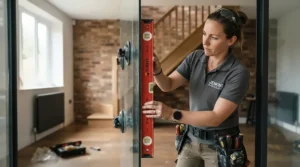
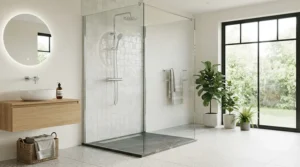
Getting either style fitted well matters more than the brand you choose, so here’s the practical side nobody puts on the box. Before anything touches a drill, check your wall is genuinely vertical with a spirit level over the full height of the opening — framed enclosures like the Aqualux Framed 6mm Pivot Door and Coram Optima Framed Shower Enclosure forgive a few millimetres of lean thanks to their adjustable profiles, but true frameless glass like the Merlyn Ionic Essence Frameless has far less tolerance, and a small wall discrepancy becomes a visible, uneven gap. Silicone sealant is the unsung hero of every enclosure on this list: apply a continuous bead along the tray-to-glass junction and let it cure fully — usually 24 hours — before the first shower, because a rushed seal is the single most common cause of the leaks that eventually rot bathroom flooring. In the first 30 days, the most common mistake is over-tightening hinge screws on pivot doors, which can crack the glass at the fixing point; snug is sufficient, and manufacturers generally specify the exact torque in the installation leaflet for good reason.
For ongoing upkeep, an easy-clean shower enclosure coating — the kind fitted as standard on models like the AICA Frameless Sliding Shower Door Matt Black 8mm NANO Glass — genuinely reduces limescale adhesion, but it isn’t a substitute for basic maintenance. Squeegee the glass after every use, and wipe down tracks and hinges weekly with a non-abrasive cloth; grit trapped in sliding tracks is the leading cause of premature roller wear across every sliding-door product in this guide. Re-silicone the enclosure roughly every 12-18 months, or sooner if you spot any discolouration or gaps, since deteriorating silicone sealant is what allows water behind tiles and into subfloors. A five-minute weekly routine genuinely adds years to any of these products, framed or frameless.
Real-World Scenarios: Which Enclosure Suits Which Buyer
Picture three different households, because “best” genuinely depends on who’s asking. First, a first-time buyer renovating a tight en-suite on a fixed budget: the AICA 8mm NANO Easy Clean glass Quadrant Shower Enclosure or the ELEGANT 800mm Frameless Pivot Shower Door both make sense here, since neither demands perfectly true walls and both keep total spend well under £250 including a shower tray. Second, a family with two young children and a bathroom that gets heavy daily use: the Aqualux Framed 6mm Pivot Door or Coram Optima Framed Shower Enclosure are the more sensible picks, because their generous wall-adjustment tolerances and readily available spares matter more than showroom aesthetics when little hands are slamming doors twice a day.
Third, a couple renovating their long-term family home with a proper budget and a wish to future-proof the bathroom: the Merlyn Ionic Essence Frameless earns its premium price here, backed by a lifetime guarantee that actually pays off over a 15-20 year ownership horizon. And for anyone converting an awkward loft en-suite or open-plan wet room where floor space is the binding constraint rather than budget, the AICA Frameless Sliding Shower Door Matt Black 8mm NANO Glass or ELEGANT 900mm Black Walk-In Shower Screen 8mm Safety Glass solve the swing-clearance problem that a hinged or pivot door simply can’t.
✨ Found the scenario that matches your bathroom?
Take a closer look at the matching pick above before prices shift — check current availability now! 🚿
How to Choose a Frameless vs Framed Shower Enclosure
Cutting through the marketing, here’s the actual decision process, step by step:
- Measure your walls for true vertical. A laser or spirit level over the full enclosure height reveals whether you need a framed design’s adjustment tolerance or can risk true frameless glass.
- Decide your glass-thickness floor. 6mm suits framed designs where the profile shares the structural load; genuine frameless glass should be 8mm minimum for long-term rigidity.
- Match the door type to your floor space. Pivot and hinged doors need swing clearance; sliding doors and wet-room screens suit tighter footprints.
- Set a realistic total budget, not just a glass budget. Factor in the shower tray, waste kit, and enclosure installation cost alongside the enclosure price itself.
- Check the certification. Look for BS EN 12150 or equivalent CE marking on every listing — this isn’t optional paperwork, it’s the safety-glass standard that keeps a broken pane from becoming a serious hazard.
- Weigh the guarantee against your ownership horizon. A short-term rental rarely justifies a lifetime-guarantee premium product; a forever home often does.
- Read aggregated review sentiment, not star ratings alone. A 4.5-star product with a recurring complaint about one specific component tells you more than the headline number.
Framed vs Frameless Shower Enclosure: The Full Comparison
| Factor | Framed | Frameless |
|---|---|---|
| Typical glass thickness | 4mm-6mm | 8mm-10mm |
| Typical price range | £90-£350 | £250-£750+ |
| Wall tolerance | Forgiving (20-40mm adjustment) | Minimal, needs true walls |
| Visual footprint | More visible hardware | Minimal hardware, more light |
| Cleaning | Frame collects grime in joints | Fewer joints, but glass shows every mark |
| Best for | Rentals, budgets, uneven walls | Forever homes, design-led renovations |
Looking at the table, the framed side genuinely wins on forgiveness and frameless enclosure cost predictability, since adjustable profiles absorb wall imperfections that would otherwise force expensive re-plastering. Frameless glass wins decisively on light flow and perceived luxury, because there’s simply less metal breaking up sightlines in a small bathroom. The honest middle ground, illustrated by products like the ELEGANT 800mm Frameless Pivot Shower Door, is a minimal-frame design that borrows some of each side’s advantages without fully committing to either extreme.
Common Mistakes When Buying a Shower Enclosure
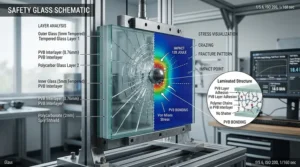
The most frequent error is measuring once and ordering immediately — walls move, tiles add thickness, and a 5mm miscalculation can turn a straightforward fit into a return-and-reorder headache. A close second is choosing frameless glass for a bathroom with genuinely uneven walls purely for the look, then discovering the installer needs expensive packing pieces to hide the gap that a framed design’s adjustment tolerance would have absorbed for free. Buyers also frequently underestimate enclosure installation cost, budgeting only for the glass and forgetting tray removal, tanking, or silicone sealant and finishing materials. Finally, skipping the certification check is a mistake with real safety consequences — BS EN 12150 or equivalent isn’t a nice-to-have, it’s what determines whether broken glass crumbles safely or shatters into dangerous shards, a distinction covered directly by the physics of toughened safety glass.
Long-Term Cost and Maintenance: Coatings, Sealant and Cleaning
An easy-clean shower enclosure coating, whether branded NANO like on the AICA products or a generic equivalent, works by creating a smoother, less porous glass surface that limescale and soap scum struggle to grip. It genuinely reduces cleaning time, but it isn’t permanent — most coatings degrade gradually over two to four years of regular use, faster in hard-water areas common across much of southern and eastern England. Reapplication products exist, but honest expectations matter more than marketing claims here: expect the coating to reduce, not eliminate, your cleaning workload. Silicone sealant is the other recurring cost people forget to budget for entirely. A single tube costs a few pounds, but the labour of stripping old sealant and reapplying it properly — scoring out the old bead, cleaning thoroughly, and allowing full cure time — is worth doing every 12-18 months regardless of enclosure style, since failed sealant is the single biggest cause of hidden water damage behind bathroom walls and floors.
Total cost of ownership over a decade tells a more interesting story than the sticker price alone. A £150 framed enclosure that needs re-sealing annually and shows its age within five years may cost more in cumulative maintenance and eventual replacement than a £600 frameless enclosure backed by a lifetime guarantee, like the Merlyn Ionic Essence Frameless, that’s still going strong at year fifteen. Neither answer is universally “right” — it depends entirely on how long you plan to stay in the property.
Safety, Regulations and Compliance Guide
UK building regulations treat glazing in bathrooms as a genuine safety matter, not a decorative afterthought. Glass installed in critical locations — including shower doors and screens — falls under Approved Document K’s guidance on protection against impact with glazing, which is why every legitimate product in this guide carries BS EN 12150 or equivalent toughened-glass certification. Beyond the glass itself, bathrooms remain one of the highest-risk rooms in any home for slips, and the Health and Safety Executive’s guidance on preventing slips is worth a genuine read even for a domestic bathroom, since wet enclosure floors and low upstands are a recurring cause of household falls, particularly among older family members. Poor ventilation around any enclosure, framed or frameless, also feeds into a separate but related risk: the government’s guidance on damp and mould health risks makes clear that trapped moisture behind a poorly sealed enclosure isn’t just a cosmetic problem but a genuine health consideration, particularly for households with children, older residents, or existing respiratory conditions.
Bathroom Budget Planning for Your Shower Enclosure
Sensible bathroom budget planning starts with separating three distinct costs that often get bundled into a single guess: the enclosure itself, the enclosure installation cost, and the ongoing maintenance spend covered above. As a rough UK rule of thumb, budget-framed enclosures like the AICA 8mm NANO Easy Clean glass Quadrant Shower Enclosure typically add £80-£150 in professional fitting costs on top of the unit price, assuming a straightforward like-for-like swap with no tanking or tray replacement required. Frameless installations, particularly wet-room screens like the ELEGANT 900mm Black Walk-In Shower Screen 8mm Safety Glass, often run higher — sometimes £200-£400 or more — because they frequently involve floor tanking, additional waterproofing, and more precise wall-fixing work.
A realistic total bathroom budget planning approach allocates roughly 60% to the enclosure and tray, 25% to installation labour, and 15% as a contingency for the silicone sealant, waste kits, and minor surprises that surface once an installer actually opens up the wall. Skipping that contingency is the single most common reason bathroom renovation budgets run over, according to consistent patterns reported across UK renovation forums and trade sources alike.
Features That Actually Matter (and Those That Don’t)
Glass thickness, certification, and wall-adjustment tolerance genuinely matter — they affect safety, longevity, and how forgiving the fit will be. Easy-clean coatings matter, but with tempered expectations about how long they last. What matters far less than marketing suggests: handle design (a matter of pure taste with no functional impact), and headline star ratings without reading the actual review text behind them. A “premium matt black” finish, similarly, is largely an aesthetic upcharge rather than a functional upgrade over chrome on products from the same manufacturer, as seen directly comparing the AICA Frameless Sliding Shower Door Matt Black 8mm NANO Glass against its chrome sibling.
Frequently Asked Questions
❓ Is a frameless shower enclosure worth the extra money?
❓ What glass thickness is best for a shower enclosure?
❓ How much does it cost to install a shower enclosure in the UK?
❓ Do frameless shower enclosures leak more than framed ones?
❓ How often should I reseal my shower enclosure?
Conclusion
The frameless vs framed shower enclosure question rarely has one universal answer, and that’s genuinely fine — your bathroom’s walls, your budget, and how long you’re staying in the property matter more than any single spec sheet. Framed picks like the Aqualux Framed 6mm Pivot Door and Coram Optima Framed Shower Enclosure earn their keep through forgiveness and value, absorbing the wall imperfections and daily wear that come with real family life. Frameless options, topped by the Merlyn Ionic Essence Frameless, ask for a genuine upfront investment but pay it back over a decade or more in durability, light flow, and a lifetime guarantee that actually means something. Somewhere in between, minimal-frame and matt black frameless picks like the ELEGANT 800mm Frameless Pivot Shower Door and AICA Frameless Sliding Shower Door Matt Black 8mm NANO Glass split the difference nicely for tighter budgets and tighter floor plans alike.
Whichever side of the debate you land on, get the fundamentals right: check your walls before you order, don’t skimp on silicone sealant or its reapplication schedule, and confirm proper certification before anything gets fitted. Do that, and either a framed or a frameless enclosure will serve your bathroom well for years to come.
✨ Ready to compare options side by side? Check current prices and availability on the picks above before making your final call — good bathroom deals don’t hang around long! 🛁
Recommended for You
- Frameless Shower Enclosure 2026: 7 Best Picks (Ultimate Guide)
- Walk-In Shower Enclosure for Small Bathroom: 7 Best Picks (2026)
- Walk-In Shower Enclosure vs Enclosed Shower: 7 Honest Picks 2026
Disclaimer: This article contains affiliate links. As an Amazon Associate, I earn from qualifying purchases. If you purchase products through these links, we may earn a small commission at no additional cost to you.
✨ Found this helpful? Share it with your friends! 💬🤗
