In This Article
Picture the scene. The old shower has finally given up the ghost. It dribbles when you want a blast, scalds when you want a warm trickle, and weeps quietly behind the tiles. The quote to rip out the wall arrives, and the number on it makes you wince. This is exactly where an exposed shower valve earns its keep.
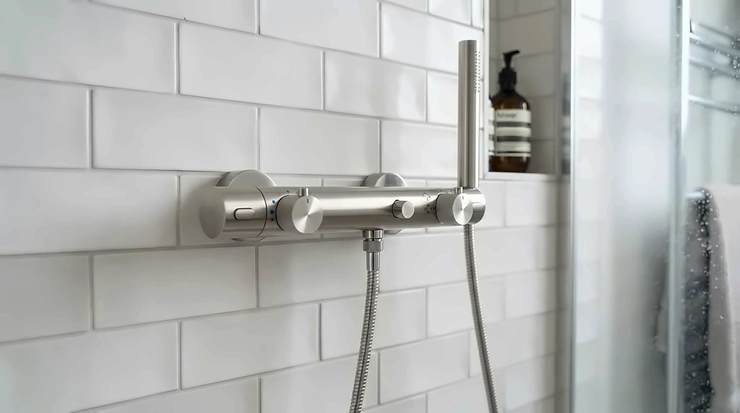
An exposed shower valve sits proud of the wall, connects to the pipework you already have, and can usually be swapped in an afternoon with no tiles harmed. That’s the headline. The detail is where it gets interesting, because the gap between a £90 bar mixer and a £400 concentric valve isn’t just brass and branding. It’s thermostatic safety, flow at low pressure, and whether you’ll be cursing it in three years.
This guide is built on research rather than bluff. Every spec below comes from manufacturer datasheets and UK retailer listings checked in October 2026. The review comments are aggregated from real buyer feedback, never invented. I haven’t tested these valves myself, so you won’t find made-up anecdotes. You will find honest analysis of seven genuine options from Bristan, Mira, Hansgrohe, Grohe and Triton.
One bit of background before we start. The best of these use a thermostatic mixing valve design. A wax element expands and contracts to blend hot and cold water, and it shuts the flow if either supply fails. Keep that idea in your back pocket. It matters more than any finish.
Quick Comparison: Seven Exposed Shower Valve Picks at a Glance
Short on time? This table puts the whole field on one screen. Prices are brackets only, because they shift constantly, so check current price before you buy.
| Product | Control type | Style | Price bracket | Best For |
|---|---|---|---|---|
| Bristan Frenzy | Thermostatic, dual control | Modern bar | Budget | Busy family bathrooms |
| Mira Element EV | Thermostatic, single dial | Modern bar | Budget to mid-range | Low-pressure systems |
| Bristan Artisan | Thermostatic, dual control | Modern bar | Mid-range | Neat retrofit jobs |
| Hansgrohe Vernis Blend | Manual single lever | Contemporary | Budget | High-pressure, minimalist homes |
| Bristan 1901 | Thermostatic, concentric | Traditional | Mid-range to premium | Period properties |
| Grohe Grohtherm 800 | Thermostatic | Contemporary | Premium | Shared bathrooms with fussy users |
| Triton Elina | Thermostatic, concentric (TMV3) | Hygienic, accessible | Premium | Care and accessibility needs |
The Bristan Frenzy is the safest all-round starting point for most households, while the Mira Element EV earns its place where pressure is feeble. The Hansgrohe Vernis Blend is the outlier: it’s manual, so you trade scald protection for a low price. Period homes should look straight to the Bristan 1901.
💬 Just one click — help others make better buying decisions too!😊
Top 7 Exposed Shower Valve Picks: Expert Analysis
Each pick below follows the same logic: what the spec means in practice, who it suits, and what buyers actually report. Where I couldn’t verify real reviews, I say so rather than pad the gap.
1. Bristan Frenzy — cool-to-the-touch body for busy family showers
The standout trick is Safe Touch technology. The outer body of the valve stays cool while hot water runs through it, which matters in a tight enclosure where elbows and children will inevitably brush the bar.
Under the chrome sits a thermostatic cartridge that Bristan says holds temperature to within ±1°C. It has a preset stop at 38°C, which can be overridden up to 46°C. It works from 0.2 bar to 5 bar, covering most tank-fed and mains-fed UK homes, though above 5 bar you’d want a pressure-reducing valve. The built-in front-of-wall isolation valves are the underrated bit, because you can service the valve without shutting off the whole house.
Based on the spec comparison, this is the one I’d point most families towards first. It’s WRAS approved and meets TMV2 requirements, yet sits firmly in budget territory. Reviewers consistently mention easy fitting by non-plumbers and replaceable parts, so you needn’t bin the whole bar if something fails. One owner of an older Frenzy reported roughly five years of leak-free service. Another noted the cool body feels odd if you switch the shower off mid-wash.
Pros:
- ✅ Safe Touch body stays cool during use
- ✅ Front-of-wall isolation valves simplify servicing
- ✅ TMV2 and WRAS approved at a budget price
Cons:
- ❌ Cool body feels unfamiliar to some users
- ❌ Handset and riser rail usually bought separately
Price and verdict: roughly £90-£125 depending on whether you add a kit, which makes it excellent value.
2. Mira Element EV — Magni-Flo flow for weak-pressure homes
Mira’s headline claim is Magni-Flo technology, which it says delivers up to three times more flow than similar mixers, even at low pressure. That’s the feature to care about if your hot water comes from a loft tank.
The valve runs from a minimum of 0.1 bar, roughly one metre of head from a cold tank, up to 5 bar maintained. Static pressure tops out at 10 bar. Thermostatic control works across a 35°C to 45°C range and shuts down automatically if either supply fails. Approval is to TMV2. The kit version listed by retailers includes a 110mm four-spray handset and an adjustable slide bar covering 400mm to 600mm, designed to hide holes left by a previous shower.
On paper, this is the pick for gravity-fed bathrooms where other bar valves feel anaemic. What the spec sheet won’t tell you is how it behaves long term, and the review pool is thin. Retailer pages I checked had few verifiable reviews, so I won’t quote a rating. The closely related Mira Element SLT EV drew one reviewer calling it a good replacement for an older Mira Excel.
Pros:
- ✅ Operates down to 0.1 bar minimum pressure
- ✅ Adjustable slide bar covers old screw holes
- ✅ Automatic shutdown if either supply fails
Cons:
- ❌ Thin verified review base to judge durability
- ❌ Single-dial control offers less fine-tuning
Price and verdict: I couldn’t verify a reliable current figure, so check current price. Mira positions the Element as its affordable thermostatic entry, and the low-pressure ability justifies a look.
3. Bristan Artisan — fast-fit design for neat swap-outs
The Artisan’s party piece is its fast-fit connections and wall-mount fixing kit. These are designed to replace an existing bar shower using the same screw holes, which cuts both fiddle time and the risk of a botched drill job.
Bristan’s datasheet lists a thermostatic cartridge and a quarter-turn ceramic disc valve. It also includes an Eco Button to reduce water use. Maximum hot supply is 60°C, minimum dynamic pressure is 0.2 bar, and the maximum is 5 bar. Isolation and check valves are included. Valve-only flow is about 11 l/min at 1 bar, rising to roughly 24 l/min at 5 bar. In practice, that means a decent drenching on mains-fed systems and a gentler experience at low pressure.
I’d argue this suits homeowners doing a careful modern refresh. It’s neat, standards-compliant (TMV2) and well-documented. The honest caveat is review data: the only buyer comment I found was for the recessed Artisan variant, so I can’t report bar-valve sentiment with confidence.
Pros:
- ✅ Fast-fit connections reuse existing screw holes
- ✅ Isolation and check valves included
- ✅ Eco Button helps trim water use
Cons:
- ❌ Few verifiable reviews for the bar version
- ❌ Low flow at very low pressure
Price and verdict: mid-range, so check current price. It’s good value if you want tidy installation without paying premium money.
4. Hansgrohe Vernis Blend — premium-brand lever for under £100
This is the cheapest way into a German-engineered valve. A single ergonomic lever controls flow and temperature through a ceramic cartridge, and it bolts onto existing S-connections with 150mm (±12mm) centres.
Here’s the critical point: it’s a manual valve, not a thermostatic one. Hansgrohe lists an adjustable temperature limitation you set during installation, plus a non-return valve. Retailer listings, however, show no water-failure shutdown. Minimum pressure is 1 bar, and Hansgrohe quotes up to 16 l/min through the handset at 3 bar. That makes it a high-pressure, mains-fed option rather than one for loft tanks.
Who is it for? Confident adults in a mains-pressure home who want a clean look and don’t need scald-proofing. Households with toddlers or elderly users should look at thermostatic rivals instead. No verified buyer reviews turned up on the listings I checked, so I’d rely on the five-year manufacturer guarantee instead.
Pros:
- ✅ Smooth single-lever operation
- ✅ Adjustable temperature limiter set at installation
- ✅ Five-year manufacturer guarantee
Cons:
- ❌ Manual valve with no thermostatic protection
- ❌ Needs a minimum of 1 bar pressure
Price and verdict: under £100 at the time of research, which is fair for the brand, provided you can live without thermostatic control.
5. Bristan 1901 — period styling with thermostatic safety
The 1901 range exists to solve one problem: you love period styling but refuse to give up modern safety. It offers twin crosshead or lever handles, top or bottom outlets, and concentric or dual-control layouts.
The concentric version lists a thermostatic cartridge with a preset stop at 42°C and adjustable inlets for existing pipework centres between 136mm and 158mm. Minimum pressure is 0.2 bar, maximum 5 bar. Listed flow figures run from about 8.5 l/min at 0.2 bar to 14.1 l/min at 1 bar, easing to around 10.6 l/min at 5 bar. Some kits also add factory-fitted flow regulators, which makes them water-saving “eco” showers.
Here’s what to weigh. The adjustable inlets make this a clever retrofit for old pipework, and the front-serviceable design helps long-term upkeep. But the price climbs quickly once you add finishes like gold. I found no verifiable buyer reviews for this specific model, so judge it on the spec and the five-year guarantee.
Pros:
- ✅ Convincing traditional looks with thermostatic control
- ✅ Adjustable inlets suit 136-158mm centres
- ✅ Serviceable from the front
Cons:
- ❌ Pricey compared with modern bar valves
- ❌ Flow dips at higher pressures
Price and verdict: listings vary widely by finish, from the low £400s for one marketplace valve-only listing upwards. Worth it only if period style matters.
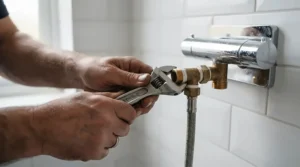
6. Grohe Grohtherm 800 — wax-cartridge precision with a 38°C safety stop
Grohe’s selling point is TurboStat, a compact cartridge with a wax thermoelement that reacts rapidly to pressure and temperature swings. That’s handy when someone flushes the loo or runs the kitchen tap mid-shower.
The SafeStop button holds the temperature at 38°C, with an optional SafeStop Plus limiter at 43°C. An EcoButton on the volume handle has an adjustable economy stop, and Grohe claims its EcoJoy technology can cut water use by up to 50%. Built-in non-return valves and dirt strainers protect the cartridge, and the ceramic headpart turns 180°. Centres are 150mm. The StarLight chrome finish resists scratching.
The expert-ish take, framed as reasoning: this is for shared bathrooms where several people with different temperature preferences share one valve, and where pressure fluctuates. I couldn’t find verifiable UK buyer reviews on the retailer pages I checked, so I’ll lean on the spec and Grohe’s reputation rather than invent sentiment.
Pros:
- ✅ Fast-reacting TurboStat cartridge
- ✅ SafeStop 38°C button plus optional 43°C limiter
- ✅ Built-in non-return valves and strainers
Cons:
- ❌ Premium pricing versus Bristan options
- ❌ Water-saving claims come from the manufacturer
Price and verdict: premium bracket, and I couldn’t verify a current GBP figure, so check current price. Pay it only if precision matters to you.
7. Triton Elina — hygienic concentric design built for accessibility
The Elina is a different animal. It was designed for care homes and hospitals, with low-resistance lever controls that are easy to grip, and a hygienic body that avoids dirt traps.
The concentric valve carries TMV3 approval and conforms to NHS Estates Model Engineering Specification D08. Flow and temperature have separate controls, with a maximum temperature of 41°C. It works from 0.1 bar minimum, with 150mm pipe centres. Retailer listings quote different flow figures by variant, 7, 8 or 12 l/min, and guarantees of two to five years. Check exactly which version you’re buying.
That tamper-resistant, easy-turn design makes it a thoughtful choice for anyone with limited hand dexterity, and for landlords housing vulnerable tenants. For a typical family bathroom it’s overkill. I found no verifiable consumer reviews, so the care-sector approvals carry the argument.
Pros:
- ✅ TMV3 approval for care environments
- ✅ Low-resistance levers suit limited dexterity
- ✅ Hygienic design avoids dirt traps
Cons:
- ❌ Flow figures vary by variant
- ❌ Expensive for ordinary domestic use
Price and verdict: around £320-£420 depending on valve-only or kit. Excellent if accessibility is the brief, poor value otherwise.
DIY Plumbing: How to Fit an Exposed Shower Valve Without Drama
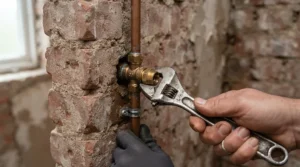
This is practical territory that Amazon listings skip, so let’s cover it. Done carefully, DIY plumbing on a like-for-like exposed shower valve swap is realistic for a confident home improver. Moving pipes or altering the system is a different matter. For that, hire a qualified plumber.
Step 1: Measure first. Standard centres are 150mm. Many valves, like the Bristan 1901 and Bristan Artisan, accept adjustable inlets, but check the range before ordering.
Step 2: Isolate and drain. Turn off the supplies, open the old valve to drain it, and keep a towel handy.
Step 3: Remove and inspect. Take off the old valve, then check the pipe ends and any compression fittings for corrosion or scale.
Step 4: Flush before connecting. Run water through the open pipes to clear debris, which protects thermostatic cartridges.
Step 5: Fit and seal. Mount the elbows, tighten the connections, and use the supplied isolation valves where included, as on the Bristan Frenzy.
Step 6: Test and set. Check for leaks, then confirm your maximum temperature stop.
Legally, work on water fittings falls under the Water Supply (Water Fittings) Regulations 1999. Notification requirements apply to certain jobs, so check your water supplier’s guidance before you start. In the first 30 days, watch for slow drips at joints and recheck tightness after the pipes have heated and cooled.
Real-World Scenarios: Which Exposed Shower Valve Suits Your Home?
Specs only help once they meet a real bathroom. Here are three buyer profiles with reasoning.
The landlord with three flats. Budget is under £150 per bathroom, tenants change often, and visits need to be quick. The Bristan Frenzy fits: isolation valves speed up repairs, and the cool body reduces scald complaints. It’s used daily, so durability and replaceable parts matter more than looks.
The Victorian terrace owner. The pipework is already on show, the budget stretches to roughly £400, and the owner wants real traditional bathroom style. The Bristan 1901 is the match, because adjustable inlets meet old centres and the handles look period-correct.
The retired couple. One partner has arthritis, and the budget isn’t the issue; ease of use is. The Triton Elina has easy-grip levers, TMV3 approval and a 41°C maximum. The extra cost buys genuine safety.
For loft-tank homes, the Mira Element EV deserves a seat at this table too, thanks to its 0.1 bar minimum.
✨ Don’t Miss These Exclusive Deals!
🔍 Take your bathroom refresh to the next level with these carefully selected valves.Click on any highlighted product to check current pricing and availability. The right exposed shower valve will help you create a safe, stylish shower your whole family will love! 🚿
Problem and Solution: Fixing Common Exposed Shower Valve Headaches
Even the best valve misbehaves occasionally. Here are the usual culprits and the sensible fixes.
Temperature swings. Thermostatic cartridges react to unbalanced supplies. Check that hot and cold pressures are reasonably matched, and clean the strainers. The Grohe Grohtherm 800 includes dirt strainers for precisely this reason.
Weak flow. Look at the flow regulators first. Many valves ship with them fitted, like the Bristan 1901 eco versions. If pressure itself is low, a valve rated down to 0.1 bar, such as the Mira Element EV, helps more than a higher-flow handset.
Drips at connections. Re-seat the joint, replace the washer, and avoid over-tightening.
Stiff controls. Limescale is the usual cause. One owner of an older Bristan Frenzy reported stiff controls after about five years. A light dab of silicone grease on serviceable parts often helps, but follow the manufacturer’s instructions.
Valve feels cool when off. On the Bristan Frenzy, that’s the Safe Touch design doing its job, not a fault.
What Is an Exposed Shower Valve?
An exposed shower valve is a mixing valve mounted on the wall’s surface rather than hidden inside it, so you see the whole body and not just a handle and faceplate. It blends hot and cold water, controls flow and temperature, and connects to a hose or fixed head. Because nothing is buried, replacement is often possible without removing tiles.
There are three common shapes. A bar valve is a horizontal tube with a control at each end. A concentric valve, like the Bristan 1901 and Triton Elina, stacks flow and temperature controls round a single centre. A single-lever mixer, like the Hansgrohe Vernis Blend, combines both in one handle.
The practical benefit is access. When something wears out, you reach it straight away. The cost is visual: you have to live with the hardware, so the shape matters.
How to Choose an Exposed Shower Valve: 7 Steps
A good decision follows an order. Work through these in sequence.
- Identify your water system. Tank-fed, combi or unvented? Low pressure favours valves rated to 0.1 bar, like the Mira Element EV.
- Check pipe centres. Measure, then match against adjustable ranges.
- Insist on thermostatic control. A mechanical valve cannot adjust to changes in supply temperature or flow, which the industry body BEAMA explains in its thermostatic mixing valve FAQ.
- Look for approvals. TMV2, WRAS and TMV3 (for care settings) tell you about tested performance.
- Pick your style. Modern bar, concentric or period.
- Plan servicing. Isolation valves and available spare parts cut future costs.
- Set a realistic budget. Value comes from the match, not the price tag.
Bar Shower Valve Review: How the Seven Compare Side by Side
A fair bar shower valve review should admit its limits. For several of these products, verifiable buyer reviews are scarce, so spec, approvals and guarantees carry more weight than star ratings.
| Product | Min pressure | Cartridge | Safety stop | Best For |
|---|---|---|---|---|
| Bristan Frenzy | 0.2 bar | Thermostatic (±1°C) | 38°C, override to 46°C | Budget families |
| Mira Element EV | 0.1 bar | Thermostatic (35-45°C) | Automatic shutdown | Low-pressure systems |
| Bristan Artisan | 0.2 bar | Thermostatic | TMV2, 60°C max supply | Neat retrofits |
| Hansgrohe Vernis Blend | 1 bar | Manual ceramic | Adjustable limiter | High-pressure budget |
| Bristan 1901 | 0.2 bar | Thermostatic | 42°C stop | Period homes |
| Grohe Grohtherm 800 | Check datasheet | TurboStat wax | 38°C SafeStop | Shared bathrooms |
| Triton Elina | 0.1 bar | Thermostatic (TMV3) | 41°C maximum | Accessibility |
Reading the table, the Bristan Frenzy and Mira Element EV cover the widest range of homes for the least money. The Bristan 1901 and Triton Elina justify their prices only if style or care approvals are your priority. A bar shower valve review that ignores your water system is incomplete, so match pressure first and brand second.

Exposed vs Concealed Shower Valve: Which Is Right for You?
Concealed valves look sleeker, but they need wall access. Exposed ones win on practicality.
| Factor | Exposed | Concealed | Best For |
|---|---|---|---|
| Installation | Mounts on existing pipework | Needs wall chasing | Exposed for quick swaps |
| Repairs | Direct access | Often behind tiles | Exposed for maintenance |
| Appearance | Visible hardware | Minimalist | Concealed for modern design |
| Typical cost | Often lower | Higher with labour | Exposed on tight budgets |
A buying guide from Ambiance Bathroom notes that exposed options are usually the easiest choice if you want to replace a valve without removing tiles. That matches the logic here. If you’re renovating from scratch, concealed may suit better; for a swap, exposed usually wins on effort and cost.
For comparison, even recessed models like the Bristan Artisan recessed valve need a cavity of about 35mm, which many older walls can’t spare.
Traditional Bathroom Style: Making an Exposed Valve Look Intentional
Done badly, visible hardware looks like a cost-cutting measure. Done well, it’s the centrepiece of traditional bathroom style. The trick is commitment.
Start with the valve. The Bristan 1901 offers crosshead or lever handles, and finish options include chrome and gold. Match those handles to your taps and radiator valves. Mixed metals rarely work unless deliberate. The Bristan Colonial exposed mixer shower is another traditional option: it lists adjustable inlets for centres between 110mm and 155mm.
Then add period companions: a rigid riser, a fixed shower rose, and white tiling with a contrasting trim. Keep the pipework tidy and aligned, since in traditional bathroom style the exposed parts are part of the design.
One caution: traditional bathroom style doesn’t mean traditional safety. Choose a thermostatic valve with a defined stop temperature, like the 42°C preset on the Bristan 1901, rather than an antique-looking manual one.
Surface-Mounted Pipework: Making It Neat, Not Messy
Visible pipes can look industrial-chic or amateurish. The difference is planning. Surface-mounted pipework works best when every run is straight, parallel and evenly clipped.
Use matching clips at consistent intervals, and cut pipes square. Chrome-plated copper keeps the finish consistent with the valve. Covers and escutcheons hide wall entries, and some kits, such as the Bristan Colonial, include plated shrouds.
Surface-mounted pipework has an upside: leaks show immediately, so a slow weep doesn’t rot a hidden cavity. It’s also easier to modify later.
Always keep access to isolation valves. The Bristan Frenzy and Bristan Artisan include them, which is a real advantage when you’re working with surface-mounted pipework and want to isolate quickly.
Safety, Regulations and Compliance Guide
Safety isn’t glamorous, but it’s where a good exposed shower valve proves itself. Look for these marks and what they mean.
TMV2 is an independent certification for thermostatic mixers, covering standards BS EN 1111 and BS EN 1287. TMV3 is the higher specification used in care settings, aligned with NHS D08, as the Triton Elina demonstrates. WRAS approval indicates the product meets water fittings requirements.
On installation, the Water Supply (Water Fittings) Regulations 1999 govern how fittings are installed and protect against backflow. Some work needs advance notification to your water supplier, and you can find guidance through Water Regs UK. If in doubt, use a plumber registered with a recognised competent person scheme.
The Hansgrohe Vernis Blend deserves a specific warning: with no water-failure shutdown listed, it offers less protection than thermostatic rivals. For households with young children or vulnerable adults, I’d choose a thermostatic model every time.
Long-Term Cost and Maintenance
The purchase price is only the opening bid. Total cost of ownership includes cartridges, washers, descaling and your time.
Take the Bristan Frenzy at roughly £100. Over a five-year guarantee period, that’s about £20 a year, and replaceable parts mean a failed cartridge needn’t mean a new bar. A premium Grohe Grohtherm 800 costs more upfront, but its built-in strainers and non-return valves protect the cartridge, which may stretch its life.
Water saving counts too. Grohe’s EcoJoy claim of up to 50% less water comes from the manufacturer, so treat it as a best case. Factory flow regulators on some Bristan 1901 kits cap use as well.
Maintenance is simple: descale annually in hard-water areas, clean strainers, and keep a note of the model number for spares.
FAQ
❓ Can I fit an exposed shower valve without removing tiles?
❓ What's the difference between a bar and a concentric exposed shower valve?
❓ Does an exposed shower valve work with low water pressure?
❓ How long does an exposed shower valve last?
❓ Is a thermostatic exposed shower valve worth the extra cost?
Conclusion
Seven valves, one clear lesson: the best exposed shower valve is the one that matches your pressure, your pipework and your household. The Bristan Frenzy is my default recommendation for most families, thanks to Safe Touch, isolation valves and a friendly price. The Mira Element EV takes the crown for low-pressure homes, and the Bristan Artisan suits tidy modern retrofits.
If style leads, the Bristan 1901 delivers period charm with thermostatic safety. If budget and mains pressure allow, the Hansgrohe Vernis Blend is a stylish manual option, though it lacks scald protection. Premium buyers should weigh the Grohe Grohtherm 800, while accessibility needs point to the Triton Elina.
Before you buy, measure your pipe centres, confirm your pressure and choose thermostatic unless you have a good reason not to. Prices change often, so check current price and availability, and make sure any DIY plumbing complies with water regulations.
Recommended for You
- Concealed Shower Valve: 7 Best Picks For UK Bathrooms (2026)
- Thermostatic Shower Valve: 7 Safest Picks For UK Homes (2026)
- Shower Tray For Wet Room Installation: 7 Best Picks (2026)
Disclaimer: This article contains affiliate links. As an Amazon Associate, I earn from qualifying purchases. If you purchase products through these links, we may earn a small commission at no additional cost to you.
✨ Found this helpful? Share it with your friends! 💬🤗
