In This Article
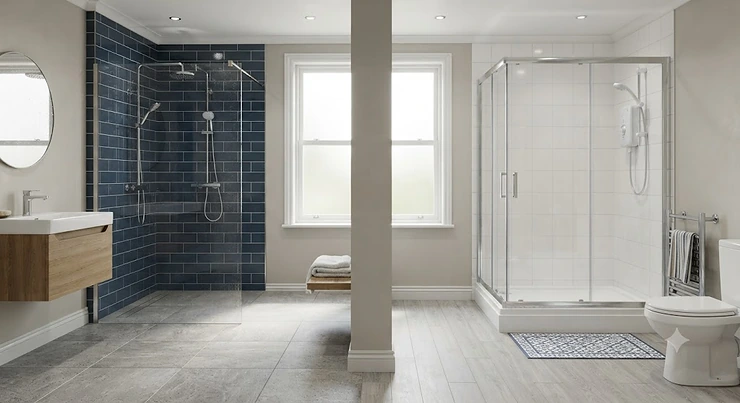
Standing in a bathroom showroom with a tape measure in one hand and a coffee going cold in the other, most people hit the same wall: walk-in shower enclosure vs enclosed shower, which one actually suits this room, not the glossy one in the brochure? It’s a fair question, and it’s more than an aesthetic choice. A walk-in shower enclosure — one or two fixed glass panels with no door — trades a bit of splash control for an open, doorless feel and genuinely easier cleaning. An enclosed shower, whether that’s a sliding, hinged, bi-fold, or quadrant design, boxes the water in more tightly, which matters if your bathroom is compact or shared by a family that isn’t always careful with the shower head.
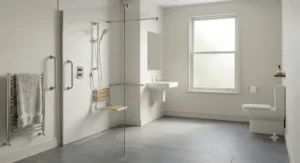
Affordability plays into it too. Framed, fully enclosed doors tend to start cheaper because there’s less glass and no wetroom floor prep involved, while walk-in panels lean on bigger sheets of toughened glass and, often, proper tanking underneath. Neither is objectively “better” — the right pick depends on your floor structure, your bathroom’s footprint, who’s using it, and how much waterproofing work you’re prepared to take on.
This guide breaks down seven real UK products spanning budget, mid-range and premium, all sourced from current UK stockists, so you can see actual specs and price bands rather than marketing fluff. We’ll also dig into wet room design, panel options, tanking and drainage, and the regulatory detail that most product pages conveniently skip. Everything here reflects genuine specifications and aggregated review sentiment from UK retailers and trade sources — no invented testimonials, no fabricated hands-on claims, just honest analysis you can actually use.
Quick Comparison Table
Before the deep dive, here’s the shape of the market at a glance. This is a snapshot of five contrasting picks — the full breakdown of all seven follows further down.
| Product | Style | Glass | Price Range | Best For |
|---|---|---|---|---|
| Aqualux Aqua 8 | Walk-in panel | 6–8mm toughened | around £150–£350 (panel only) | Tightest budgets |
| Nuie Walk-In Enclosure | Walk-in bundle + tray | 8mm toughened | £320–£460 | Value bundle with tray included |
| Merlyn Ionic Showerwall | Walk-in wetroom panel | 8mm toughened | around £300–£500 per panel | All-round reliability |
| Coram Premier Frameless Sliding Door | Enclosed (sliding) | 8mm toughened | around £500–£900 | Fully enclosed, minimal look |
| Matki Boutique Corner Enclosure | Walk-in with tray | 8/10mm super-toughened | £1,400–£2,200 | Premium spa finish |
A pattern jumps out fast: fully framed, enclosed doors like the Coram Premier Frameless Sliding Door sit in similar money to a mid-tier walk-in panel once you account for the tray and installation labour, so price alone rarely settles the walk-in shower enclosure vs enclosed shower question. Where the walk-in options pull ahead is long-term cleaning and that open, hotel-bathroom feel; where enclosed doors earn their keep is splash containment in smaller or shared bathrooms. We’ll unpack exactly why in the sections below.
💬 Scroll on for the full seven-product breakdown — or jump straight to the comparison that matches your bathroom below.🤗
Top 7 Walk-In Shower Enclosures & Panels: Expert Analysis
| # | Product | Type | Glass | Price Range | Best For |
|---|---|---|---|---|---|
| 1 | Merlyn Ionic Showerwall | Walk-in wetroom panel | 8mm | £300–£500/panel | All-rounder |
| 2 | Aqualux Aqua 8 | Walk-in panel/quadrant | 6–8mm | £150–£650 (kit) | Budget |
| 3 | Nuie Walk-In Enclosure with Tray | Walk-in bundle | 8mm | £320–£460 | Value bundle |
| 4 | Kudos Ultimate2 Wetroom Panel | Modular walk-in panel | 8/10mm | £225–£420/panel | Custom layouts |
| 5 | Coram Premier Frameless Sliding Door | Enclosed sliding door | 8mm | £500–£900 | Fully enclosed |
| 6 | Matki Boutique Corner Enclosure | Walk-in with tray | 8/10mm | £1,400–£2,200 | Premium finish |
| 7 | Impey Aqua-Dec EasyFit + WaterGuard | Tanking & drainage system | N/A | £270–£600 (tanking) + £150–£400 (former) | True wet rooms |
Looking at the spread, the jump from the sub-£500 walk-in panels to Matki‘s premium corner enclosure isn’t just about glass thickness — it’s the aluminium framing, the integrated Synthastone tray, and a genuinely longer guarantee that push the price. Meanwhile Impey‘s tanking kit is the odd one out here on purpose: it’s not glass at all, but if you’re leaning toward a true wet room rather than a tray-based walk-in, this is the bit that actually stops your ceiling downstairs from developing a suspicious brown patch. Treat the table as a starting point — your final spend depends heavily on panel width, tray choice and whether a fitter needs to correct out-of-true walls.
1. Merlyn Ionic Showerwall — best all-round reliability with a 20-year guarantee
The Merlyn name carries weight in UK bathrooms for a reason, and the Ionic Showerwall is the brand’s dependable walk-in workhorse. It’s built from 8mm toughened safety glass, stands 2000mm tall (2015mm including the bracing rail), and comes finished with Merlyn’s Mershield Stayclear coating — a hydrophobic treatment that makes water bead and slide off rather than sitting around to leave limescale trails. What that actually means day to day is fewer Sunday mornings spent scrubbing glass with a squeegee and vinegar spray. The panel is reversible for left- or right-hand fitting, suits both corner and recess layouts, and comes in widths from 700mm up to 1600mm+, so it flexes to most bathroom shapes. Based on the spec sheet, this is the panel to pick if you want a known-quantity brand with strong UK stock availability rather than a boutique name. Reviewer feedback aggregated across UK plumbing retailers consistently flags the coating’s easy-clean performance as the standout, though a recurring theme is that the bracing bar, while functional as a towel rail, is a bit of an eyesore for anyone chasing a fully minimalist look.
Pros:
- ✅ 20-year manufacturer guarantee for genuine peace of mind
- ✅ Mershield coating meaningfully cuts limescale build-up
- ✅ Wide size range suits recess and corner layouts alike
Cons:
- ❌ Bracing bar adds visual clutter versus frameless rivals
- ❌ Wall post adjustment is modest on very uneven walls
Priced around £300–£500 depending on width, the Merlyn Ionic Showerwall sits comfortably as a mid-range panel that punches above its price for durability and after-sales support.
2. Aqualux Aqua 8 — best budget-friendly frameless panel widely stocked nationwide
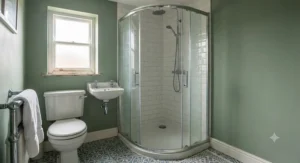
If your renovation budget is doing a lot of heavy lifting elsewhere in the bathroom, the Aqualux Aqua 8 range is where most trade fitters point cost-conscious clients first. It uses 6–8mm toughened safety glass depending on the specific model, with an anti-limescale coating baked into the glass to reduce daily maintenance. What that trade-off in glass thickness means practically is a lighter, easier-to-handle panel for DIY-adjacent installs, though it flexes a touch more underfoot pressure than the thicker premium ranges — not a safety issue, just a slightly different feel when you lean on it drying off. Aqualux is also one of the few brands stocked directly through Screwfix, which keeps delivery times and stock availability far more predictable than boutique imports. Reviewers on major UK retailer sites frequently mention good value for money and straightforward fitting instructions as the headline positives, with the main gripe being that the quadrant and slider ranges’ door rollers can feel a little plasticky compared with pricier alternatives.
Pros:
- ✅ Genuinely budget-friendly without skipping safety glass
- ✅ Nationwide stock through major UK trade retailers
- ✅ Anti-limescale coating reduces day-to-day cleaning
Cons:
- ❌ Thinner glass options feel less substantial underfoot
- ❌ Door rollers on sliding models can wear faster
Individual panels run from around £150–£350, while complete quadrant kits with tray land closer to £550–£650, making Aqualux Aqua 8 the pick when budget is the priority and you’re happy to fit it onto a standard tray rather than a full wet floor.
3. Nuie Walk-In Enclosure with Tray — best value complete kit with tray included
Buying panel, tray and waste separately can quietly balloon a budget, and this is exactly the gap the Nuie Walk-In Enclosure bundles fill. Each package pairs an 8mm toughened glass walk-in panel with a matching low-profile tray, sized from 1200x700mm up to 1700x800mm, so you’re not left hunting for a compatible tray afterwards. What that bundling means in real terms is a single delivery, one set of dimensions to double-check, and — usually — a lower total spend than buying components à la carte. The polished chrome frame elements and concealed fixings give it a tidier look than some budget rivals, and it’s genuinely suitable for both standard tray installs and a tiled wetroom finish if you swap the tray for a wet room former later. Aggregated feedback from UK trade suppliers points to good value as the strongest theme, with occasional notes that delivery on the larger bundle sizes needs careful scheduling since the glass and tray typically arrive as separate, bulky parcels.
Pros:
- ✅ Tray and panel bundled together for simpler buying
- ✅ 8mm glass at a genuinely competitive bundle price
- ✅ Works for tray installs or a future wetroom conversion
Cons:
- ❌ Bundle sizes are fixed — less room for bespoke widths
- ❌ Large bundles need coordinated, careful delivery logistics
At £320–£460 for a complete tray-and-panel bundle, Nuie Walk-In Enclosure offers some of the strongest pound-for-pound value in this entire round-up.
4. Kudos Ultimate2 Wetroom Panel — best modular system for a bespoke layout
Some bathrooms simply don’t fit standard sizes, and that’s where the Kudos Ultimate2 range earns its place. It’s a modular system: choose from nine individual glass panel widths (roughly 400mm to 1600mm) in 8mm or 10mm toughened glass, add an optional fold-away deflector panel, and build a configuration that matches your exact opening — rather than forcing your bathroom to match someone else’s standard width. Life Shield glass protection is baked in to resist dirt and limescale, and the panels are designed to work with either a Kudos G4 shower tray or a tiled wetroom floor directly. Based on the spec comparison against fixed-width competitors, this modularity is the real selling point for awkward loft conversions or period bathrooms with non-standard alcoves. Trade retailer reviews consistently praise the fitting flexibility and the wall-post adjustment for out-of-true walls, a common headache in older UK housing stock, while a fair few buyers note that sourcing every individual component (post, deflector, tray) does take more planning than a boxed kit.
Pros:
- ✅ Genuinely bespoke widths for awkward or period bathrooms
- ✅ Life Shield coating keeps glass cleaner for longer
- ✅ Wall-post system handles out-of-true walls well
Cons:
- ❌ Component-based buying takes more planning than a kit
- ❌ Deflector panels and posts are priced as separate extras
Panel prices run from around £225 for a 400mm section up to roughly £420 for the widest 1600mm option, positioning Kudos Ultimate2 as the mid-range choice for anyone prioritising a tailored fit over an off-the-shelf bundle.
5. Coram Premier Frameless Sliding Door — best fully enclosed option with a minimalist look
Not everyone wants to go doorless, and this is the strongest argument in this whole list for staying enclosed. Coram’s Premier Frameless Sliding Door delivers that clean, edge-to-edge wetroom aesthetic while still fully containing the shower behind 8mm toughened safety glass tested to EN12150 and EN12600, with the complete enclosure independently certified to BS EN14428 — the standard covering the whole unit, not just the glass. What that dual certification means in practice is Coram has tested the door as a working system, not just the raw glass sheet, which matters if you’ve got kids who lean on the panel while reaching for the shampoo. It stands 2000mm tall, includes 40mm of adjustment for out-of-true walls, and can be fitted onto either a slimline tray or a proper wetroom floor. Reviewers and trade installers commonly note the smooth, soft sliding action as a highlight, particularly next to older hinged doors, while the honest trade-off — as with any sliding mechanism — is that the track needs periodic cleaning to keep glide quality consistent.
Pros:
- ✅ Fully enclosed water containment for busy family bathrooms
- ✅ Whole-enclosure BS EN14428 certification, not just the glass
- ✅ Lifetime guarantee backs long-term confidence
Cons:
- ❌ Sliding track needs regular cleaning to stay smooth
- ❌ Less of the open, doorless feel walk-in fans want
Typically priced around £500–£900 depending on width, the Coram Premier Frameless Sliding Door is the sensible pick if the walk-in shower enclosure vs enclosed shower debate tips toward “enclosed” for your household.
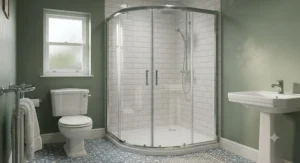
6. Matki Boutique Corner Enclosure — best premium British-made pick for a spa finish
At the top of this round-up sits Matki, a British manufacturer whose Boutique Corner Walk-in Enclosure is built to feel more like a five-star hotel bathroom than a retrofit. The high-lustre aluminium frame pairs with 8mm and 10mm super-toughened safety glass and an acrylic-filled Synthastone tray, with the panels recessing directly into grooves cut into the tray edge for a near-seamless glass-to-tray junction that stops water sneaking out at the base. What that recessed detail means practically is markedly less puddling around the enclosure’s foot than you get with panels simply sitting on top of a standard tray lip. Matki’s own Glass Guard coating is applied as standard, and the whole enclosure carries a genuinely strong 10-year guarantee, with sizes running from 1200x900mm up to 1700x900mm to suit larger bathrooms. Aggregated buyer sentiment from UK bathroom retailers is overwhelmingly positive on build quality and finish, with the main honest caveat being that at this price point, a professional fit is close to essential to justify the spend — DIY installation risks undermining exactly the seamless look you’re paying for.
Pros:
- ✅ Recessed glass-to-tray junction dramatically cuts leaks
- ✅ 10-year guarantee reflects genuine confidence in build quality
- ✅ British-made with a distinctly premium, spa-like finish
Cons:
- ❌ Significant premium over mid-range walk-in panels
- ❌ Professional installation is strongly recommended, adding cost
With RRPs around £2,179 and typical selling prices in the £1,400–£2,200 range, Matki Boutique Corner Enclosure is squarely for buyers who see the bathroom as a long-term investment rather than a quick refresh.
7. Impey Aqua-Dec EasyFit + WaterGuard Tanking Kit — best tanking system for a genuinely leak-proof wetroom floor
None of the glass above matters much if the floor beneath it isn’t properly waterproofed, which is why Impey’s tanking system earns its spot as product seven. The Aqua-Dec EasyFit is a 22mm GRP floor former with pre-formed drainage gradients that replace a section of floorboard entirely, available with gravity, pumped or slimline waste options depending on your joist depth and drain run. Paired with it, the WaterGuard membrane is a 1mm-thick, self-adhesive butyl rubber sheet that seals both floor and walls and — crucially — can be tiled over immediately, with no curing time to wait around for. What this combination means for anyone converting an upstairs bathroom in a typical UK timber-joist house is a level-access wet floor without waiting days for a wet-applied membrane to cure before tiling can start. Impey backs the system with a lifetime watertight guarantee when installed correctly, and it’s compatible with underfloor heating if you’re going all-in on the wet room experience. Trade forum discussion and installer feedback consistently rate the self-adhesive membrane as faster and less mess-prone than traditional liquid tanking, though several installers note the floor former does need a genuinely flat, well-prepared subfloor to sit correctly.
Pros:
- ✅ No cure time — tile directly after the membrane goes down
- ✅ Lifetime watertight guarantee when professionally installed
- ✅ Compatible with underfloor heating for a genuine spa feel
Cons:
- ❌ Requires a properly flat, prepared subfloor to perform
- ❌ Adds real cost on top of the glass panel itself
Budget around £270–£600 for the WaterGuard tanking kit and a further £150–£400 for the floor former depending on drainage style — Impey Aqua-Dec EasyFit is the unglamorous but essential product that makes a true wet room actually work long-term.
Practical Installation & Tanking Guide
Getting a walk-in panel or wet room right starts weeks before the glass arrives. First, confirm your floor structure: solid concrete floors need chasing out to create a fall toward the drain, while timber joist floors (common in Victorian and 1930s UK homes) need a floor former like the Impey Aqua-Dec EasyFit to build in that gradient without weakening the joists. Second, sort drainage before tiling — retrofitting a drain after tiles are down is expensive and disruptive. Third, apply your tanking membrane methodically, working corners and upstands first since these are the most common leak points, not the flat floor area.
For the first 30 days after fitting, resist the urge to jet-wash the enclosure or blast it with a high-pressure shower attachment while any sealant is still curing — most silicone needs 24–48 hours minimum, and tanking membranes vary by manufacturer. A common early mistake is over-tightening wall brackets on wetroom panels, which can bow the glass fractionally and create a gap at the seal. Once settled in, a simple maintenance schedule pays off: wipe the glass dry after each use to keep coatings like Mershield Stayclear or Life Shield working properly, and check silicone seals every six months for the earliest signs of shrinkage or discolouration, since replacing a bead of sealant is far cheaper than fixing a slow leak that’s been running for a year unnoticed.
Real-World Scenarios: Which Set-Up Suits You?
If you’re a first-time buyer converting a small 1930s semi’s box room into an en-suite on a tight budget, the Nuie Walk-In Enclosure with Tray bundle makes the most sense — it keeps costs predictable and avoids the extra tanking labour of a full wet room, since the tray does the waterproofing job for you. If you’re a family with two teenagers who treat the shower head like a water pistol, the Coram Premier Frameless Sliding Door is the more sensible enclosed pick, containing splashes far more reliably than an open panel while still looking contemporary. And if you’re renovating a period home for the long haul and want a bathroom that adds genuine resale value, pairing the Matki Boutique Corner Enclosure with proper Impey tanking underneath gives you both the premium look and the watertight substructure that survives a building survey without red flags.
What Is a Walk-In Shower Enclosure?
A walk-in shower enclosure is a showering area defined by one or more fixed glass panels rather than a hinged or sliding door, allowing you to step straight in without opening anything. It typically sits on a low-profile tray or a tiled wetroom floor, uses 8mm toughened safety glass as standard, and relies on panel positioning and a deflector to keep most of the spray contained.
Walk-In Shower Enclosure vs Enclosed Shower: What’s Actually Different?
The core distinction isn’t glass quality or price — most mid-range products on both sides use comparable 8mm toughened glass — it’s containment versus openness. A walk-in shower enclosure leaves one edge genuinely open, relying on careful shower-head positioning and a wide enough tray or wet floor to catch any stray spray before it reaches the rest of the room. An enclosed shower, whether sliding, hinged or bi-fold, seals that gap with a moving door, trapping essentially all the water inside regardless of where the shower head is aimed. What most buyers overlook is that this affects more than mopping: walk-in panels genuinely need a slightly larger footprint to work well, generally 900mm or more of clear space beyond the panel, whereas an enclosed door can be squeezed into a tighter alcove because the door itself does the containment work. If your bathroom is under 6m² and shared by more than one person, an enclosed door like the Coram Premier Frameless Sliding Door is usually the more forgiving choice; if you’ve got the space and want that hotel-spa openness, a walk-in panel wins on both looks and long-term cleaning ease.
Open Shower vs Enclosed Shower: Airflow, Heat & Everyday Practicality
Beyond splash control, an open shower — meaning a walk-in panel or a wetroom with no door at all — changes how the whole bathroom behaves day to day. Steam disperses into the room rather than staying trapped, which is genuinely useful if your bathroom lacks strong extraction, but it also means the room can feel a touch cooler while you’re actually showering since warm air escapes past the panel more readily. An enclosed shower, by contrast, holds heat and steam inside the cubicle, making the shower itself feel warmer and more cocooning, at the cost of a steamier, more humid bathroom afterwards unless your extractor fan is doing serious work. Reviewers who’ve lived with both setups in UK homes tend to note that open designs suit well-ventilated, larger bathrooms best, while enclosed doors are the more comfortable everyday choice in smaller or poorly ventilated en-suites — a genuinely practical distinction that rarely makes it into glossy brochure copy.
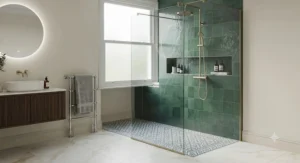
Wet Room Screen vs Enclosure: Which Wins for Your Bathroom?
A wet room screen is a single glass panel protecting a fully tanked, level floor with no visible tray at all, while an enclosure — walk-in or fully closed — typically sits on a defined tray that raises the shower area slightly and contains water mechanically rather than relying purely on floor gradient. The Ideal Home guide to shower enclosures and wet rooms notes that ease of installation is often the deciding factor between the two, and that’s borne out here: a wet room screen demands full tanking underneath (see the tanking section below), while an enclosure can usually be fitted onto an existing sound floor in a day or two.
| Factor | Wet Room Screen | Traditional Enclosure |
|---|---|---|
| Floor prep | Full tanking required | Tray does the waterproofing |
| Install time | Days (tanking + tiling) | Typically 1–2 days |
| Cleaning | Very easy, few nooks | Tray edges need attention |
| Resale appeal | High, especially en-suites | Solid, familiar to buyers |
| Typical cost | £3,000–£8,000+ (full room) | £300–£2,200 (panel/door alone) |
The table makes the trade-off obvious: a wet room screen costs considerably more once you include tanking, drainage and tiling labour, but it delivers a genuinely more luxurious, low-maintenance result and better accessibility for level-access showering. A traditional enclosure, sitting on a tray, is the faster and cheaper route to a smart-looking shower, particularly where the floor structure or budget doesn’t stretch to full tanking.
How to Choose a Walk-In Shower Panel
- Measure your clear floor space first — walk-in panels need roughly 900mm or more of open room beyond the glass to avoid spray escaping onto the floor.
- Check your floor structure — timber joists need a floor former; solid concrete needs chasing for a fall, both adding cost and time.
- Decide on tray or tanked floor — a tray is faster and cheaper; a tanked wet floor looks sleeker but costs meaningfully more.
- Match glass thickness to frame style — frameless panels typically need 8–10mm glass for rigidity; framed designs can use 6mm safely.
- Prioritise a genuine easy-clean coating — Mershield, Life Shield and similar treatments meaningfully cut limescale build-up over years, not months.
- Confirm the guarantee terms — anything under 10 years on premium glass is worth questioning before you buy.
- Budget for professional fitting — an out-of-true wall or a poorly sealed junction undoes even the best panel on paper.
Walk-In Shower Panel Options Explained
Walk-in shower panel options generally split into three configurations: single straight panels for alcove installs, corner configurations using two panels to wrap around an angle, and modular systems — like the Kudos Ultimate2 range — that let you combine multiple widths and an optional deflector panel to suit an awkward or non-standard opening. Deflector panels deserve a specific mention here: a small hinged or fixed panel, usually 300mm, angled to redirect spray back toward the drain, is often the difference between a walk-in panel that stays genuinely dry outside the shower zone and one that leaves a permanent damp patch on the bathroom floor. Frame finish is the other major variable worth weighing — chrome remains the safest, most universally saleable choice, while matt black and brushed brass have grown sharply in popularity across UK renovations in the past couple of years for a warmer, more characterful look.
Wet Room Design: Layout & Style Considerations
Good wet room design starts with the drain position, not the glass, since everything else — floor fall, tile layout, even where the toilet and basin can realistically go — cascades from that single decision. Linear drains running along one wall, like those compatible with the Impey Aqua-Dec range, tend to suit modern, minimalist bathrooms and are easier to keep visually discreet than a central point drain. Tile choice matters more in a wet room than almost anywhere else in the house: smaller format tiles (mosaic or anything under roughly 100mm) cope far better with the multiple gentle falls a wet floor needs than large-format slabs, which can crack or sit awkwardly across a gradient. Underfloor heating, while optional, genuinely transforms the everyday experience of a tiled wet floor in a UK winter, and most tanking systems — including Impey’s — are designed to work alongside it without extra complication.
Tanking and Drainage: Getting the Waterproofing Right
Problem: A wet room floor that pools instead of draining. This almost always comes down to an incorrect or inconsistent fall gradient during floor former installation — the fix is ensuring your floor former (such as the Impey Aqua-Dec EasyFit) is bedded and levelled precisely to manufacturer spec before any membrane goes down, not adjusted afterward.
Problem: Leaks appearing months after installation. Membrane failure at corners and upstands, not the flat floor area, is the usual culprit. The fix is using a purpose-made corner and upstand kit — as included with Impey WaterGuard — rather than trying to fold flat membrane into a corner and hoping the seal holds.
Problem: Musty smells from an old wet room. Often a sign the membrane wasn’t continuous behind tiles at wall junctions, letting moisture into the substrate. Retrofitting is invasive, so the real fix is specifying a system with a documented lifetime watertight guarantee from the outset, giving you recourse if it does fail.
Problem: Drain flow feels sluggish under a powerful shower. Check the waste type matches your setup — gravity wastes need a genuine, uninterrupted fall to a soil stack, while pumped wastes solve this in rooms without one, at the cost of a small mechanical pump that needs occasional servicing.
Common Mistakes When Buying a Walk-In Shower Enclosure
The single most common mistake is buying the glass before confirming the floor can actually take a wet room conversion — timber joist depth, in particular, catches people out repeatedly. A close second is underestimating clear floor space; a walk-in panel crammed into a room that’s too tight simply relocates the water onto the bathroom floor instead of containing it. Buyers also frequently skip checking whether the panel’s stated height (commonly 2000mm) will clear their ceiling once a tray or raised former is factored in, only discovering the shortfall on delivery day. Finally, choosing the cheapest available tanking kit rather than one bundled with corner and upstand accessories is a false economy — the flat membrane is rarely where a wet room actually fails.
Long-Term Cost & Maintenance
Upfront price is only half the picture. A budget walk-in panel with a weak easy-clean coating can cost more in replacement cleaning products and eventual reglazing over a decade than a mid-range panel with a genuine limescale-resistant treatment, particularly in UK hard-water regions. Tanking, similarly, is a pay-once-properly category: a cut-price membrane that fails in year four means ripping out tiles, drying the substructure, and starting again — vastly more expensive than specifying a lifetime-guaranteed system like Impey WaterGuard the first time around.
| Consideration | Budget Panel | Premium Panel + Proper Tanking |
|---|---|---|
| Upfront cost | Lower | Higher |
| 10-year cleaning effort | More frequent, harder | Less frequent, easier |
| Reseal/reglaze risk | Higher over time | Lower with strong coatings |
| Leak/failure risk | Depends heavily on tanking | Minimised with certified systems |
The takeaway from the table is straightforward: for a shower you’ll use daily for a decade or more, spending a little more on coating quality and tanking certification upfront generally beats the cheapest sticker price once you account for maintenance and failure risk over the product’s realistic lifespan.
Safety, Regulations & Compliance Guide
Glass safety in UK bathrooms is governed primarily by BS EN 12150 for toughened glass and, specifically for complete shower enclosures rather than just the glass sheet, BS EN 14428, which tests the whole assembly for impact resistance — a distinction the Sava technical guide on safety glass standards explains clearly, noting that markings should remain visible after installation so compliance can be verified later. For anyone planning a level-access wet room with accessibility in mind, either now or for future-proofing, Approved Document M on access to and use of buildings sets out the minimum dimensions and access zones for a compliant level-access shower, and the full technical detail is also available via the Planning Portal’s Approved Document M guidance. Practically, this means checking that any glass panel you buy carries a permanent BS EN 12150 or BS EN 14428 marking, and if you’re building in future accessibility, allowing the 1200mm x 1200mm minimum level-access shower zone referenced in the regulations from the outset rather than retrofitting it later.
✨ Don’t Miss These Exclusive Deals!
🔍 Ready to take your bathroom from tired to genuinely showroom-worthy? Click through on any highlighted product above to check current stock and pricing. Whichever style you land on, these picks will help you build a shower space your whole household will actually enjoy using every single day!
FAQ
❓ What's the difference between a walk-in shower enclosure and an enclosed shower?
❓ Is a walk-in shower cheaper than an enclosed shower?
❓ Do walk-in showers need a door?
❓ Can you fit a walk-in shower in a small bathroom?
❓ Does a walk-in shower need tanking?
Conclusion
There’s no single right answer buried in the walk-in shower enclosure vs enclosed shower debate — only the right answer for your specific bathroom, floor structure and household. If you’ve got the space, a well-ventilated room, and want that open, low-maintenance spa feel, a walk-in panel like the Merlyn Ionic Showerwall or, for bigger budgets, the Matki Boutique Corner Enclosure, is genuinely worth the investment. If your bathroom is compact, shared, or you simply want water contained without question, an enclosed option like the Coram Premier Frameless Sliding Door delivers a comparably modern look with far less risk of spray escaping onto the floor. Whichever direction you lean, don’t skimp on the unglamorous middle layer — proper tanking and drainage from a system like Impey Aqua-Dec EasyFit is what actually determines whether your new shower is still looking sharp in ten years, or quietly causing problems behind the tiles. Measure carefully, budget honestly for installation as well as glass, and pick the style that matches how your household actually showers, not just how it photographs.
✨ Don’t Miss These Exclusive Deals!
🔍 Take your bathroom project to the next level with the products covered in this guide. Click through on any highlighted item to check current pricing and availability, and build a shower space that genuinely earns its keep for years to come!
Recommended for You
- Sliding Door Shower Enclosure for Small Bathroom: 7 Best Picks 2026
- Quadrant vs Sliding Shower Enclosure: 7 Top Picks for 2026
- Quadrant Shower Enclosure: 7 Best Buys for UK Bathrooms 2026
Disclaimer: This article contains affiliate links. As an Amazon Associate, I earn from qualifying purchases. If you purchase products through these links, we may earn a small commission at no additional cost to you.
✨ Found this helpful? Share it with your friends! 💬🤗
