In This Article
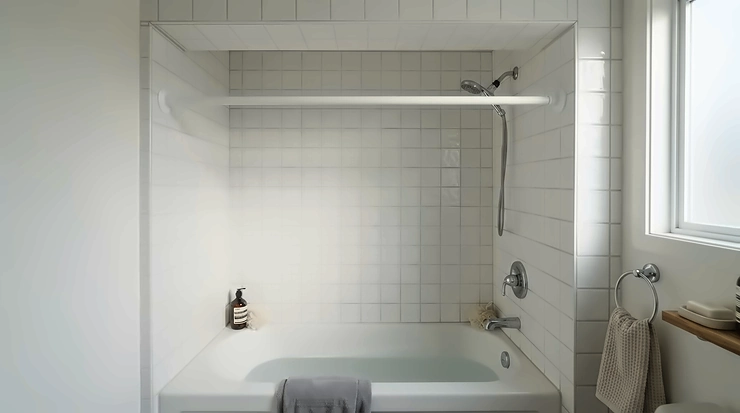
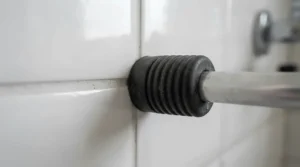
A tension shower curtain pole is a telescopic rod that wedges between two opposing walls using spring or twist-lock pressure. It holds a curtain up without screws, brackets or drill holes. Rubber or plastic end caps grip the wall, and you simply set the length to fit. That’s the whole trick, and it’s a good one.
Here’s why a tension shower curtain pole belongs on your shortlist in 2026. Renters can’t always drill into tiles. Homeowners with freshly finished walls don’t fancy perforating them. And anyone who has fought a wall plug into a stubborn grout line knows that a no-drill shower curtain pole is a small act of mercy. The catch is that quality varies wildly. A cheap pole that lets go at 2 a.m. and drops a soaked curtain into the bath is no bargain. A curtain that billows inward when the water runs, the well-documented shower-curtain effect, also tugs at the rod every single day.
This guide compares seven real models, built from published specifications and the genuine, aggregated themes in customer reviews. It is not based on hands-on testing, and where I couldn’t verify solid review data I say so rather than guess. Prices are shown as ranges only, and they move constantly, so check the current price before buying.
Quick Comparison: 7 Tension Shower Curtain Pole Options at a Glance
| Product | Extends to | Material | Best For |
|---|---|---|---|
| iDesign 78470 Extra Short Tension Rod | 66–107 cm | Stainless steel | Compact cubicles and small openings |
| Croydex Stick ‘n’ Lock Premium Telescopic Tension Rod | 1295–2298 mm | Aluminium | Standard-to-wide baths, wall-friendly fixing |
| Croydex 1100–1830 mm Chrome Telescopic Tension Rod | 110–183 cm | Aluminium with plastic fittings | Straightforward standard baths on a budget |
| Umbra Chroma Tension Rod | 107–183 cm | Metal | Light curtains, design-led bathrooms |
| Vailge Tension Rod (210–310 cm) | 210–310 cm | Carbon steel | Wet rooms and extra-wide spans |
| CoFvHo Extendable Shower Curtain Pole | 105–190 cm | Stainless steel | Mid-length baths on a budget |
| Stainless Steel Extendable Shower Curtain Rod 72–130 cm | 72–130 cm | Stainless steel | Showers and short spans, holders included |
Looking at the table above, the real dividing line is span, not brand. The iDesign 78470 and the Stainless Steel Extendable Shower Curtain Rod 72–130 cm suit small openings, while the Vailge Tension Rod (210–310 cm) is in a different league for wide gaps. For a typical bath, the two Croydex models, the Umbra Chroma Tension Rod and the CoFvHo Extendable Shower Curtain Pole are the realistic contenders. Your choice there comes down to how much weight and wall-friendliness matter.
💬 Just one click — help others make better buying decisions too!😊
Top 7 Tension Shower Curtain Pole Picks: Expert Analysis
Each pick below translates specs into real-life meaning, flags the review themes that recur, and says who should (and shouldn’t) buy it.
1. iDesign 78470 Extra Short Tension Rod — compact stainless for narrow cubicles
This rod is built for tight gaps rather than full-length baths. It stretches from 66 to 107 cm, and the same maker’s 78670 sibling covers roughly 127–221 cm if you need more reach.
The listing describes a matte silver stainless body weighing about 499 g, with a patented constant-tension mechanism and non-slip grip pads. In practice, the light weight keeps stress off the walls, and a shorter span naturally sags less than a long one. Based on the spec comparison, this is the sensible choice for a small shower cubicle or a short return wall, but not for a heavy curtain across a generous bath.
Aggregated review sentiment on a retailer mirror of the Amazon UK listing sits around 4.4 out of 5 from roughly 19,600 ratings. Reviewers commonly praise how simply it fits. One renter reports it staying put for five years, while another says rust appeared within two months in a shower room. Treat “stainless” as rust-resistant, not rust-proof.
Pros:
- ✅ Compact span suits small cubicles
- ✅ Constant-tension grip reported to hold firm
- ✅ Light, easy to fit and remove
Cons:
- ❌ Too short for most baths
- ❌ Some reviewers report rust spotting in humid rooms
Price band: budget-to-mid, so check the current price. It’s good value if your gap really is short.

2. Croydex Stick ‘n’ Lock Premium Telescopic Tension Rod — adhesive-backed brackets for wall protection
Croydex pairs tension with adhesive, and that hybrid is the standout feature here. The pole is tensioned first, then adhesive pads on the end brackets add insurance against slow creep.
It extends from 1295 to 2298 mm on a 22 mm aluminium tube, in matt black or chrome. It includes adhesive pads and an extra tension bracket, and one retailer’s chrome listing bundles 12 clear C-shaped rings. Aluminium keeps the weight down for a long span, though it flexes more than steel at the same diameter, so expect a touch more give at the full 2.3 m. The pads also work as wall protection pads of a sort, spreading load rather than pressing a small rubber disc into one spot.
My analytical take: this suits a family bath where the curtain gets yanked daily. One caution is that adhesive on painted plaster can lift paint when removed, so tiles are the safer target.
On reviews, the retailer pages I checked show a very small pool. One verified buyer praised the easy fitting for a light window curtain. That’s not enough to judge shower performance, so I won’t pretend otherwise.
Pros:
- ✅ Adhesive pads add grip beyond tension alone
- ✅ Wide extension range for bigger baths
- ✅ Choice of black or chrome finish
Cons:
- ❌ Adhesive may mark painted surfaces on removal
- ❌ Aluminium flexes more at full length
Price range: around £30-£50 depending on retailer and finish at the time of research. A fair mid-range price for long-span security.
3. Croydex 1100–1830 mm Chrome Telescopic Tension Rod — dependable high-street basic
This is the no-nonsense option: a self-supporting rod that extends via a simple slide-and-twist action.
The model code AD101000WKS is stocked by UK DIY retailers, and one listing describes it as roughly 89% aluminium and 11% plastic. A reach of 110–183 cm covers many standard baths with room to tension properly. The fewer extras there are, the fewer things can fail, which is its strength. It is also why there is no adhesive backup if your curtain gets tugged.
Who is it for? Buyers who want a familiar UK brand and a clean chrome look without paying for bells and whistles. If your walls are smooth tile and your curtain is average weight, it covers the brief. I couldn’t verify a meaningful review set on the retailer pages checked, so look at the current review pool on the Amazon UK listing before committing.
Pros:
- ✅ Simple, quick installation
- ✅ Fits many standard bath widths
- ✅ Familiar high-street brand
Cons:
- ❌ No adhesive backup for heavy tugging
- ❌ Review data hard to verify
Price range: around £20-£40 depending on retailer. Solid value for a standard bath.
4. Umbra Chroma Tension Rod — coil-spring design with a clear weight rating
Here is a genuine example of spring-loaded tension. Twisting the rod into place activates a coil spring inside to hold it up.
The UK page lists 107–183 cm (42–72 inches) in rust-resistant metal, supporting up to 6.8 kg (15 lb). That’s plenty for a liner and a curtain, though less headroom if wet towels end up draped over it. A Canadian retail listing cites a five-year warranty, but UK terms may differ, so confirm before relying on it.
What most buyers overlook is the intended use. The maker pitches Chroma for window treatments and general curtains as well as showers, so it leans towards light-to-medium loads rather than heavy-duty abuse. I couldn’t verify UK shower-specific review data, so the honest verdict rests on the specs. It suits a design-conscious bathroom with a modest curtain.
Pros:
- ✅ Genuine spring-loaded tension mechanism
- ✅ Clear stated weight rating
- ✅ Slim, modern look in several finishes
Cons:
- ❌ Lighter load rating than heavy-duty rivals
- ❌ Shower-specific reviews hard to verify
Price: check the current price. It sits mid-to-premium for its class and rewards light curtains.
5. Vailge Tension Rod Shower Rail (210–310 cm) — extra-wide spans without drilling
Most tension poles stop around two metres. This one keeps going to three, with a 310–410 cm variant beyond that.
The UK part number is Vai-UK-Tension-Rod-White-210-310. It’s carbon steel and weighs about 1.3 kg packaged, with the longer black version closer to 2 kg. That extra mass is the point, because heavier steel resists sagging across a long gap. A 3 m shower is unusual, so think wet rooms, awkward alcoves or even a canopy.
Aggregated review sentiment is positive. Reviewers describe clear instructions (including a video link) and a robust pole, and one used it to hold a heavy curtain across a three-metre space. A recurring practical note is that the tube is wide enough that ordinary curtain rings may not fit. One reviewer used tabs and shower rings instead.
Pros:
- ✅ Covers spans most poles can’t
- ✅ Robust build reported by reviewers
- ✅ Clear installation instructions
Cons:
- ❌ Wide tube may not take standard rings
- ❌ Overkill and heavy for a standard bath
Price: check the current price. Mid-range, and good value only if you genuinely need the reach.
6. CoFvHo Extendable Shower Curtain Pole (105–190 cm) — polished stainless for mid-length baths
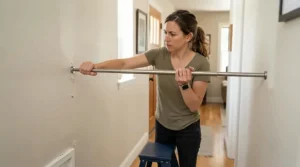
This is the budget-friendly stainless option for standard bath widths. It adjusts from 105 to 190 cm, which covers most baths with margin to spare.
Reviewers say the tension is very good and the pole stays put. One buyer using it for a front-door curtain noted a slight sag in the middle, which hints at where its limits lie with heavier loads. Another observed that similar poles often ship with sticky pads to stop slipping, and this one doesn’t seem to. That’s a cue to budget for your own wall protection pads.
Based on the specs, it’s a sensible pick for a family bath with a standard curtain and liner, provided you don’t pile wet towels on it. The sag report matters for the longer end of the range, so keep the setting nearer the middle where possible.
Pros:
- ✅ Strong tension reported by reviewers
- ✅ Bright stainless finish
- ✅ Fits most standard baths
Cons:
- ❌ Slight mid-span sag reported under heavier use
- ❌ No adhesive pads apparently included
Price: check the current price. It’s budget-friendly, and the added cost of pads is small.
7. Stainless Steel Extendable Shower Curtain Rod 72–130 cm — wall holders and voile rails included
This listing stands out for its extras. It reportedly comes with two wall holders and net voile rails, ready to use out of the box.
It stretches 72–130 cm and weighs about 632 g. The listing shows around 4.5 out of 5 from roughly 1,900 reviews on a retailer mirror, and it ranked near the top of its Amazon UK category at one point during research. Reviewers highlight that the wall cradles are incredibly sticky and robust. Another says the grip is rock solid on the panel walls of a wetroom. Those cradles do double duty as wall protection pads, spreading the load.
This is a strong choice for shower enclosures and short spans. Its limit is plain: 130 cm won’t span most baths. And with a generic listing name, check the warranty and seller details.
Pros:
- ✅ Holders reported as very sticky and robust
- ✅ Works on smooth wetroom panels, per reviewers
- ✅ Light and easy to handle
Cons:
- ❌ Too short for most baths
- ❌ Generic branding makes warranty harder to verify
Price: check the current price. It’s budget-friendly and a good-value choice for showers.
Here is how the seven compare on price tier, review signal and fit.
| Product | Price tier (indicative) | Review signal | Best For |
|---|---|---|---|
| iDesign 78470 Extra Short Tension Rod | Mid | ~4.4/5, ~19,600 ratings (retailer mirror) | Compact cubicles |
| Croydex Stick ‘n’ Lock Premium Telescopic Tension Rod | £30-£50 range | Very small pool | Wide baths, adhesive security |
| Croydex 1100–1830 mm Chrome Telescopic Tension Rod | Around £20-£40 | Not verified | Standard baths on a budget |
| Umbra Chroma Tension Rod | Mid-to-premium | Not verified for UK shower use | Light curtains, style |
| Vailge Tension Rod (210–310 cm) | Mid | Robust, clear instructions | Wet rooms, wide spans |
| CoFvHo Extendable Shower Curtain Pole | Budget | Strong tension, slight sag | Mid-length baths |
| Stainless Steel Extendable Shower Curtain Rod 72–130 cm | Budget | ~4.5/5, ~1,900 ratings (retailer mirror) | Showers, short spans |
The table shows how price and span interact. The Croydex Stick ‘n’ Lock Premium Telescopic Tension Rod costs more but adds adhesive security on a long span, whereas the CoFvHo Extendable Shower Curtain Pole and Stainless Steel Extendable Shower Curtain Rod 72–130 cm win on pure value. Where review data is thin, as with the Croydex 1100–1830 mm Chrome Telescopic Tension Rod and the Umbra Chroma Tension Rod, the specs have to do the talking, so read the live reviews first.
What Is a Tension Shower Curtain Pole and How Does It Work?
The principle is simple physics. The pole pushes outward against both walls, the walls push back, and friction at the end caps resists the downward pull of the curtain’s weight. More outward force means more friction, which is why a pole feels rock-solid once properly tensioned.
Two mechanisms dominate. In spring-loaded tension designs, an internal spring keeps pushing outward, so the pole can compensate for small wall movement. In twist-lock designs, you rotate the pole to lock a set length, with no spring involved. Both work on flat, firm surfaces like tiles. Neither is ideal on flexing stud walls or crumbly plaster.
One buyer-beware point: the word “tension” on a listing doesn’t guarantee a spring. A reviewer on one marketplace listing flagged a rail sold as tension that was not actually spring-loaded. Check the product description if spring-loaded tension matters to you.

How to Choose a Tension Shower Curtain Pole: 7 Steps
- Measure the gap at curtain height. Measure wall to wall at three points and use the smallest figure. Walls aren’t always parallel, and the narrowest point decides what fits.
- Check the wall surface. Smooth tiles grip best. Textured, painted or hollow surfaces need extra care or wall protection pads.
- Mind the adjustable pole length. Pick a pole whose range puts your measurement in the middle third. A fully extended pole is at its weakest.
- Pick the right material. Stainless steel resists corrosion, aluminium is light, and carbon steel is heavy and rigid. Humidity makes finish quality matter.
- Understand the mechanism. Independent testing, such as Bob Vila’s tested roundup, stresses a strong spring, easy resizing and rust resistance for tension rods. A spring-loaded tension design suits people who want self-adjusting grip.
- Match the weight rating to your curtain. Add the liner, the hooks and any towels you’ll hang. The Umbra Chroma Tension Rod states a 6.8 kg figure. Other listings vary.
- Look at the end fittings. Wide rubber caps, adhesive pads and holders spread the load and protect surfaces.
No-Drill Shower Curtain Pole vs Drilled Rails: What You Gain and Lose
A no-drill shower curtain pole wins on speed, reversibility and wall-friendliness. You can fit one in minutes, move it, or take it with you when you leave. A drilled rail wins on load capacity and permanence, so it’s the right call for very heavy curtains or if the pole will double as a towel rail.
| Factor | Tension pole | Drilled rail | Best For |
|---|---|---|---|
| Installation | Minutes, no tools | Longer, needs drill and fixings | Croydex 1100–1830 mm Chrome Telescopic Tension Rod |
| Wall damage | None to minimal | Permanent holes | Stainless Steel Extendable Shower Curtain Rod 72–130 cm |
| Load capacity | Lower, varies by model | Generally higher | Vailge Tension Rod (210–310 cm) |
| Flexibility | Easy to move or remove | Fixed once fitted | Umbra Chroma Tension Rod |
The comparison shows that the trade-off is permanence versus convenience. For most UK baths with a standard curtain, tension wins comfortably. Drilled rails earn their place only where heavy loads or a fixed look matter more than flexibility.
Spring-Loaded Tension vs Twist-Lock: Which Holds Better?
Spring-loaded tension has one real advantage: it keeps pushing outward as walls expand and contract with temperature and humidity. A twist-lock pole set tight on a cold morning can loosen slightly on a hot, steamy one. The Umbra Chroma Tension Rod uses an internal coil spring, and the iDesign 78470 Extra Short Tension Rod advertises a constant-tension system.
Twist-lock isn’t inferior, though. The Croydex 1100–1830 mm Chrome Telescopic Tension Rod uses a slide-and-twist action, and its simplicity is a virtue. Fewer internal parts means fewer things to wear out.
My analytical verdict: for a family bathroom where the curtain gets pulled daily, spring-loaded tension gives extra margin. For occasional use or a short span, twist-lock is perfectly fine. Whichever you choose, re-check the grip after the first week.
Adjustable Pole Length: How to Measure Your Bath Properly
Adjustable pole length sounds like a minor spec, but it governs how well the pole grips. Measure the wall-to-wall gap at the height where the pole will sit, at three points, and use the smallest result.
Then aim for the middle of the pole’s range. A pole stretched to its maximum has less overlap between its sections, so it flexes more and grips less securely. For example, a 170 cm gap sits comfortably in the middle of the wide band offered by the Croydex Stick ‘n’ Lock Premium Telescopic Tension Rod. The same gap would push the CoFvHo Extendable Shower Curtain Pole closer to the top of its range.
Also check height. Mount the pole high enough that the curtain hangs just clear of the bath rim. If the pole sits too low, the curtain bunches. Too high, and it leaves a gap for spray to escape.
Wall Protection Pads: Small Details That Save Your Tiles
Wall protection pads are the unglamorous hero of a tension fit. Bare metal against tile concentrates pressure on a tiny area, which can mark glaze, crack a thin tile or simply slide. Wide rubber or adhesive pads spread that load.
Some models include them. The Croydex Stick ‘n’ Lock Premium Telescopic Tension Rod has adhesive pads and an extra bracket, and the Stainless Steel Extendable Shower Curtain Rod 72–130 cm reportedly includes sticky holders. Others, like the CoFvHo Extendable Shower Curtain Pole, apparently don’t, so a reviewer suggests adding your own.
If you do, thin rubber discs or cut-to-size non-slip liner work well. Clean the contact area first and let it dry. And don’t over-tighten. Too much force is a bigger risk to tiles than too little.
✨ Don’t Miss These Exclusive Deals!
🔍 Take your bathroom refresh to the next level with these carefully selected poles. Click on any highlighted product to check current pricing and availability. These picks will help you create a tidy, leak-free shower your family will love!
Choosing an Extendable Shower Curtain Pole for Bath Use
An extendable shower curtain pole for bath use has a tougher job than one in a cubicle. The span is usually longer, the curtain is often heavier, and the pole may get pulled daily. Span and sag are therefore the two things to watch.
For a standard bath, the Croydex Stick ‘n’ Lock Premium Telescopic Tension Rod, Croydex 1100–1830 mm Chrome Telescopic Tension Rod, Umbra Chroma Tension Rod and CoFvHo Extendable Shower Curtain Pole all cover the likely range. Stiffer materials sag less. Heavy curtains and liners push you towards the premium Croydex or, for very wide baths, the Vailge Tension Rod (210–310 cm).
If your bath is short or sits in a small alcove, the iDesign 78470 Extra Short Tension Rod or the Stainless Steel Extendable Shower Curtain Rod 72–130 cm may be enough. Choosing an extendable shower curtain pole for bath use is mostly about honest measuring, so don’t buy on hope.

Common Mistakes When Buying a Tension Shower Curtain Pole
- Buying at the limit of the range. A pole stretched to maximum is at its weakest.
- Ignoring the curtain’s real weight. Add the liner, hooks and anything you hang.
- Trusting “stainless” blindly. Reviewers of the iDesign 78470 Extra Short Tension Rod mention rust in humid rooms, so dry the pole when you can.
- Skipping the wall surface check. Flexing stud walls and crumbly plaster are poor partners for tension.
- Over-tightening. More force can damage tiles without improving hold.
The pattern across all five is the same: most failures are fit and expectation problems, not product defects.
How to Fit a Tension Shower Curtain Pole in 10 Minutes (and Keep It There)
- Measure and choose. Use the smallest wall-to-wall figure at curtain height.
- Clean the contact points. Wipe both spots and let them dry fully.
- Set the length. Extend until the pole is slightly shorter than the gap, so you can wedge it in without scraping.
- Position and tension. Hold it level, then twist or release until it pushes firmly outward. Stop when it feels solid, not when it strains.
- Press the pads. For adhesive-backed brackets such as those on the Croydex Stick ‘n’ Lock Premium Telescopic Tension Rod, a retailer listing advises pressing for at least 30 seconds.
- Hang the curtain gradually. Add the liner first, then the curtain, and watch for slippage.
Your first 30 days: re-check the grip weekly, since walls and humidity can shift things slightly. Don’t hang wet towels from the pole unless the rating allows it. And if the pole slips, clean the ends and add wall protection pads before re-tensioning.
Problem → Solution: Sagging, Slipping, Rust and Squeaks
Problem: the pole sags in the middle. Shorten the span if possible, reduce the curtain weight, or step up to a stiffer rod such as the Vailge Tension Rod (210–310 cm). A reviewer of the CoFvHo Extendable Shower Curtain Pole noted slight sag under heavier use.
Problem: the pole creeps or falls overnight. Clean the wall and the end caps, then add wall protection pads and re-tension. A spring-loaded tension model such as the Umbra Chroma Tension Rod can absorb small wall movement.
Problem: rust spots appear. Wipe and dry the pole after showers where practical, and consider ventilation. Remember that one reviewer of the iDesign 78470 Extra Short Tension Rod reported rust within two months.
Problem: curtain rings won’t fit. Reviewers of the Vailge Tension Rod (210–310 cm) note the wide tube, so use tabs or shower rings instead.
Problem: the pole turns when you pull the curtain. Ease the tension slightly, reseat it, then re-tighten. Adhesive-backed brackets, as on the Croydex Stick ‘n’ Lock Premium Telescopic Tension Rod, help here.
Real-World Scenarios: Renter, Family Bathroom, Wet Room
The renter in a flat. A tiled alcove, a modest budget and a landlord who frowns on drill holes. Shelter’s guidance on tenants’ home improvements notes that private tenants often need permission even for things like repainting, so a no-drill shower curtain pole sidesteps the argument. The Croydex 1100–1830 mm Chrome Telescopic Tension Rod covers a standard bath at a sensible price. Check your tenancy agreement for any rules on adhesives.
The busy family bathroom. A daily shower, a liner plus curtain, and children who grab the fabric. Here the adhesive backing on the Croydex Stick ‘n’ Lock Premium Telescopic Tension Rod gives extra security against tugging. Keep it away from the extreme end of its range.
The wet room. Long span, panel walls and a heavy curtain. The Vailge Tension Rod (210–310 cm) handles the width, while the Stainless Steel Extendable Shower Curtain Rod 72–130 cm suits a shorter run, and a reviewer reports its holders gripping wetroom panels well.
The student in a tiny shower. A narrow cubicle and a tight budget. The iDesign 78470 Extra Short Tension Rod fits the gap without overkill.
Long-Term Cost & Maintenance
Cost per year is the sensible lens. A pole in the £30-£50 range that lasts five years works out at roughly £6-£10 a year, and one reviewer reports five years from the iDesign 78470 Extra Short Tension Rod. A cheaper pole that fails in months costs more in the end, plus the hassle of a soaked curtain.
Compare that with drilling. A drilled rail needs fixings, tools and often some filler when you leave. A no-drill shower curtain pole carries none of that cost, which is its quiet financial advantage for renters.
Maintenance is light but real:
- Wipe the pole and end caps monthly.
- Check the tension and replace worn wall protection pads.
- Dry any rust-prone spots and inspect finishes.
- Re-seat the pole if the wall or curtain load changes.
Budget buyers should note that spending a little more on a stiffer, better-fitted pole usually pays back in fewer re-tensioning chores.

FAQ: Tension Shower Curtain Pole Questions
❓ How much weight can a tension shower curtain pole hold?
❓ Where can I buy a tension shower curtain pole in the UK?
❓ Does a tension shower curtain pole work in a wet room?
❓ How tight should a spring-loaded tension pole be?
❓ How often should I replace a tension shower curtain pole?
Conclusion: Which Tension Shower Curtain Pole Should You Buy?
A good tension shower curtain pole is one of the cheapest bathroom upgrades going, but only if it fits properly. Measure first, aim for the middle of the adjustable pole length, and respect the weight rating.
For most standard baths, the Croydex 1100–1830 mm Chrome Telescopic Tension Rod is the dependable, budget-friendly choice. If your curtain gets pulled daily, the adhesive backing on the Croydex Stick ‘n’ Lock Premium Telescopic Tension Rod adds welcome security. The Umbra Chroma Tension Rod suits lighter curtains and design-conscious bathrooms. Wide spans point to the Vailge Tension Rod (210–310 cm), mid-length baths on a budget to the CoFvHo Extendable Shower Curtain Pole, and compact showers to the iDesign 78470 Extra Short Tension Rod or the Stainless Steel Extendable Shower Curtain Rod 72–130 cm.
Whatever you choose, prices and review pools change, so check the current price and the latest reviews before you buy.
✨ Ready to ditch the drill?
🚿 Click on any highlighted product to check current pricing and availability, and give your bathroom a tidy, damage-free upgrade today!
Recommended for You
- Extra Long Shower Curtain: 7 Proven Picks For UK Baths (2026)
- Fabric Shower Curtain Vs Plastic Shower Curtain: 7 Proven Picks 2026
- Anti-Mould Shower Curtain: 7 Best Picks That Beat Mildew (2026)
Disclaimer: This article contains affiliate links. As an Amazon Associate, I earn from qualifying purchases. If you purchase products through these links, we may earn a small commission at no additional cost to you.
✨ Found this helpful? Share it with your friends! 💬🤗
