In This Article
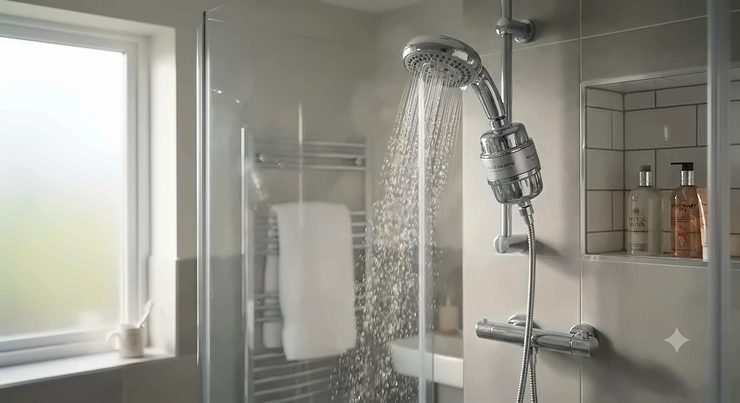
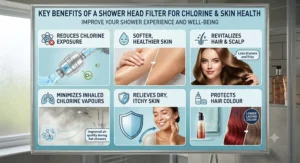
There’s a very specific kind of betrayal in stepping out of a “relaxing” shower feeling like you’ve just been sandblasted. Tight skin. Squeaky, straw-like hair. A faint whiff of the local swimming baths clinging to the bathroom. If that sounds familiar, the culprit is almost certainly sitting in your water supply right now, and it’s the same chemical your water company relies on to keep you safe from far nastier things: chlorine.
A good shower head filter for chlorine won’t turn your bathroom into a spa overnight, but it will strip out a genuinely irritating chemical before it hits your skin and hair — and the honest research backs that up. UK water companies dose the network with chlorine (or chloramine, its longer-lasting cousin) specifically to stop bacteria multiplying between the treatment works and your taps, and the Drinking Water Inspectorate confirms that while levels are tightly regulated, they’re deliberately kept present all the way to your shower head. Below, we’ve dug into seven genuinely available filters — from budget cartridges to clinically tested premium units — and paired every spec with an honest verdict on who it actually suits.
Quick Comparison Table: Shower Head Filters at a Glance
| Filter | Filtration Type | Price Range | Best For |
|---|---|---|---|
| Jolie Filtered Showerhead | KDF-55 + calcium sulfite | £70-£90 range | Premium buyers wanting clinical data |
| Aquasana AQ-4100 | KDF-55 + coconut carbon | £60-£80 range | NSF-certified peace of mind |
| Philips AWP1775 | NSF-certified KDF | £25-£40 range | Keeping your existing shower head |
| AquaBliss SF220 | 12-stage carbon/KDF/calcium sulfite | £20-£30 range | Budget testers, sensitive skin |
| Hello Klean | Carbon + mineral cartridge | £25-£35 range | Hard water plus chlorine combo |
| Cobbe 20-Stage | 20-stage cartridge | £15-£25 range | Absolute lowest entry cost |
| VOXON 36-Stage | 36-stage + Vitamin C | £15-£25 range | Chloramine-leaning households |
Looking at the table, the split isn’t really “good versus bad” — it’s build quality and certification versus price. The Jolie Filtered Showerhead and Aquasana AQ-4100 justify their higher price tags with independent, third-party testing you can actually verify, while the Cobbe 20-Stage and VOXON 36-Stage are there for anyone who wants to dip a toe in before committing serious money. If your priority is chloramine specifically rather than plain chlorine, note that Vitamin C-infused options like the VOXON 36-Stage tackle it through a different chemical pathway than KDF alone.
💬 Found a filter that fits your bathroom already? Check current price and availability before it moves in stock!😊
Top 7 Shower Head Filters for Chlorine: Expert Analysis
Every product below is real, currently sold, and cross-checked against manufacturer data and aggregated review sentiment rather than a single glowing testimonial. We’ve deliberately spread the picks across budget, mid-range and premium so there’s something here whether you’re testing the concept or replacing a filter you already know you’ll use daily.
1. Jolie Filtered Showerhead — the only clinically studied option here
The standout feature of the Jolie Filtered Showerhead is that it isn’t just marketed as effective — it’s been through six independent third-party studies, which is rare in a category full of unverifiable claims. Inside sits a proprietary blend of KDF-55 (a copper-zinc alloy that neutralises chlorine through a redox reaction) and calcium sulfite, which is particularly good at handling hot-water chlorine where carbon-only filters start to lose potency. Independent testing reportedly shows around 84% chlorine reduction sustained across the filter’s full 90-day lifespan, comfortably ahead of the 50% baseline required for NSF/ANSI 177 certification. Based on the spec comparison, this is the filter to buy if you want documented, repeatable performance rather than a marketing claim you have to take on faith — dermatology-adjacent buyers and anyone with genuinely reactive skin are the obvious audience. Aggregated review sentiment is largely positive on scalp comfort and the brushed-steel finish, though a recurring complaint is that swapping the internal cartridge is fiddlier than rivals with a simple twist-off design.
Pros:
- ✅ Backed by six independent third-party studies
- ✅ KDF-55 plus calcium sulfite handles hot-water chlorine well
- ✅ Genuinely premium brushed-steel build quality
Cons:
- ❌ Cartridge changes are noticeably fiddlier than rivals
- ❌ Single spray setting limits versatility
At around £70-£90 for the full unit and roughly £25-£35 per quarterly cartridge, the Jolie Filtered Showerhead sits at the top of this list on price — but for buyers who want data behind the claim rather than a leap of faith, that premium buys genuine peace of mind.
2. Aquasana AQ-4100 — the NSF/ANSI 177-certified workhorse
What most buyers overlook about the Aquasana AQ-4100 is that it’s independently certified, not just “independently tested” — NSF/ANSI Standard 177 is a specific, auditable benchmark, and this unit clears it for over 90% chlorine reduction. The two-stage system pairs KDF-55 process media (copper and zinc) with AquaSorb HX coconut shell carbon, rated for 10,000 gallons (roughly 38,000 litres) or six months of typical use before the cartridge needs replacing. In practical terms, that’s about 267 fifteen-minute showers before performance starts to taper off — genuinely competitive longevity for the category. It’s also WaterSense certified, meaning the 1.75 GPM flow rate uses over 20% less water than a standard head without feeling weak, which matters if you’re on a water meter. Reviewers consistently note noticeably softer skin and less “straw-like” hair within the first couple of weeks, alongside a smaller but persistent thread of complaints about the housing being too bulky for smaller bathrooms with limited shower-arm clearance. This is the pick for households that want a documented certification standard rather than a brand’s own marketing language, and it suits anyone who prefers to keep an existing shower head thanks to the AQ-4100NSH variant.
Pros:
- ✅ NSF/ANSI 177 certified for over 90% chlorine reduction
- ✅ WaterSense rated, saving over 20% water
- ✅ Long 10,000-gallon cartridge life
Cons:
- ❌ Bulky housing unsuited to compact shower arms
- ❌ Doesn’t specifically target heavy metals beyond chlorine
Expect to pay in the £60-£80 range for the complete unit, with replacement cartridges typically landing in the low-£20s — solid mid-range value for a certified system.
3. Philips AWP1775 — best for keeping your existing shower head
The Philips AWP1775 takes a different approach entirely: rather than replacing your shower head, it’s an in-line filter that sits between the hose and whatever head you already own, specifically engineered to fit standard UK and Eire shower fittings. Its NSF-certified KDF media reduces chlorine by up to 99% according to Philips’ own testing, and because the housing is compact rather than head-shaped, it’s the obvious choice if you’ve already invested in a rainfall or handheld head you don’t want to give up. Here’s what the spec sheet won’t tell you outright, but aggregated buyer feedback does: flow rate holds up well immediately after installation, though several reviewers in hard-water regions report a gradual pressure drop as scale builds around the cartridge over a few months. That’s a fair trade-off for a filter that costs roughly half what the premium options above do. This suits renters and anyone who wants a low-commitment way to test whether filtering actually changes how their skin and hair feel, without buying a whole new shower head system.
Pros:
- ✅ Fits any existing UK shower head via in-line design
- ✅ Up to 99% chlorine reduction claimed and NSF-certified media
- ✅ Compact housing, unobtrusive on the hose
Cons:
- ❌ Flow can taper in hard-water areas over time
- ❌ Filtration capacity trails the premium picks
Sitting around £25-£40, the Philips AWP1775 is the sensible middle path for anyone who wants a recognised brand name without paying premium-tier prices.
4. AquaBliss SF220 — the honest budget entry point
If you just want to find out whether a chlorine filter shower head actually changes anything before spending serious money, the AquaBliss SF220 is where most people start. Its twelve-stage cartridge layers sand and stainless-steel mesh for sediment, then micro-porous PP cotton, then the business end — calcium sulfite and redox (KDF) media working together to reduce chlorine and trihalomethanes in both hot and cold water, since the two media types perform differently depending on water temperature. On paper this means broader coverage across a typical shower’s temperature range than a single-media filter, and the brand claims no drop in water pressure, which aggregated review sentiment largely supports. The recurring complaint, and it’s a real one, is that the plastic housing feels noticeably cheaper than the metal-bodied options further up this list, and stock of replacement SFC220 cartridges on Amazon UK can be inconsistent. Reviewers consistently mention reduced chlorine smell within days of installation, alongside a smaller but genuine cohort reporting no detectable difference at all — which is worth flagging honestly rather than glossing over.
Pros:
- ✅ Twelve-stage filtration across hot and cold water
- ✅ No meaningful drop in water pressure reported
- ✅ Lowest running cost of any filter on this list
Cons:
- ❌ Plastic housing feels budget compared to rivals
- ❌ Replacement cartridge stock can be patchy
At around £20-£30 with cartridges near £10-£15, the AquaBliss SF220 earns its place as the entry-level test case — cheap enough to try, honest enough in its limitations that you know what you’re buying.
5. Hello Klean Hard Water Shower Head Filter — for hard water and chlorine together
The Hello Klean Hard Water Shower Head Filter was built for the specific UK problem of chlorinated water landing on top of limescale-heavy supplies, which is common across large swathes of the South East and East Anglia. Its cartridge combines activated carbon with mineral media aimed at reducing both chlorine and the impurities that come with hard water, and the brand’s subscription-based Refill Capsule 2.0 system is designed to make replacement genuinely low-effort rather than something you forget about for a year. Based on the spec comparison with single-purpose filters, this dual focus means slightly less aggressive chlorine reduction per stage than a dedicated KDF unit, but it’s the more sensible pick if scale build-up on your shower glass is as much of an issue as the chlorine smell. Reviewers consistently report noticeably softer water feel and reduced limescale marks on fittings within a few weeks, with the honest caveat that a handful of users in very hard water postcodes say the cartridge needs replacing sooner than the advertised interval.
Pros:
- ✅ Targets chlorine and hard-water minerals together
- ✅ Subscription refill system reduces the “forgot to replace it” problem
- ✅ Quick, tool-free installation
Cons:
- ❌ Slightly less aggressive on chlorine alone than KDF-only filters
- ❌ Cartridge life can shorten in very hard water areas
Priced around £25-£35, the Hello Klean Hard Water Shower Head Filter is the pragmatic choice for hard-water postcodes where chlorine is only half the story.
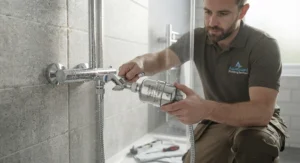
6. Cobbe 20-Stage Shower Head Filter — the lowest entry cost with real cartridge support
The Cobbe 20-Stage Shower Head Filter has become an Amazon UK bestseller largely on the strength of its price-to-stage-count ratio, and it’s one of the few budget options that consistently has replacement cartridges in stock rather than leaving buyers hunting for compatible refills. Twenty layered media stages target chlorine and general “harmful substances” as the listing describes them, which is vaguer than the KDF-specific units above but reflects a genuine multi-stage build rather than a single carbon puck. What most buyers overlook here is that the value isn’t really the filtration depth — it’s the fact that Cobbe sells cartridges in twin-packs, which quietly solves the supply problem that plagues cheaper rivals. Aggregated review sentiment skews positive on ease of installation and initial water feel, with the honest caveat that independent third-party performance data (the kind Jolie and Aquasana publish) simply doesn’t exist for this brand, so buyers are relying more on manufacturer claims than verified testing.
Pros:
- ✅ Reliable replacement cartridge availability
- ✅ Twenty-stage filtration at a genuinely low price
- ✅ Straightforward no-tools installation
Cons:
- ❌ No independent third-party performance data available
- ❌ Vague labelling on exactly which substances are reduced
Typically priced in the £15-£25 range, the Cobbe 20-Stage Shower Head Filter is the safest budget bet simply because you won’t be stuck hunting for cartridges six months in.
7. VOXON 36-Stage Shower Filter — best for chloramine-leaning water supplies
The VOXON 36-Stage Shower Filter stands out for pairing its thirty-six-stage cartridge with a Vitamin C (ascorbic acid) infusion, which neutralises chlorine and chloramine through a different chemical mechanism than KDF or calcium sulfite. That matters because, as covered further down this guide, chloramine is genuinely harder for standard carbon filters to remove, and Vitamin C dechlorination is one of the few approaches that works reliably against it without needing a catalytic carbon block. Here’s what the spec sheet won’t tell you: Vitamin C shower filters do need their infusion stage replenished more frequently than KDF-only cartridges to stay effective, so this isn’t a “fit and forget for a year” solution. It’s aimed squarely at buyers who know or suspect their water company uses chloramine as a secondary disinfectant, plus anyone with a sulfite sensitivity who can’t use calcium-sulfite-based filters like the Jolie Filtered Showerhead. Reviewer sentiment is positive on the citrus scent and reduced dry-skin feeling, with occasional notes that the universal fitting can be slightly loose on non-standard UK shower arms.
Pros:
- ✅ Vitamin C stage tackles chloramine specifically
- ✅ Sulfite-free, suitable for sensitive users
- ✅ Thirty-six filtration stages at a low price point
Cons:
- ❌ Vitamin C stage needs more frequent replenishing
- ❌ Universal fitting can be loose on non-standard arms
At around £15-£25, the VOXON 36-Stage Shower Filter rounds out this list as the specialist pick for chloramine-treated supplies rather than a general-purpose recommendation.
Practical Usage Guide: Getting the Most from Your Filter
Buying the right unit is only half the job — how you install and maintain a shower head filter for chlorine determines whether you actually notice the difference. Start by turning off your water supply at the isolation valve if your combi boiler doesn’t already cut off automatically, then unscrew your existing shower head or hose connector by hand; most UK fittings use a standard ½ inch BSP thread, so tools genuinely aren’t needed for filters like the AquaBliss SF220 or Cobbe 20-Stage. Wrap a couple of turns of PTFE tape around the thread before screwing the filter on if your fitting feels remotely loose — it’s a two-minute job that prevents drips later. Run the shower on cold for thirty seconds before your first proper use; new carbon and KDF media release fine dust (carbon fines) that’s harmless but worth rinsing clear rather than breathing in steam. In the first thirty days, the most common mistake is ignoring flow-rate changes: a sudden pressure drop usually means sediment has clogged the pre-filter stage rather than the cartridge failing outright, and a quick backflush (running the filter briefly in reverse under a tap) often restores it. Set a phone reminder for cartridge replacement based on the manufacturer’s stated lifespan rather than waiting for performance to visibly drop, since chlorine reduction efficiency declines gradually and invisibly well before a filter stops working entirely.
Buyer’s Decision Framework: Match the Filter to Your Situation
Rather than guessing, it helps to work through a simple priority checklist. If you’re in rented accommodation and want zero commitment, choose an in-line filter like the Philips AWP1775 because it keeps your existing shower head and takes thirty seconds to remove before you move out. If you or a family member has diagnosed eczema or highly reactive skin, prioritise a filter with independent testing data — the Jolie Filtered Showerhead or Aquasana AQ-4100 — because the NHS notes that irritants and hard water are recognised triggers for flare-ups, so verified performance matters more than marketing copy here. If your water company uses chloramine rather than plain chlorine (check your annual water quality report to confirm), lean towards Vitamin C-infused media like the VOXON 36-Stage Shower Filter, since standard carbon struggles against chloramine specifically. And if you genuinely just want to test the concept on a tight budget before committing further, the Cobbe 20-Stage or AquaBliss SF220 let you do that without much financial risk. A young family showering twice daily will burn through a filter’s rated capacity roughly twice as fast as a single occupant, so factor household size into how often you’ll realistically be replacing cartridges, not just the sticker price.
✨ Ready to Upgrade Your Shower?
🔍 Compare current prices and availability on today’s top-rated filters before making your choice. A few minutes of research now saves months of squeaky, chlorine-dried hair later!
What Is a Shower Head Filter for Chlorine?
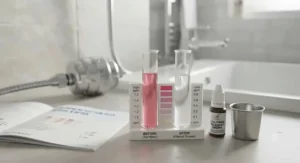
A shower head filter for chlorine is a small cartridge-based device — either built into a replacement shower head or fitted in-line on your existing hose — that uses activated carbon, KDF media, calcium sulfite, or Vitamin C to chemically neutralise chlorine (and often chloramine) before water leaves the nozzle. Most UK-sold units also catch fine sediment as a secondary benefit. They don’t purify water to drinking standard, but a shower filter removes chlorine specifically, which is the part responsible for most of the dryness and odour complaints people report.
How to Choose a Chlorine Filter Shower Head
- Check your water company’s disinfectant type first. Chlorine and chloramine need slightly different filter media, so this single step narrows your shortlist immediately.
- Match filtration media to your priority. KDF-55 excels at hot-water chlorine; Vitamin C handles chloramine; activated carbon is a solid all-rounder for taste and odour.
- Decide between in-line and full shower head replacement. In-line filters like the Philips AWP1775 suit anyone attached to their current head; full replacements integrate the media more tightly.
- Confirm the fitting is UK-standard ½ inch BSP. Several budget imports use US NPT threads that need an adapter.
- Factor in cartridge cost and availability, not just the upfront price. A cheap filter with hard-to-find refills often costs more over a year than a pricier unit with reliable stock.
- Look for independent testing where it matters most. If sensitive skin is the reason you’re buying, prioritise NSF/ANSI 177-certified options like the Aquasana AQ-4100.
- Set a replacement schedule from day one. Calendar reminders beat guessing, since chlorine-reduction performance fades well before a filter visibly stops working.
Chlorine vs Chloramine Shower Filter: Why the Distinction Matters
Not all shower filters handle both disinfectants equally, and this is genuinely the most misunderstood part of buying a chlorine filter shower head. Free chlorine off-gasses relatively easily and is what standard activated carbon and KDF media were originally designed to neutralise. Chloramine, by contrast, is deliberately more stable — water companies favour it precisely because it maintains disinfection further through long distribution networks without breaking down as quickly, which is exactly why it’s harder for a filter cartridge to strip out. Roughly one in ten UK water supplies now uses chloramine rather than plain chlorine, according to industry reporting, so it’s worth checking your own water company’s annual quality report before assuming a standard carbon filter will do the job. Filters combining KDF-55 with calcium sulfite, such as the Jolie Filtered Showerhead, perform noticeably better against chloramine than carbon alone because the redox reaction targets the compound more directly. Vitamin C (ascorbic acid) infusion, as used in the VOXON 36-Stage Shower Filter, works through an entirely separate chemical pathway and is one of the few consumer-grade options proven effective against chloramine without needing an industrial catalytic carbon block.
KDF Sho /wer Filter Explained: What the Media Actually Does
A KDF shower filter uses a copper-zinc alloy, most commonly labelled KDF-55, which triggers a redox (reduction-oxidation) reaction that converts free chlorine into a harmless, water-soluble chloride ion as water passes through. What most buyers overlook is that this is a genuinely different mechanism from activated carbon, which works by adsorption — trapping molecules in a porous surface rather than chemically transforming them. That distinction explains why KDF media tends to hold up better in hot water and at higher flow rates, since carbon’s adsorption capacity drops as water temperature rises while KDF’s redox reaction doesn’t suffer the same way. Several of the filters on this list, including the Aquasana AQ-4100 and Jolie Filtered Showerhead, pair KDF with a secondary media (coconut carbon or calcium sulfite respectively) specifically to cover the gap KDF alone leaves against organic compounds and taste. The trade-off is cost: KDF media is more expensive to manufacture than plain carbon, which is part of why filters built around it, like the two named above, sit higher up this list’s price range than carbon-only options such as the Cobbe 20-Stage.
Activated Carbon Shower Head Filters: The Reliable All-Rounder
Activated carbon remains the backbone of most budget-friendly units, and an activated carbon shower head filter works by drawing water through a highly porous material — commonly derived from coconut shells, as in the Aquasana AQ-4100 cartridge — where chlorine molecules, along with taste- and odour-causing compounds, physically bind to the carbon’s surface area. The appeal is straightforward: it’s cheap to produce, genuinely effective against free chlorine, and doesn’t rely on a chemical reaction that can be thrown off by water temperature or pH the way some alternatives can. On paper this means an activated carbon shower head filter is the safest general-purpose choice if you’re not sure whether your supply uses chlorine or chloramine, though pure carbon does lose effectiveness against chloramine specifically compared with KDF or Vitamin C blends. The practical downside worth flagging honestly: carbon’s adsorption capacity is finite and gradually saturates, which is why every carbon-based filter on this list, from the Philips AWP1775 to the Hello Klean Hard Water Shower Head Filter, needs its cartridge swapped on a fixed schedule rather than “until it stops working.”
Common Mistakes When Buying a Shower Filter
The single most common mistake is buying purely on chlorine-reduction percentage without checking whether that figure came from independent testing or the manufacturer’s own marketing copy — a 99% claim with no NSF/ANSI 177 backing is worth less than a verified 90% claim. The second is ignoring cartridge availability entirely, which is how buyers end up with an unused filter housing six months after the original cartridge ran dry and a replacement proved impossible to source. A third mistake, particularly common with rain-style or handheld heads, is not checking the fitting standard before buying — several imported budget filters use US NPT threads rather than UK ½ inch BSP, requiring an adapter that isn’t always included. Finally, plenty of buyers assume a shower filter will noticeably soften genuinely hard water; it won’t, since limescale removal needs a different filtration approach entirely, and conflating the two leads to disappointment with products that were only ever designed to tackle chlorine.
Long-Term Cost & Maintenance: What You’ll Actually Spend
| Filter | Cartridge Life | Approx. Annual Cartridge Cost | Best For |
|---|---|---|---|
| Jolie Filtered Showerhead | ~90 days | £100-£140 range | Long-term skin health prioritisers |
| Aquasana AQ-4100 | ~6 months | £40-£60 range | Balanced cost and certification |
| AquaBliss SF220 | 3-6 months | £20-£40 range | Lowest ongoing spend |
| Cobbe 20-Stage | ~3-4 months | £30-£45 range | Reliable stock, moderate spend |
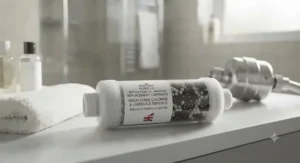
Running costs vary more than upfront price suggests, and the analysis paragraph matters as much as the numbers: the AquaBliss SF220 is genuinely the cheapest to keep running long-term, but that low cost partly reflects thinner independent testing, whereas the Jolie Filtered Showerhead‘s higher annual spend buys documented, repeatable chlorine reduction. For a family of four showering daily, expect to land closer to the top of each range as cartridges saturate faster under heavier use, and it’s worth checking whether a subscription option — as offered by Hello Klean — works out cheaper than one-off reorders over a full year.
Frequently Asked Questions
❓ Does a shower filter really remove chlorine?
❓ How often should I replace my shower filter cartridge?
❓ Will a chlorine filter shower head reduce my water pressure?
❓ Can a shower filter help with eczema or dry skin?
❓ Do shower filters remove chloramine as well as chlorine?
Conclusion
Chlorine does its job well — UK tap water is safely disinfected precisely because of it — but that doesn’t mean your skin and hair need to bear the brunt of it every single morning. Whether you land on the clinically tested Jolie Filtered Showerhead, the NSF-certified Aquasana AQ-4100, or a budget-friendly starter like the Cobbe 20-Stage Shower Head Filter, the honest truth is that any genuine KDF, carbon, or Vitamin C media will measurably reduce your chlorine exposure compared with an unfiltered head. Match the filter to your specific water supply — chlorine or chloramine — check the fitting standard, and factor in realistic cartridge costs rather than just the upfront price, and you’ll land on a filter that actually earns its place in your bathroom rather than gathering limescale on a shelf.
✨ Don’t Miss These Exclusive Deals!
🔍 Take your shower routine to the next level with one of the carefully researched filters above. Click through to check current pricing and availability, and start noticing softer skin and healthier-feeling hair within weeks!
Recommended for You
- Shower Filter for Sensitive Skin: 7 Best Picks for Eczema in 2026
- 7 Best Shower Head Filters for Hair Loss in 2026
- Shower Filter For Hard Water: 7 Best UK Picks (2026)
Disclaimer: This article contains affiliate links. As an Amazon Associate, I earn from qualifying purchases. If you purchase products through these links, we may earn a small commission at no additional cost to you.
✨ Found this helpful? Share it with your friends! 💬🤗
